
What happens if giardiasis is not treated?
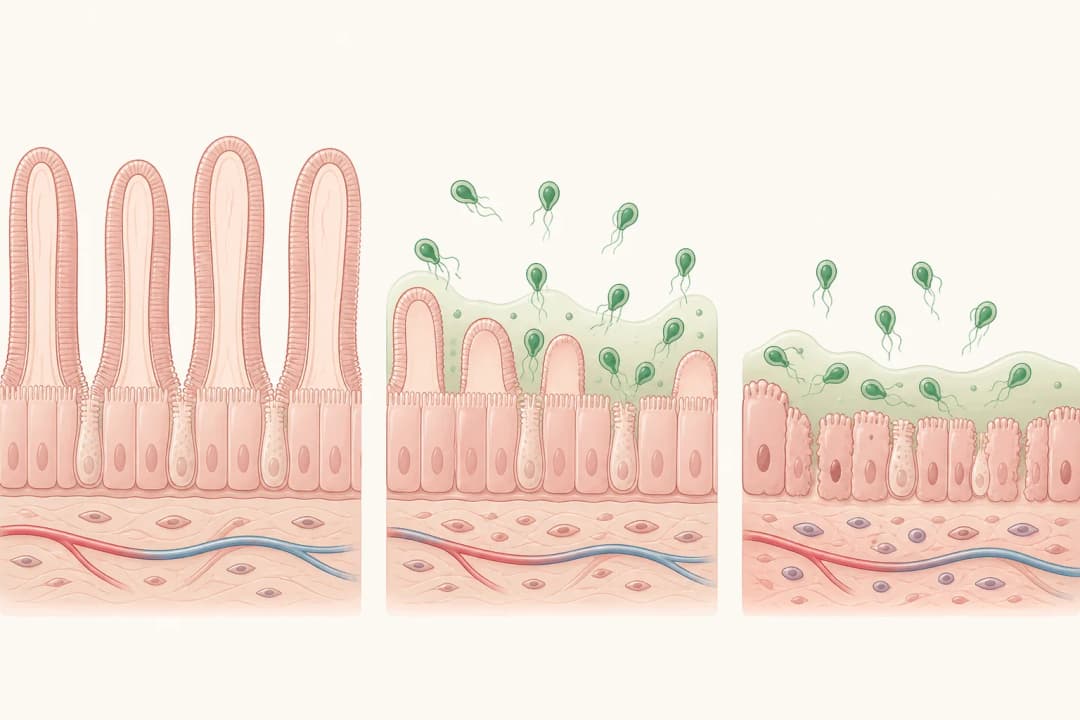
Short answer
Untreated giardiasis can prolong diarrhoea, bloating and abdominal pain, leading to dehydration, reduced nutrition and ongoing bowel changes.
This answers one question. It is not a diagnosis and does not replace an assessment by a licensed doctor.
At a glance
- Common effects
- Diarrhoea, bloating, cramps and gas
- Main immediate risk
- Dehydration from ongoing fluid loss
Why symptoms may continue
Giardiasis is an intestinal infection caused by a microscopic parasite. It can lead to frequent or loose stools, cramps, bloating, gas, nausea and tiredness. Some people notice greasy or unusually foul-smelling stools, while others have milder symptoms. If the infection continues, fluid loss can build up and eating may become difficult.
The bowel can remain sensitive after the infection has cleared, so diarrhoea or bloating may not stop immediately after treatment. People can also pass the parasite to others through contaminated hands, food or water. Children, older adults and people who are medically vulnerable may become dehydrated more quickly.
What to do next
Arrange a GP consultation if diarrhoea continues, especially after travel, unsafe water exposure, childcare contact or a household illness. The clinician may request stool testing and will consider other causes of persistent bowel symptoms. Antibiotic treatment or another prescription may be advised when giardiasis is confirmed or strongly suspected.
Drink frequent small amounts of fluid; oral rehydration solution can help replace water and salts when losses are significant. Wash hands carefully after using the toilet and before preparing food, avoid sharing towels, and do not prepare food for others while you have diarrhoea. Follow any treatment instructions fully.
When to seek urgent help
Seek urgent medical advice if you cannot keep fluids down, pass very little urine, feel faint or confused, have severe abdominal pain, blood in the stool, or marked weakness. Get prompt advice for a young child, pregnancy, frailty or a weakened immune system, because dehydration can become serious.
Questions for an appointment
Ask whether stool testing is needed, how to replace fluids, which treatment is suitable, when you can return to work or school, and whether household or travel contacts need advice.
Find care
General Clinics & Polyclinics in Abu Dhabi
That answer is general. If you want it applied to your own case, these are licensed general clinics & polyclinics listed in Abu Dhabi.
27 Ar Ruwwad St - Shakhbout City - MSH4 - Abu Dhabi - United Arab Emirates
Accepts: Daman, Thiqa, Cigna, MetLife +20 more
Al Ruwais, Al Dhafrah
Accepts: Daman, Thiqa, AXA, Cigna +16 more
Al Bahyah - Al Bahyah Old - Abu Dhabi - United Arab Emirates
Accepts: Daman, Thiqa, Cigna, Allianz Care +18 more
Abu Dhabi
Accepts: Daman, Thiqa, AXA, Cigna +27 more
Ordered by verification status and how complete each clinic's public record is, then alphabetically. This is a directory listing, not a ranking — Zavis does not rate or recommend providers.
A factual listing drawn from the DHA, DOH and MOHAP licence registers. It is not a referral, an endorsement, or advice that any of these providers is right for you.
Questions people ask
Can symptoms continue after treatment?
Yes. The bowel may remain sensitive for a while, so diarrhoea or bloating can take time to settle even after the infection is cleared.
How can giardiasis spread at home?
The parasite can spread through contaminated hands, surfaces, food or water, so careful handwashing and food hygiene are important.
Related
Related reading
Keep reading
Medical disclaimer. This page is general health information, not medical advice, and it cannot diagnose you. Always consult a licensed healthcare provider about your own symptoms and treatment. In an emergency in the UAE, call 998 for an ambulance.