
What happens if COPD is not treated?
Short answer
If COPD is not treated, airflow limitation can become more disabling, breathlessness may restrict activity, and flare-ups can become more difficult to manage.
This answers one question. It is not a diagnosis and does not replace an assessment by a licensed doctor.
At a glance
- Main concern
- Progressive airflow limitation and disabling breathlessness
- Useful checks
- Symptom review, inhaler technique and spirometry
- Support
- Inhaler treatment, activity planning and nicotine cessation
How unmanaged COPD can affect you
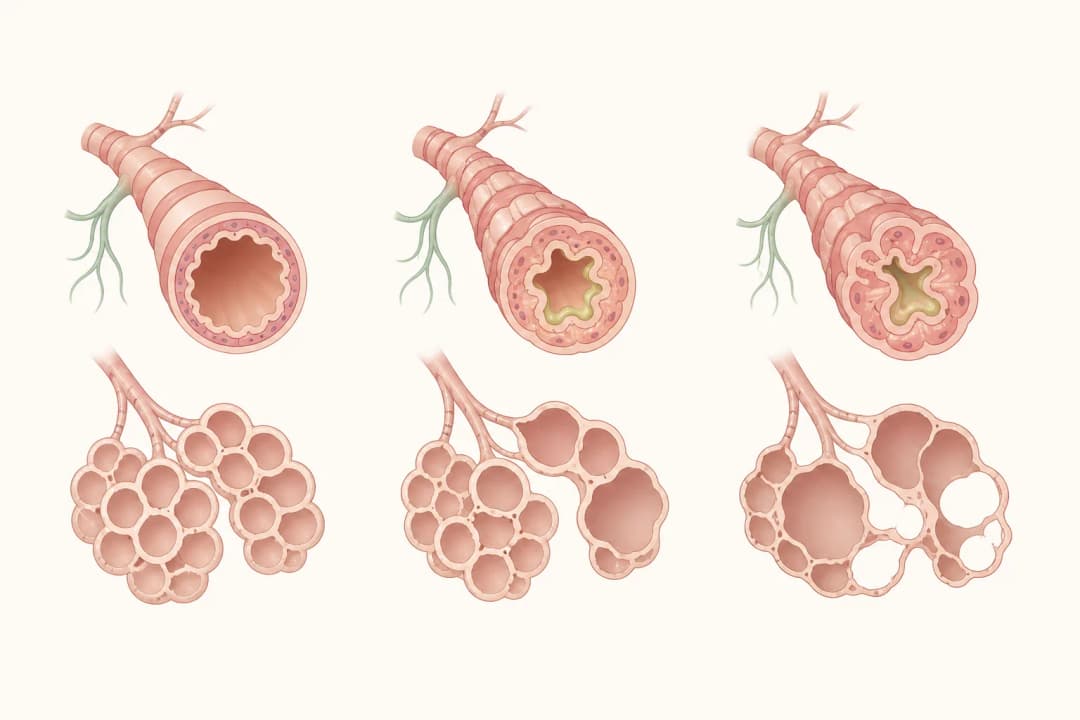
COPD affects airflow through the lungs. Ongoing irritation and narrowing can cause shortness of breath, wheezing, cough and reduced exercise tolerance. People may gradually avoid activity because breathing feels difficult, which can lead to loss of fitness and make everyday tasks harder.
Flare-ups may bring a noticeable increase in breathlessness, cough or phlegm. Repeated or severe flare-ups can require urgent treatment and may place extra strain on the body. Nicotine dependence can make stopping smoking difficult, but continued smoking or exposure to irritants can keep lung damage active.
Steps that support control
Arrange a Chronic Disease Review to check symptoms, inhaler technique, vaccinations, activity and an action plan for flare-ups. Spirometry may help confirm airflow obstruction and measure how your lungs are working.
Use Inhaler Therapy exactly as prescribed and ask for a technique demonstration if the device feels unfamiliar. A Smoking Cessation Programme can support people who smoke or use nicotine. Pace activity, keep moving within your limits and discuss breathlessness rather than stopping all exercise.
When to seek urgent help
Call emergency services for severe breathlessness at rest, inability to speak in full sentences, blue or grey lips, new confusion, collapse or chest pain. Use your agreed flare-up plan while waiting for help, if you have one.
Seek same-day medical advice when breathlessness, wheezing, cough or phlegm suddenly worsens, or when usual reliever treatment is not helping. Early review can identify infection or another trigger.
Questions for your doctor
Ask what your usual breathing level should be, how to recognise a flare-up, whether spirometry is needed, and how to check inhaler technique. Ask about stopping nicotine, safe activity and the point at which symptoms require emergency help.
Find care
General Clinics & Polyclinics in Abu Dhabi
That answer is general. If you want it applied to your own case, these are licensed general clinics & polyclinics listed in Abu Dhabi.
27 Ar Ruwwad St - Shakhbout City - MSH4 - Abu Dhabi - United Arab Emirates
Accepts: Daman, Thiqa, Cigna, MetLife +20 more
Al Ruwais, Al Dhafrah
Accepts: Daman, Thiqa, AXA, Cigna +16 more
Al Bahyah - Al Bahyah Old - Abu Dhabi - United Arab Emirates
Accepts: Daman, Thiqa, Cigna, Allianz Care +18 more
Abu Dhabi
Accepts: Daman, Thiqa, AXA, Cigna +27 more
Ordered by verification status and how complete each clinic's public record is, then alphabetically. This is a directory listing, not a ranking — Zavis does not rate or recommend providers.
A factual listing drawn from the DHA, DOH and MOHAP licence registers. It is not a referral, an endorsement, or advice that any of these providers is right for you.
Questions people ask
Can COPD be managed if symptoms are mild?
Yes. Early review can establish a treatment plan, identify triggers and help preserve daily activity.
When is a COPD flare-up an emergency?
Severe breathlessness, blue or grey lips, confusion, collapse or chest pain needs emergency help.
Related
Related reading
Keep reading
Medical disclaimer. This page is general health information, not medical advice, and it cannot diagnose you. Always consult a licensed healthcare provider about your own symptoms and treatment. In an emergency in the UAE, call 998 for an ambulance.