
What happens if chronic sinusitis is not treated?
Short answer
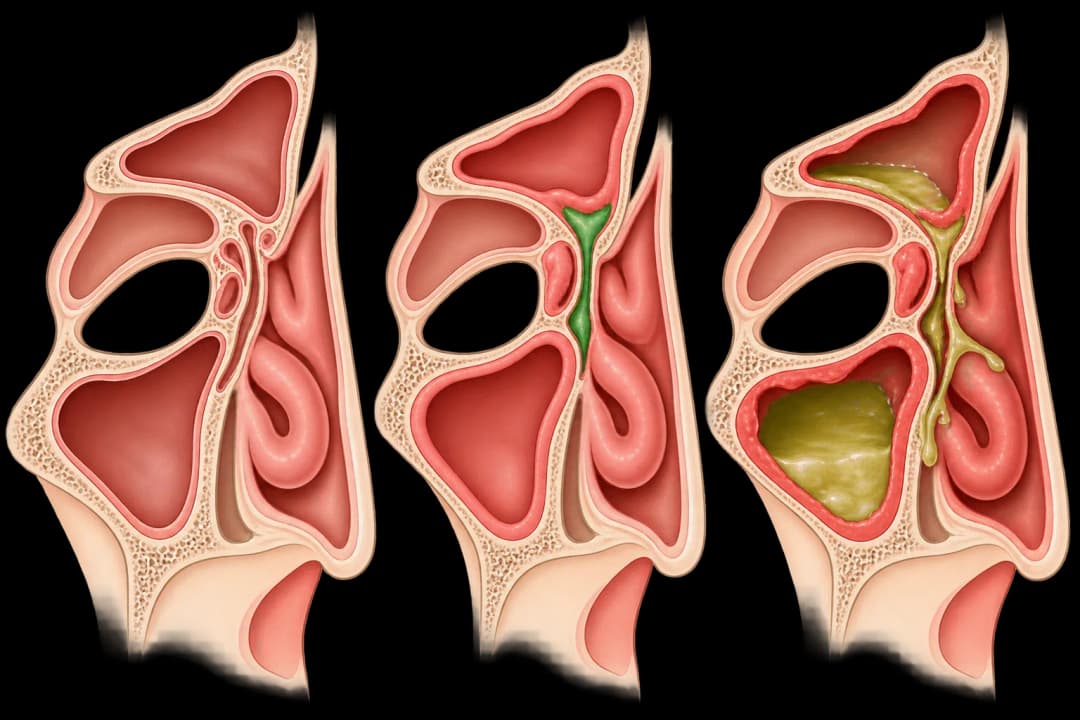
If chronic sinusitis is not treated, ongoing inflammation can keep the nose blocked, impair drainage, disturb sleep and allow symptoms to persist or flare.
This answers one question. It is not a diagnosis and does not replace an assessment by a licensed doctor.
At a glance
- Main issue
- Persistent inflammation and reduced sinus drainage
- Common effects
- Nasal blockage, pressure, headache and disturbed sleep
- Useful assessment
- Nose and throat examination, with allergy review when relevant
What untreated symptoms can mean
The swollen lining of the nose and sinuses may narrow the passages that normally let mucus drain. This can cause a blocked nose, facial pain or pressure, reduced smell, headache and coughing up phlegm from mucus draining into the throat. Chronic inflammation can also make breathing through the nose and sleeping comfortably more difficult.
Symptoms may remain steady, fluctuate, or worsen during a flare. Allergic rhinitis can contribute to nasal swelling, so identifying triggers may be part of the assessment. Persistent symptoms do not by themselves prove that a serious complication is present, but they deserve a clinical review when they interfere with normal activities.
What to do next
Arrange a GP Consultation if symptoms continue, recur frequently or affect sleep, work or exercise. A clinician can examine your nose and throat, review medicines and consider whether allergy symptoms, nasal polyps or another cause is involved.
Follow the recommended plan consistently. This may include saline measures, a nasal medicine, treatment for allergies or other targeted care. Allergy Testing may be considered when the pattern suggests an allergic trigger. Avoid using decongestant nasal sprays for longer than advised, because overuse can worsen congestion.
When to seek urgent care
Seek urgent medical help for swelling or redness around an eye, vision changes, severe or rapidly worsening headache, confusion, a stiff neck, marked facial swelling, or difficulty breathing. These symptoms can signal a problem needing prompt assessment rather than routine sinus care.
Contact a clinician soon if fever, facial pain, discoloured discharge or a sudden deterioration accompanies your usual symptoms, or if symptoms are strongly one-sided and persistent.
Questions for your doctor
Ask whether your symptoms fit chronic sinusitis, whether allergies or polyps could be contributing, which treatments are appropriate for regular use, and what changes should prompt a review. You can also ask how to protect sleep and manage mucus while the cause is being assessed.
Find care
General Clinics & Polyclinics in Abu Dhabi
That answer is general. If you want it applied to your own case, these are licensed general clinics & polyclinics listed in Abu Dhabi.
27 Ar Ruwwad St - Shakhbout City - MSH4 - Abu Dhabi - United Arab Emirates
Accepts: Daman, Thiqa, Cigna, MetLife +20 more
Al Ruwais, Al Dhafrah
Accepts: Daman, Thiqa, AXA, Cigna +16 more
Al Bahyah - Al Bahyah Old - Abu Dhabi - United Arab Emirates
Accepts: Daman, Thiqa, Cigna, Allianz Care +18 more
Abu Dhabi
Accepts: Daman, Thiqa, AXA, Cigna +27 more
Ordered by verification status and how complete each clinic's public record is, then alphabetically. This is a directory listing, not a ranking — Zavis does not rate or recommend providers.
A factual listing drawn from the DHA, DOH and MOHAP licence registers. It is not a referral, an endorsement, or advice that any of these providers is right for you.
Questions people ask
Can untreated chronic sinusitis spread?
Most ongoing symptoms reflect inflammation and poor drainage, but severe eye, neurological or breathing symptoms need urgent assessment.
Will chronic sinusitis always get worse without treatment?
Not necessarily. Symptoms can fluctuate, but persistent inflammation may continue to affect comfort, sleep and nasal breathing.
Related
Related reading
Keep reading
Medical disclaimer. This page is general health information, not medical advice, and it cannot diagnose you. Always consult a licensed healthcare provider about your own symptoms and treatment. In an emergency in the UAE, call 998 for an ambulance.