
What happens before PRP for hair loss?
Short answer
Before PRP for hair loss, your clinician assesses the pattern and cause of shedding, reviews your health and medicines, and explains the injection plan.
This answers one question. It is not a diagnosis and does not replace an assessment by a licensed doctor.
At a glance
- Assessment
- Hair-loss pattern, scalp condition and possible causes
- Tell the clinician
- All medicines, supplements and bleeding concerns
What the visit is designed to clarify
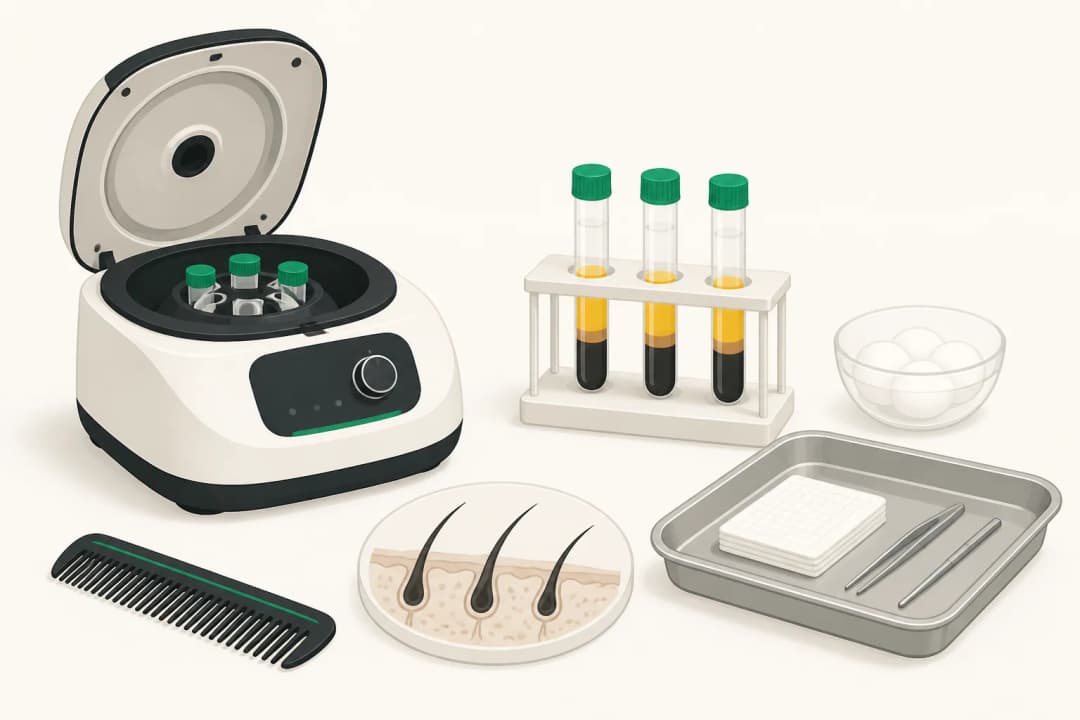
The clinician examines the scalp for thinning, inflammation, scaling, scarring and areas of active loss. They ask when shedding began, whether it is sudden or gradual, and whether illness, stress, nutrition, hormones or family history may be relevant. A hair-pull assessment, scalp photographs or laboratory tests may be considered when the history suggests another cause. PRP involves drawing a small blood sample, processing it and placing the prepared plasma into selected scalp areas; it is not the same procedure as a [Hair Transplant](/treatments/hair-restoration/hair-transplant/).
Preparing for the appointment
Give the clinic a full medicine and supplement list, including products that affect bleeding or inflammation. Mention anaemia, bleeding conditions, fainting with blood draws, scalp infection and any recent illness. Follow the clinic's advice about washing your hair and eating or drinking before the visit. Avoid changing prescribed medicine without the prescriber's guidance. Wear a top with a comfortable neckline and plan gentle scalp care afterwards. The treatment details are outlined in [PRP For Hair Loss](/treatments/hair-restoration/prp-hair-treatment/).
When to contact the clinic
Tell the clinic before the session if you have fever, an infected or very inflamed scalp, unexplained bruising, a new medicine or a significant change in shedding. After the procedure, contact the clinic for increasing redness, warmth, pus, severe pain, fever or swelling that is spreading rather than settling.
Questions for your doctor
Ask what type of hair loss is being treated, whether tests are needed first, which medicines should be discussed, how many visits may be considered, and how progress will be documented. Ask what other options fit your diagnosis if PRP is not suitable.
Find care
General Clinics & Polyclinics in Abu Dhabi
That answer is general. If you want it applied to your own case, these are licensed general clinics & polyclinics listed in Abu Dhabi.
27 Ar Ruwwad St - Shakhbout City - MSH4 - Abu Dhabi - United Arab Emirates
Accepts: Daman, Thiqa, Cigna, MetLife +20 more
Al Ruwais, Al Dhafrah
Accepts: Daman, Thiqa, AXA, Cigna +16 more
Al Bahyah - Al Bahyah Old - Abu Dhabi - United Arab Emirates
Accepts: Daman, Thiqa, Cigna, Allianz Care +18 more
Abu Dhabi
Accepts: Daman, Thiqa, AXA, Cigna +27 more
Ordered by verification status and how complete each clinic's public record is, then alphabetically. This is a directory listing, not a ranking — Zavis does not rate or recommend providers.
A factual listing drawn from the DHA, DOH and MOHAP licence registers. It is not a referral, an endorsement, or advice that any of these providers is right for you.
Questions people ask
Will the clinician check for another cause of shedding?
Yes. The history and scalp examination help identify inflammation, scarring or medical causes that may need a different approach.
Can I stop a prescribed medicine before PRP?
Do not stop prescribed treatment on your own; discuss it with the prescribing clinician and the PRP provider.
Related
Related reading
Keep reading
Medical disclaimer. This page is general health information, not medical advice, and it cannot diagnose you. Always consult a licensed healthcare provider about your own symptoms and treatment. In an emergency in the UAE, call 998 for an ambulance.