
What does fractional laser treatment treat?
Short answer
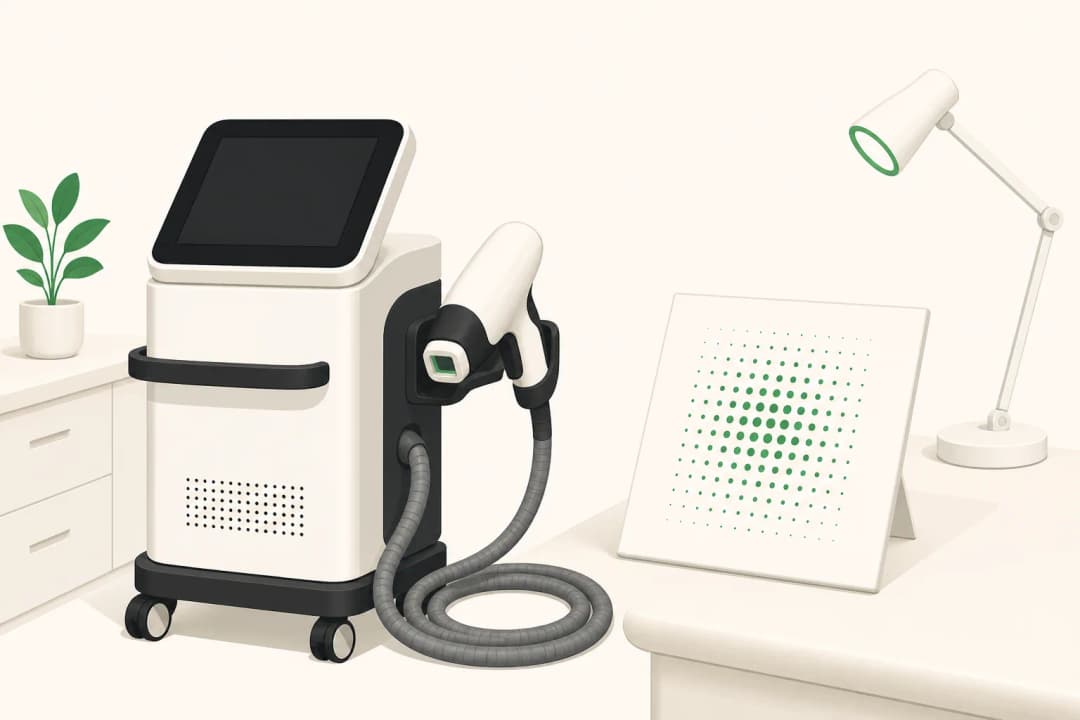
Fractional laser treatment treats selected texture and tone concerns by creating microscopic treatment zones that prompt the skin to remodel during healing.
This answers one question. It is not a diagnosis and does not replace an assessment by a licensed doctor.
At a glance
- Main targets
- Texture, selected scars, fine lines, sun damage, and some pigment concerns.
- How it works
- Creates microscopic zones that encourage controlled skin remodelling.
- Recovery
- Redness, warmth, dryness, or peeling can occur temporarily.
What fractional treatment may improve
A clinician may consider fractional laser for sun-damaged skin, uneven texture, fine lines, selected acne or surgical scars, and stretch marks. It may also be discussed for some pigment changes, including exogenous ochronosis, when the diagnosis and skin type are carefully assessed. Treatment targets columns of skin while leaving surrounding areas untreated, which supports healing between the treated zones.
Fractional laser is not appropriate for every scar or pigment problem. Raised keloid scars, active infection, uncontrolled inflammation, and some pigment conditions need a specialist plan. Results depend on the device, settings, concern, skin tone, and healing response; several sessions may be considered.
How to prepare and care for skin
Have a qualified clinician review your medical history, medicines, tendency to form raised scars, recent tanning, and any active skin disease. Follow instructions about products and sun avoidance before treatment. Afterward, expect temporary redness, warmth, swelling, dryness, or peeling depending on the laser and settings. Use the recommended gentle skincare and sun protection, and do not pick at peeling skin.
When to seek care
Contact the treating clinic if pain, swelling, blistering, oozing, or redness is worsening rather than settling, or if the area becomes increasingly warm or tender. Seek urgent help for facial swelling with breathing difficulty. New or persistent darkening, lightening, or scarring should be reviewed before another session.
Questions for your doctor
Ask which concern the proposed laser can realistically improve, whether your skin tone or scar history changes the plan, and what alternatives may fit. Discuss the expected recovery, number of visits, settings, sun precautions, and how complications would be managed.
Find care
General Clinics & Polyclinics in Abu Dhabi
That answer is general. If you want it applied to your own case, these are licensed general clinics & polyclinics listed in Abu Dhabi.
27 Ar Ruwwad St - Shakhbout City - MSH4 - Abu Dhabi - United Arab Emirates
Accepts: Daman, Thiqa, Cigna, MetLife +20 more
Al Ruwais, Al Dhafrah
Accepts: Daman, Thiqa, AXA, Cigna +16 more
Al Bahyah - Al Bahyah Old - Abu Dhabi - United Arab Emirates
Accepts: Daman, Thiqa, Cigna, Allianz Care +18 more
Abu Dhabi
Accepts: Daman, Thiqa, AXA, Cigna +27 more
Ordered by verification status and how complete each clinic's public record is, then alphabetically. This is a directory listing, not a ranking — Zavis does not rate or recommend providers.
A factual listing drawn from the DHA, DOH and MOHAP licence registers. It is not a referral, an endorsement, or advice that any of these providers is right for you.
Questions people ask
Can fractional laser remove every scar?
No. Suitability depends on the scar type, depth, location, skin tone, and risk of pigment or raised-scar changes.
Is fractional laser the same as CO2 laser resurfacing?
They are related laser approaches, but the device, intensity, depth, and recovery plan can differ. A clinician can compare them for your concern.
Related
Related reading
Keep reading
Medical disclaimer. This page is general health information, not medical advice, and it cannot diagnose you. Always consult a licensed healthcare provider about your own symptoms and treatment. In an emergency in the UAE, call 998 for an ambulance.