
What does an electrocardiogram treat?
Short answer
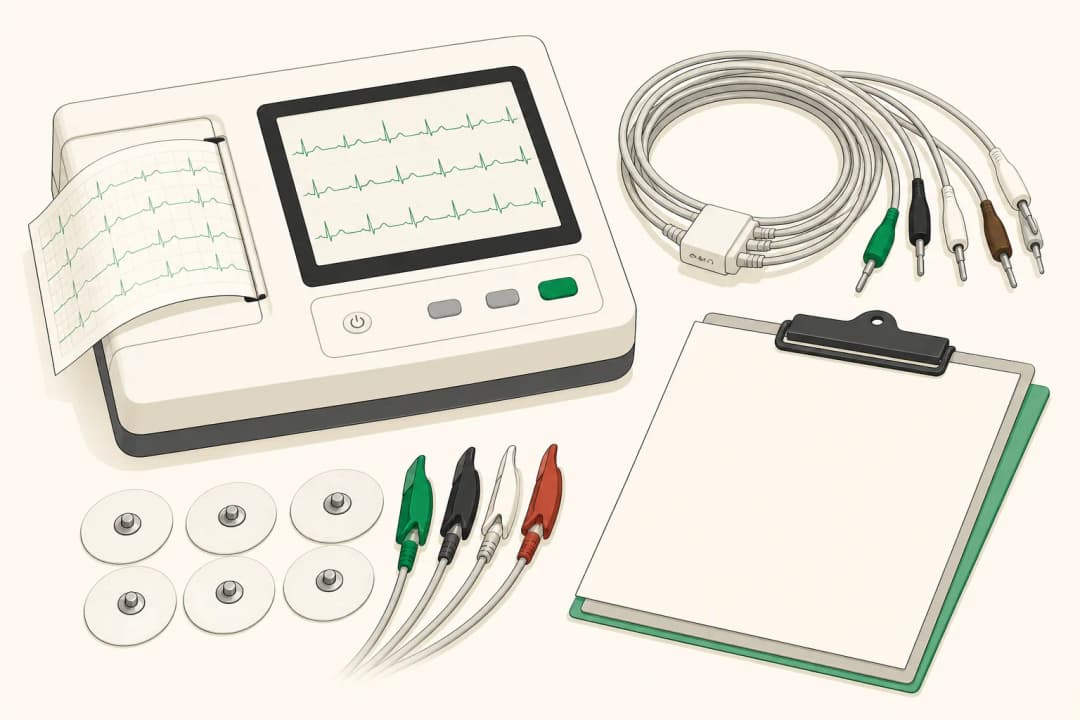
An electrocardiogram does not treat a condition; it records the heart's electrical activity to help clinicians assess it.
This answers one question. It is not a diagnosis and does not replace an assessment by a licensed doctor.
At a glance
- Purpose
- Records electrical activity; it is not a treatment
- May support assessment of
- Rhythm problems and signs of heart strain
What an ECG can show
An ECG uses sensors placed on the skin to capture the timing and pattern of each heartbeat. It may help identify an irregular rhythm, signs that the heart muscle is under strain, or changes that need further assessment. It can support evaluation of symptoms such as chest discomfort, palpitations, breathlessness, dizziness, or fainting. A normal recording does not explain every symptom, particularly when an intermittent rhythm problem is not happening during the test. A clinician interprets the tracing alongside your history and examination.
What happens after the test
If an ECG suggests a rhythm or heart problem, a clinician may arrange repeat monitoring, blood tests, imaging, or specialist review. Treatment depends on the underlying finding, not on the ECG itself. An ECG may form part of assessment for angina, atrial fibrillation, heart attack, or heart failure. Wear loose clothing when attending and tell the team about symptoms, medicines, and previous heart diagnoses. The recording is quick and usually involves remaining still while the sensors are attached.
When to seek urgent care
Call emergency services for sudden chest pressure or pain, severe breathlessness, collapse, new weakness on one side, or a fast or irregular heartbeat with fainting. Do not wait for a routine ECG appointment when symptoms are severe, sudden, or worsening. While waiting for help, rest and follow the emergency operator's instructions.
Questions for your doctor
Ask why the ECG was recommended, whether you need a resting or longer recording, what the result means for your symptoms, and which warning signs should lead you to seek urgent help. Ask when and how you will receive the interpretation.
Find care
General Clinics & Polyclinics in Abu Dhabi
That answer is general. If you want it applied to your own case, these are licensed general clinics & polyclinics listed in Abu Dhabi.
27 Ar Ruwwad St - Shakhbout City - MSH4 - Abu Dhabi - United Arab Emirates
Accepts: Daman, Thiqa, Cigna, MetLife +20 more
Al Ruwais, Al Dhafrah
Accepts: Daman, Thiqa, AXA, Cigna +16 more
Al Bahyah - Al Bahyah Old - Abu Dhabi - United Arab Emirates
Accepts: Daman, Thiqa, Cigna, Allianz Care +18 more
Abu Dhabi
Accepts: Daman, Thiqa, AXA, Cigna +27 more
Ordered by verification status and how complete each clinic's public record is, then alphabetically. This is a directory listing, not a ranking — Zavis does not rate or recommend providers.
A factual listing drawn from the DHA, DOH and MOHAP licence registers. It is not a referral, an endorsement, or advice that any of these providers is right for you.
Questions people ask
Is an ECG painful?
The recording itself should not hurt, although removing adhesive sensors can briefly tug at the skin.
Can an ECG find every heart problem?
No. Some problems require longer rhythm monitoring, imaging, or other tests.
Related
Related reading
Keep reading
Medical disclaimer. This page is general health information, not medical advice, and it cannot diagnose you. Always consult a licensed healthcare provider about your own symptoms and treatment. In an emergency in the UAE, call 998 for an ambulance.