
What Causes Osteopenia?
Short answer
Osteopenia can develop when bone breakdown outpaces bone building, including with vitamin D deficiency, hormonal changes, inactivity, or certain medicines.
This answers one question. It is not a diagnosis and does not replace an assessment by a licensed doctor.
At a glance
- What it is
- Reduced bone density, distinct from osteoporosis
- Review factors
- Medicines, nutrition, hormones, activity, and fracture history
What it means
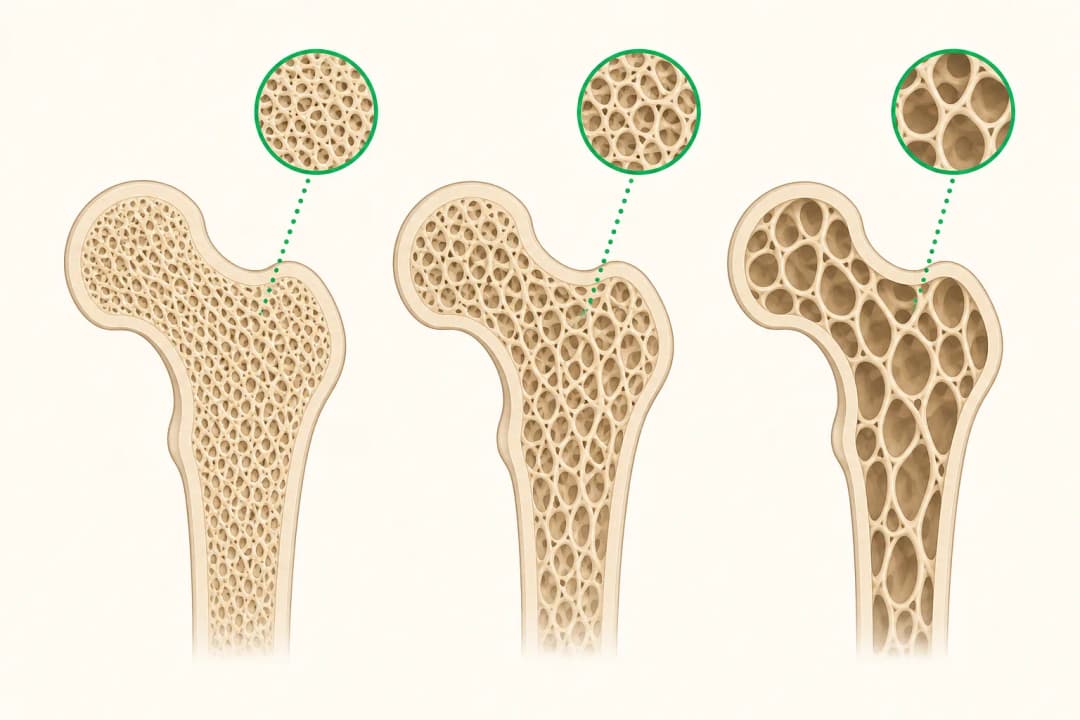
Bone is living tissue that is continually renewed. Osteopenia indicates reduced bone density, so the skeleton may be less able to tolerate stress than it once was, but the finding does not by itself predict a fracture. Causes may include limited calcium or vitamin D intake, reduced sunlight exposure, low physical activity, smoking, heavy alcohol use, menopause or other hormone changes, digestive conditions that reduce absorption, and prolonged use of some medicines such as corticosteroids. Vitamin D Deficiency is one possible contributor and may need specific evaluation.
A bone-density result is interpreted alongside age, medical history, medicines, previous fractures, and other risk factors rather than in isolation.
What to do
Ask your clinician to review medicines and health conditions that may affect bone. Weight-bearing activity, strength work, balance training, adequate dietary calcium and vitamin D, and avoiding smoking can support bone health when suitable for you. Do not start high-dose supplements without advice; the right approach depends on diet, blood tests, kidney health, and fracture risk.
When to seek care
Arrange a review after a fracture from a minor fall, new persistent back pain, noticeable loss of height, or a new diagnosis that may affect bone. Seek urgent help after severe pain or inability to bear weight following an injury. A clinician can decide whether testing or follow-up is needed.
Questions for your doctor
Ask what may have lowered your bone density, whether vitamin D or other blood tests are appropriate, which exercises are safe, and when your bone health should be reassessed.
Find care
General Clinics & Polyclinics in Abu Dhabi
That answer is general. If you want it applied to your own case, these are licensed general clinics & polyclinics listed in Abu Dhabi.
27 Ar Ruwwad St - Shakhbout City - MSH4 - Abu Dhabi - United Arab Emirates
Accepts: Daman, Thiqa, Cigna, MetLife +20 more
Al Ruwais, Al Dhafrah
Accepts: Daman, Thiqa, AXA, Cigna +16 more
Al Bahyah - Al Bahyah Old - Abu Dhabi - United Arab Emirates
Accepts: Daman, Thiqa, Cigna, Allianz Care +18 more
Abu Dhabi
Accepts: Daman, Thiqa, AXA, Cigna +27 more
Ordered by verification status and how complete each clinic's public record is, then alphabetically. This is a directory listing, not a ranking — Zavis does not rate or recommend providers.
A factual listing drawn from the DHA, DOH and MOHAP licence registers. It is not a referral, an endorsement, or advice that any of these providers is right for you.
Questions people ask
Can osteopenia improve?
Bone health can respond to addressing contributing factors and following an individualized exercise, nutrition, and medical plan.
Does osteopenia cause symptoms?
It often causes no noticeable symptoms; it is commonly found through bone-density assessment or after a fracture.
Related
Related reading
Keep reading
Medical disclaimer. This page is general health information, not medical advice, and it cannot diagnose you. Always consult a licensed healthcare provider about your own symptoms and treatment. In an emergency in the UAE, call 998 for an ambulance.