
What causes diabetic foot ulcer?
Short answer
A diabetic foot ulcer usually begins with pressure or injury that is not felt and then heals slowly because diabetes affects nerves, blood flow, and infection control.
This answers one question. It is not a diagnosis and does not replace an assessment by a licensed doctor.
At a glance
- Typical starting point
- Pressure, rubbing, blister, cut, or burn
- Why it is missed
- Neuropathy can reduce protective feeling
How an ulcer develops
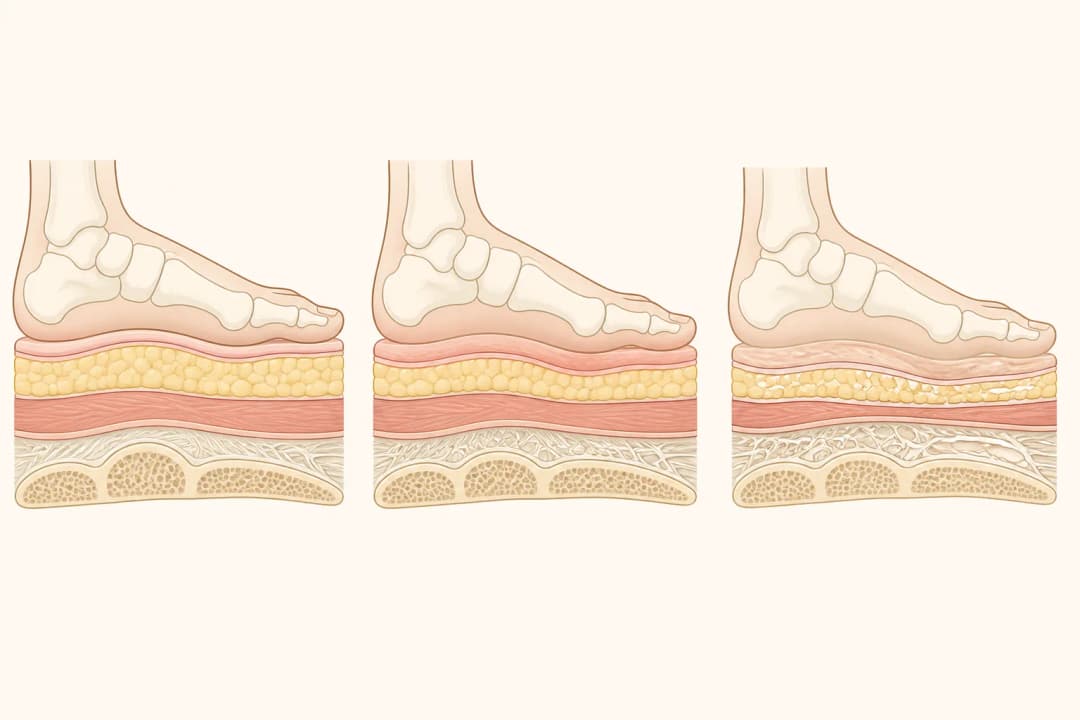
Peripheral neuropathy can reduce protective sensation, so a person may not notice a blister, cut, burn, or rubbing from footwear. Repeated pressure on a callus or a prominent area of the foot can then damage deeper tissue. Dry skin and changes in foot shape may create further cracks or pressure points.
Type 2 diabetes can affect small blood vessels and the body’s response to infection, which may slow healing. An ulcer is an open break in the skin, not simply a sore spot. Redness, warmth, swelling, drainage, odour, or spreading pain can signal infection, although reduced sensation may make pain less obvious.
What to do now
Check both feet every day, including between the toes and the soles with a mirror if needed. Wash gently, dry carefully, moisturise dry skin without putting cream between the toes, and wear well-fitting shoes and clean socks. Do not cut a corn yourself or walk barefoot.
If you find a break in the skin, keep it clean and covered with a suitable dressing and arrange prompt clinical assessment. Reduce pressure on the area as advised. A foot-care team can assess circulation, sensation, footwear, wound depth, and infection risk.
When to seek care
Contact a clinician promptly for any new ulcer, even if it looks small or does not hurt. Seek urgent help for spreading redness, warmth or swelling, pus, fever, a black or pale area, a cold foot, severe swelling, or sudden change in colour or shape.
Questions for your doctor
Could reduced sensation or circulation be affecting this wound? How should I dress it and keep pressure off? Do I need assessment for infection, footwear changes, or specialist foot care?
Find care
General Clinics & Polyclinics in Abu Dhabi
That answer is general. If you want it applied to your own case, these are licensed general clinics & polyclinics listed in Abu Dhabi.
27 Ar Ruwwad St - Shakhbout City - MSH4 - Abu Dhabi - United Arab Emirates
Accepts: Daman, Thiqa, Cigna, MetLife +20 more
Al Ruwais, Al Dhafrah
Accepts: Daman, Thiqa, AXA, Cigna +16 more
Al Bahyah - Al Bahyah Old - Abu Dhabi - United Arab Emirates
Accepts: Daman, Thiqa, Cigna, Allianz Care +18 more
Abu Dhabi
Accepts: Daman, Thiqa, AXA, Cigna +27 more
Ordered by verification status and how complete each clinic's public record is, then alphabetically. This is a directory listing, not a ranking — Zavis does not rate or recommend providers.
A factual listing drawn from the DHA, DOH and MOHAP licence registers. It is not a referral, an endorsement, or advice that any of these providers is right for you.
Questions people ask
Can a diabetic foot ulcer be painless?
Yes. Reduced sensation from peripheral neuropathy may hide pain from a wound or pressure injury.
Should I wait for a foot ulcer to improve?
No. Arrange prompt assessment for any new break in the skin because infection and deeper damage can develop.
Related
Related reading
Keep reading
Medical disclaimer. This page is general health information, not medical advice, and it cannot diagnose you. Always consult a licensed healthcare provider about your own symptoms and treatment. In an emergency in the UAE, call 998 for an ambulance.