
What are the treatment options for thalassaemia?
Short answer
Treatment options for thalassaemia range from monitoring and tailored supplements to transfusions, iron chelation and specialist procedures.
This answers one question. It is not a diagnosis and does not replace an assessment by a licensed doctor.
At a glance
- Mild trait
- Often managed with monitoring
- More significant disease
- May need transfusions and iron management
Why treatment differs
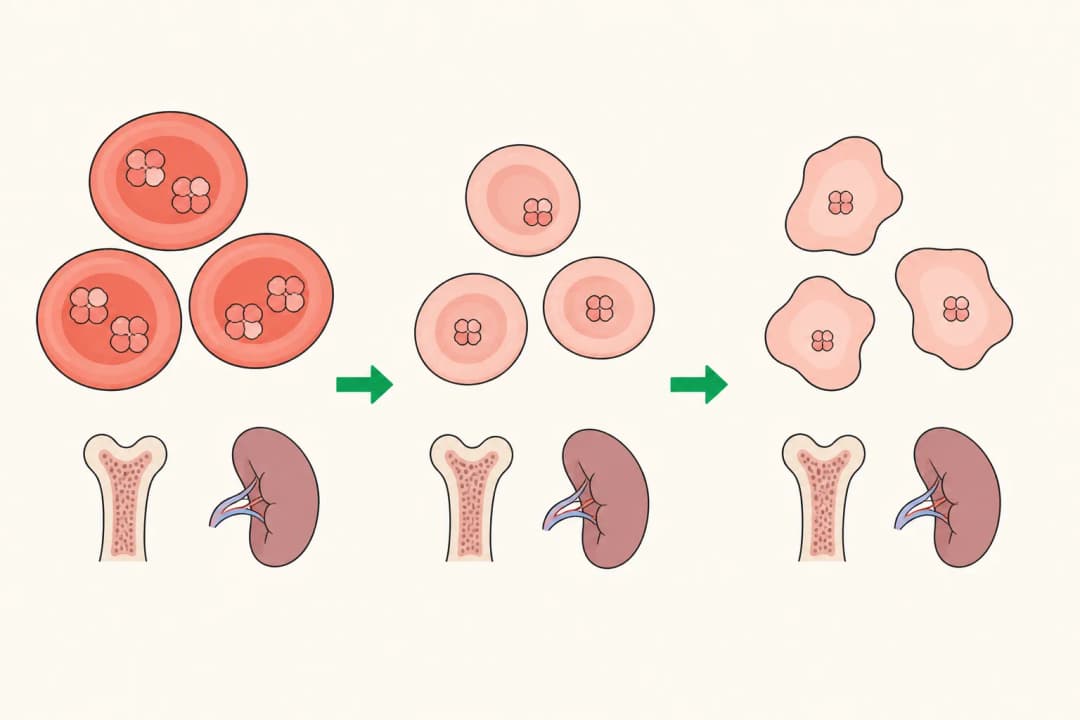
Thalassaemia is an inherited blood condition that affects haemoglobin and red blood cell production. A carrier or trait may need no treatment, while a more significant form can cause ongoing anaemia and require care from a haematology team. Blood tests help identify the type and severity, check haemoglobin and look for iron changes. Some people need scheduled blood transfusions. Repeated transfusions can lead to excess iron, which may be treated with iron-chelating medicine. Folic acid may be advised in selected situations, but iron should not be taken unless testing shows deficiency.
Planning ongoing care
Keep regular appointments and bring a record of symptoms, medicines and transfusions. Ask whether a Blood Test is needed to monitor anaemia, iron stores, liver function or other effects of treatment. Take chelation medicine exactly as prescribed and report troublesome effects rather than stopping it alone. A specialist may discuss stem cell transplantation or newer disease-directed options in selected cases. Premarital Screening and genetic counselling can help couples understand carrier status and reproductive choices.
When to seek medical help
Contact your treating team promptly for worsening breathlessness, chest pain, fainting, new palpitations, marked weakness, fever or symptoms of infection. Seek urgent help for severe breathing difficulty, collapse, confusion or sudden chest pain. People receiving transfusions should report fever, rash, back pain, dark urine or unusual discomfort during or soon after a transfusion.
Questions for your doctor
Ask which type of thalassaemia you have, whether you need treatment or monitoring, how iron levels will be checked, and which symptoms need urgent attention. Ask whether family testing or genetic counselling would be useful.
Find care
General Clinics & Polyclinics in Abu Dhabi
That answer is general. If you want it applied to your own case, these are licensed general clinics & polyclinics listed in Abu Dhabi.
27 Ar Ruwwad St - Shakhbout City - MSH4 - Abu Dhabi - United Arab Emirates
Accepts: Daman, Thiqa, Cigna, MetLife +20 more
Al Ruwais, Al Dhafrah
Accepts: Daman, Thiqa, AXA, Cigna +16 more
Al Bahyah - Al Bahyah Old - Abu Dhabi - United Arab Emirates
Accepts: Daman, Thiqa, Cigna, Allianz Care +18 more
Abu Dhabi
Accepts: Daman, Thiqa, AXA, Cigna +27 more
Ordered by verification status and how complete each clinic's public record is, then alphabetically. This is a directory listing, not a ranking — Zavis does not rate or recommend providers.
A factual listing drawn from the DHA, DOH and MOHAP licence registers. It is not a referral, an endorsement, or advice that any of these providers is right for you.
Questions people ask
Should everyone with thalassaemia take iron?
No. Iron is appropriate only when testing shows iron deficiency and a clinician recommends it.
Can treatment change over time?
Yes. The plan may change with haemoglobin levels, transfusion needs, iron results, symptoms and overall health.
Related
Related reading
Keep reading
Medical disclaimer. This page is general health information, not medical advice, and it cannot diagnose you. Always consult a licensed healthcare provider about your own symptoms and treatment. In an emergency in the UAE, call 998 for an ambulance.