
What are the treatment options for meningitis?
Short answer
Meningitis needs urgent medical assessment; hospital treatment may include antibiotics, antiviral medicines or supportive care.
This answers one question. It is not a diagnosis and does not replace an assessment by a licensed doctor.
At a glance
- Response needed
- Emergency assessment when suspected
- Treatment setting
- Often hospital-based
- Prevention
- Vaccination protects against some forms
Why the cause matters
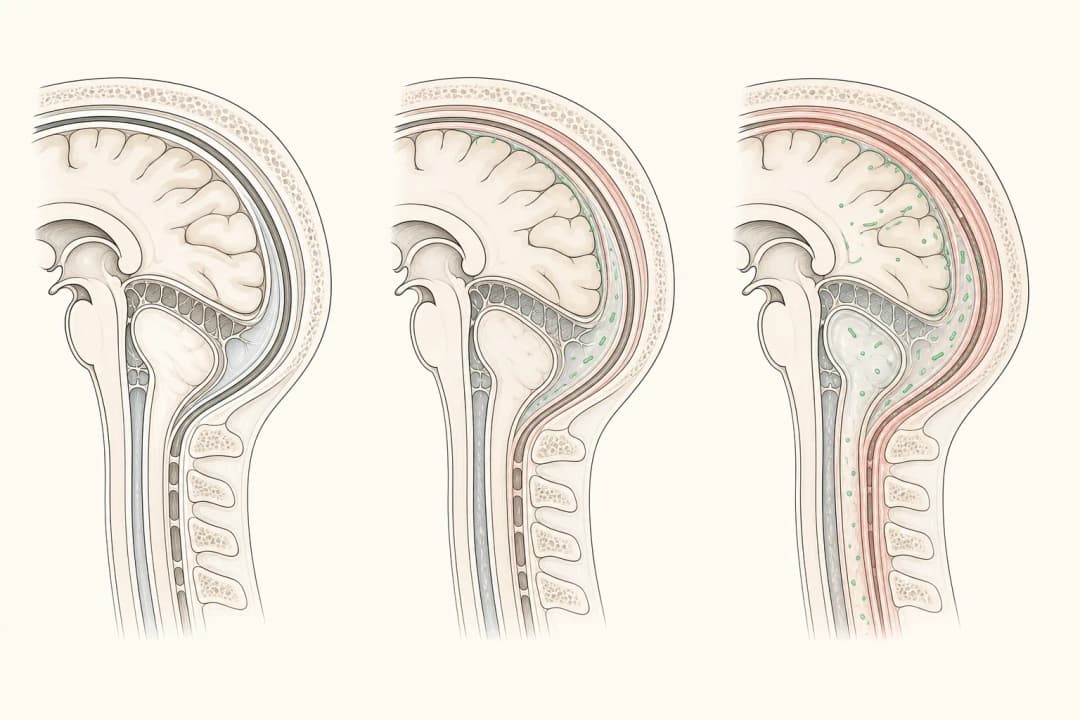
Meningitis is inflammation around the brain and spinal cord. Bacterial meningitis is a medical emergency and may be treated in hospital with antibiotics through a vein, alongside fluids and close monitoring. Viral meningitis may need supportive care, although antiviral treatment can be used for particular viruses. Other causes require different specialist treatment. Clinicians may use blood tests, scans or a lumbar puncture when safe and appropriate; urgent treatment is not delayed when serious infection is strongly suspected.
Hospital teams monitor breathing, blood pressure, alertness, seizures and fluid balance. Some people need intensive care. Close contacts may be assessed for preventive antibiotics depending on the organism and exposure. Vaccination reduces the risk of some forms but does not treat an illness that has already started.
What to do if it is suspected
Do not wait for a routine appointment if meningitis is possible. Seek emergency medical help for fever with a severe headache, stiff neck, confusion, unusual sleepiness, a seizure, a rash that does not fade under pressure, or marked sensitivity to light. Tell responders when symptoms began and mention recent infections, medicines and vaccination history. Learn about [Meningitis](/conditions/meningitis/), and discuss prevention through [Meningococcal Vaccination](/treatments/preventive-care-and-vaccination/meningococcal-vaccination/).
Urgency is the priority
Call emergency services immediately for difficulty waking, collapse, breathing difficulty, blue or mottled skin, a seizure, rapidly spreading non-fading rash, or sudden worsening. Infants may show poor feeding, a high-pitched cry, an abnormal soft spot or unusual floppiness rather than the classic symptoms. Do not rely on the presence or absence of a rash to decide whether help is needed.
Questions for your doctor
Once the person is safe, ask which cause is suspected, what tests are planned, how treatment will be monitored, whether household contacts need advice, and which symptoms should prompt immediate reassessment.
Find care
General Clinics & Polyclinics in Abu Dhabi
That answer is general. If you want it applied to your own case, these are licensed general clinics & polyclinics listed in Abu Dhabi.
27 Ar Ruwwad St - Shakhbout City - MSH4 - Abu Dhabi - United Arab Emirates
Accepts: Daman, Thiqa, Cigna, MetLife +20 more
Al Ruwais, Al Dhafrah
Accepts: Daman, Thiqa, AXA, Cigna +16 more
Al Bahyah - Al Bahyah Old - Abu Dhabi - United Arab Emirates
Accepts: Daman, Thiqa, Cigna, Allianz Care +18 more
Abu Dhabi
Accepts: Daman, Thiqa, AXA, Cigna +27 more
Ordered by verification status and how complete each clinic's public record is, then alphabetically. This is a directory listing, not a ranking — Zavis does not rate or recommend providers.
A factual listing drawn from the DHA, DOH and MOHAP licence registers. It is not a referral, an endorsement, or advice that any of these providers is right for you.
Questions people ask
Can meningitis be treated at home?
Suspected meningitis needs urgent assessment; bacterial disease in particular requires prompt hospital treatment.
Does every case need antibiotics?
Treatment depends on the cause, but clinicians may start antibiotics urgently when bacterial meningitis is a concern.
Related
Related reading
Keep reading
Medical disclaimer. This page is general health information, not medical advice, and it cannot diagnose you. Always consult a licensed healthcare provider about your own symptoms and treatment. In an emergency in the UAE, call 998 for an ambulance.