
What are the treatment options for inguinal hernia?
Short answer
Treatment for an inguinal hernia may involve observation for mild symptoms or surgical repair when the bulge causes pain, enlarges, or interferes with daily activity.
This answers one question. It is not a diagnosis and does not replace an assessment by a licensed doctor.
At a glance
- Possible plan
- Monitoring or surgical repair
- Useful test
- Abdominal ultrasound when diagnosis is uncertain
Understanding the choices
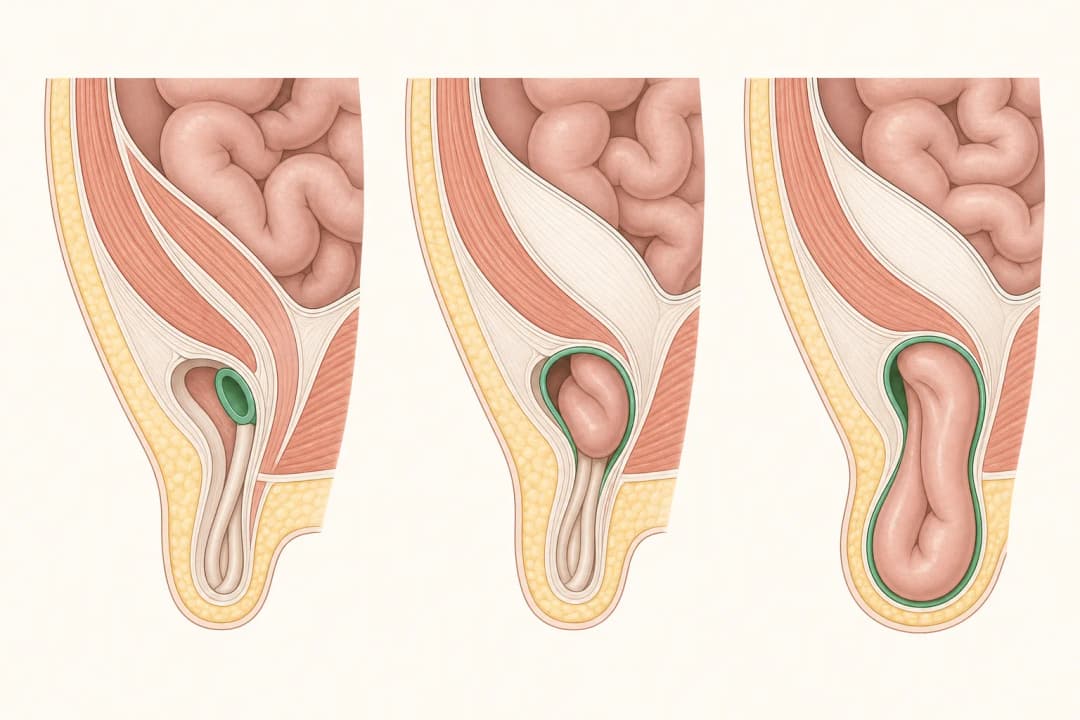
An inguinal hernia occurs when tissue pushes through a weak area in the groin. A clinician may diagnose it from your history and an examination. An abdominal ultrasound can help when the finding is uncertain or the bulge is not easy to feel.
If the hernia is small and causes little trouble, a clinician may recommend monitoring and practical measures. Repair closes and reinforces the weak area, usually through an operation. The choice depends on symptoms, examination findings, general health, previous operations, and how the hernia affects movement or work.
Steps to take
Book a GP consultation for a new groin lump, dragging sensation, or discomfort that appears with coughing, lifting, or standing. Note when the bulge appears, whether it goes away when lying down, and whether pain limits activity. Avoid activities that clearly worsen symptoms until assessed, and ask for guidance about lifting and constipation.
Do not forcefully push a painful or firm bulge back in. If surgery is recommended, discuss the expected recovery, activity restrictions, pain control, and what happens if you choose monitoring instead.
When to seek care
Seek urgent care if the bulge becomes suddenly painful, firm, tender, discoloured, or cannot be gently reduced, especially with vomiting, abdominal swelling, or difficulty passing stool or gas. These features can indicate trapped or obstructed tissue and need immediate assessment.
Questions to ask your doctor
Ask whether examination is enough or an ultrasound is useful, whether monitoring is reasonable, what symptoms would change the plan, and which activities are safe. If repair is advised, ask about the surgical approach, anaesthesia, recovery, and recurrence monitoring.
Find care
General Clinics & Polyclinics in Abu Dhabi
That answer is general. If you want it applied to your own case, these are licensed general clinics & polyclinics listed in Abu Dhabi.
27 Ar Ruwwad St - Shakhbout City - MSH4 - Abu Dhabi - United Arab Emirates
Accepts: Daman, Thiqa, Cigna, MetLife +20 more
Al Ruwais, Al Dhafrah
Accepts: Daman, Thiqa, AXA, Cigna +16 more
Al Bahyah - Al Bahyah Old - Abu Dhabi - United Arab Emirates
Accepts: Daman, Thiqa, Cigna, Allianz Care +18 more
Abu Dhabi
Accepts: Daman, Thiqa, AXA, Cigna +27 more
Ordered by verification status and how complete each clinic's public record is, then alphabetically. This is a directory listing, not a ranking — Zavis does not rate or recommend providers.
A factual listing drawn from the DHA, DOH and MOHAP licence registers. It is not a referral, an endorsement, or advice that any of these providers is right for you.
Questions people ask
Does every inguinal hernia need surgery?
No. A clinician may monitor a hernia that causes few symptoms, while pain, enlargement, or activity limits may support a surgical opinion.
Can an inguinal hernia become urgent?
Yes. Sudden pain, a firm irreducible bulge, vomiting, or abdominal swelling needs urgent assessment because tissue may be trapped.
Related
Related reading
Keep reading
Medical disclaimer. This page is general health information, not medical advice, and it cannot diagnose you. Always consult a licensed healthcare provider about your own symptoms and treatment. In an emergency in the UAE, call 998 for an ambulance.