
What are the treatment options for asthma?
Short answer
Asthma treatment may include inhaler therapy, trigger control, regular reviews, breathing tests and urgent nebuliser treatment during severe attacks.
This answers one question. It is not a diagnosis and does not replace an assessment by a licensed doctor.
At a glance
- Daily control
- Correct inhaler use and a personalised action plan
- Monitoring
- Reviews and spirometry can guide adjustments
How asthma treatment is chosen
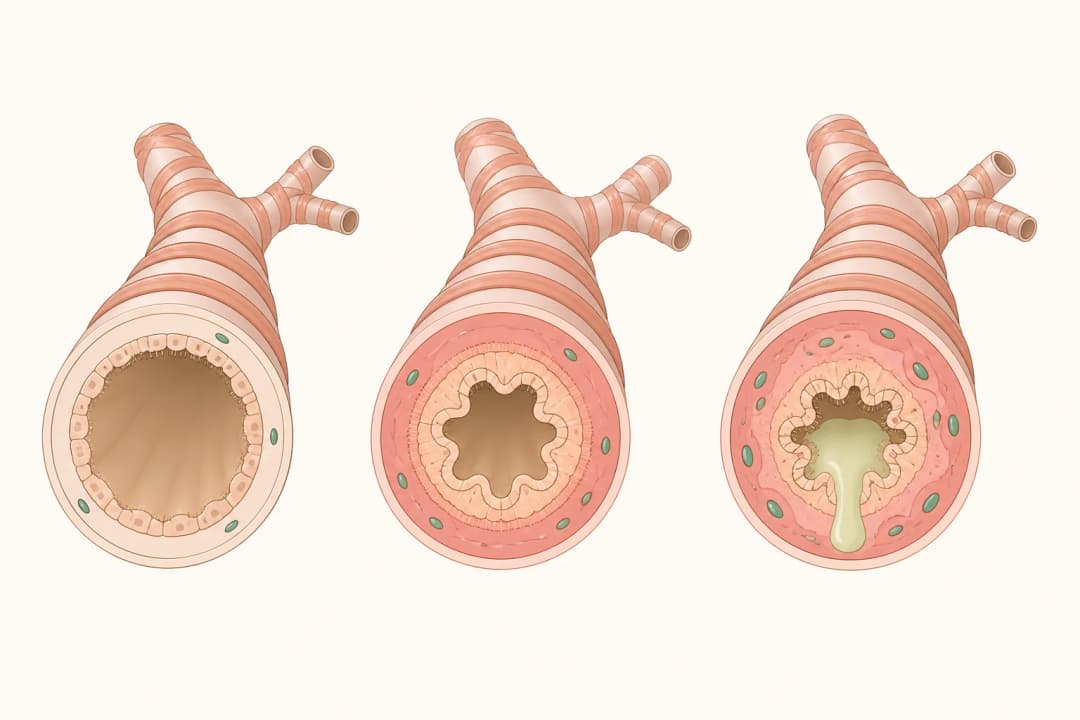
Asthma causes sensitive, inflamed airways that can narrow and make breathing difficult. A clinician considers your symptoms, night waking, reliever use, examination and spirometry results. Inhaler therapy may include a preventer to reduce airway inflammation and a reliever for sudden symptoms; the exact medicine and strength depend on your needs. Allergy testing can be useful when an allergic trigger is suspected, but not every person with asthma has an allergy.
Keeping symptoms controlled
Use inhalers with the technique taught to you and keep a written asthma action plan. A chronic disease review can check symptom control, inhaler technique, side effects, vaccinations, trigger exposure and whether the plan needs adjustment. Avoid known triggers such as smoke, dust or exercise patterns only when they affect you, and do not stop a preventer because symptoms have settled without discussing it. Severe flare-ups may need oxygen, additional medicines or nebuliser treatment in an urgent-care setting.
When breathing problems are urgent
Use your action plan and seek urgent help if breathing is rapidly worsening, you cannot speak comfortably, your reliever is not helping, your lips look blue, or you feel drowsy, confused or exhausted. Sit upright and avoid lying flat if that worsens breathing. Emergency assessment is needed when symptoms are severe or do not settle promptly, even if a previous attack felt similar.
Questions for your doctor
Ask which inhaler is the preventer, how to check your technique, what your action-plan steps mean, when spirometry should be repeated, and whether allergy testing or a chronic disease review would help.
Find care
General Clinics & Polyclinics in Abu Dhabi
That answer is general. If you want it applied to your own case, these are licensed general clinics & polyclinics listed in Abu Dhabi.
27 Ar Ruwwad St - Shakhbout City - MSH4 - Abu Dhabi - United Arab Emirates
Accepts: Daman, Thiqa, Cigna, MetLife +20 more
Al Ruwais, Al Dhafrah
Accepts: Daman, Thiqa, AXA, Cigna +16 more
Al Bahyah - Al Bahyah Old - Abu Dhabi - United Arab Emirates
Accepts: Daman, Thiqa, Cigna, Allianz Care +18 more
Abu Dhabi
Accepts: Daman, Thiqa, AXA, Cigna +27 more
Ordered by verification status and how complete each clinic's public record is, then alphabetically. This is a directory listing, not a ranking — Zavis does not rate or recommend providers.
A factual listing drawn from the DHA, DOH and MOHAP licence registers. It is not a referral, an endorsement, or advice that any of these providers is right for you.
Questions people ask
Do all people with asthma need a nebuliser?
No. Nebuliser treatment is generally considered for severe symptoms or when a clinician decides inhaled medicine needs to be delivered in that way.
Why are regular reviews useful?
Reviews can identify worsening control, check technique and adjust treatment before symptoms become difficult to manage.
Related
Related reading
Keep reading
Medical disclaimer. This page is general health information, not medical advice, and it cannot diagnose you. Always consult a licensed healthcare provider about your own symptoms and treatment. In an emergency in the UAE, call 998 for an ambulance.