
What are the symptoms of hives?
Short answer
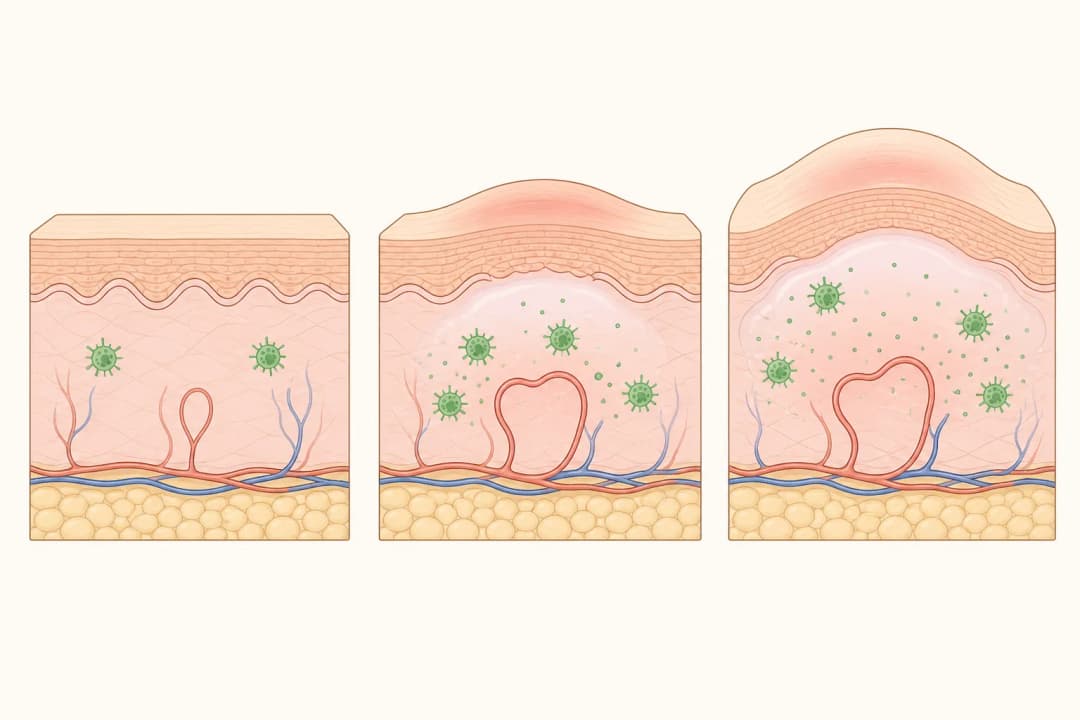
Hives are itchy, raised welts that can appear suddenly, change shape or location, and fade while new welts form elsewhere.
This answers one question. It is not a diagnosis and does not replace an assessment by a licensed doctor.
At a glance
- Typical appearance
- Raised, itchy welts with changing borders
- Movement over time
- Welts may fade as new ones appear elsewhere
- Emergency warning
- Breathing difficulty or throat and tongue swelling
How hives present
Individual welts may be pink, red, or close to the surrounding skin tone. They can be small or merge into broad irregular areas, and the centre may look paler than the edge. Pressure, heat, cold, exercise, infection, medicines, foods, or contact with an irritant can precede an episode, although a trigger is not always found.
Itching is common, and burning or stinging can occur. Swelling deeper under the skin, especially around the lips, eyelids, hands, feet, or throat, is called angioedema. Hives that keep returning over a longer period may need assessment for chronic hives.
What to do during an episode
Keep the skin cool, avoid rubbing, and choose loose clothing. Record foods, medicines, infections, heat, pressure, and activities around the onset so a clinician can look for a pattern. Do not stop a prescribed medicine without advice, even if you suspect it is involved.
A clinician may recommend oral antihistamine treatment and, in selected severe situations, a short course of oral corticosteroid treatment. Treatment choice depends on age, other medicines, pregnancy, and the symptoms involved.
When to seek urgent care
Call emergency services immediately for hives with trouble breathing, wheezing, throat or tongue swelling, faintness, confusion, or difficulty swallowing. These symptoms can indicate a serious allergic reaction. Seek prompt medical advice when individual marks stay fixed in one place, become painful or bruise-like, or come with fever or joint pain.
Questions for your doctor
Ask whether the pattern fits hives or another skin rash, whether swelling suggests angioedema, which triggers are worth recording, and which treatment is safe with your existing conditions and medicines.
Find care
General Clinics & Polyclinics in Abu Dhabi
That answer is general. If you want it applied to your own case, these are licensed general clinics & polyclinics listed in Abu Dhabi.
27 Ar Ruwwad St - Shakhbout City - MSH4 - Abu Dhabi - United Arab Emirates
Accepts: Daman, Thiqa, Cigna, MetLife +20 more
Al Ruwais, Al Dhafrah
Accepts: Daman, Thiqa, AXA, Cigna +16 more
Al Bahyah - Al Bahyah Old - Abu Dhabi - United Arab Emirates
Accepts: Daman, Thiqa, Cigna, Allianz Care +18 more
Abu Dhabi
Accepts: Daman, Thiqa, AXA, Cigna +27 more
Ordered by verification status and how complete each clinic's public record is, then alphabetically. This is a directory listing, not a ranking — Zavis does not rate or recommend providers.
A factual listing drawn from the DHA, DOH and MOHAP licence registers. It is not a referral, an endorsement, or advice that any of these providers is right for you.
Questions people ask
Do hives always have a known trigger?
No. Episodes can follow several physical or immune triggers, and sometimes no clear cause is identified.
Are hives and angioedema the same?
No. Hives affect the more superficial skin with raised welts, while angioedema is deeper swelling that can occur alongside them.
Related
Related reading
Keep reading
Medical disclaimer. This page is general health information, not medical advice, and it cannot diagnose you. Always consult a licensed healthcare provider about your own symptoms and treatment. In an emergency in the UAE, call 998 for an ambulance.