
What are the symptoms of sickle cell disease?
Short answer
Sickle cell disease may cause episodes of severe pain, fatigue, pale skin, jaundice, swelling of the hands or feet and repeated infections.
This answers one question. It is not a diagnosis and does not replace an assessment by a licensed doctor.
At a glance
- Common pattern
- Pain episodes alongside anaemia-related fatigue
- Useful test
- Blood test
Why these symptoms happen
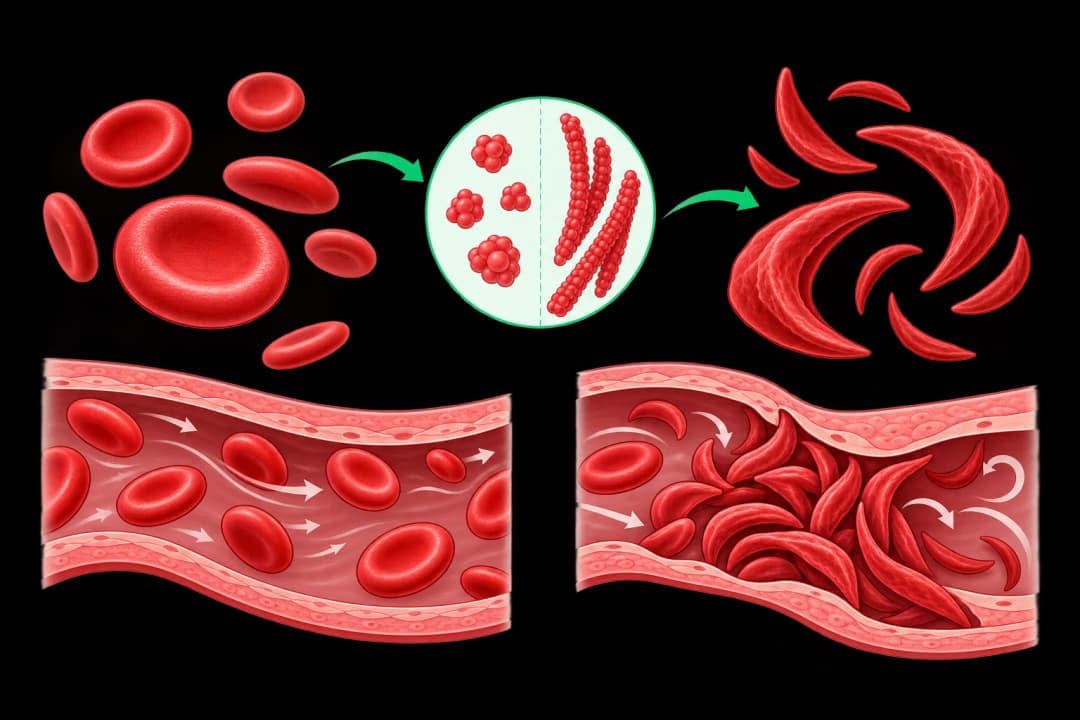
Sickle-shaped red blood cells can break down sooner than expected and may obstruct small blood vessels. Reduced oxygen delivery can contribute to tiredness, pale skin and shortness of breath. Breakdown of red cells can cause yellowing of the skin or eyes, known as jaundice.
Pain episodes may affect the bones, chest, abdomen or joints and can vary in intensity. Children may have painful swelling of the hands or feet. Blood in the urine, vision changes or recurrent infections can also occur and deserve medical review.
What to do about symptoms
Follow the person's sickle cell care plan, drink fluids as advised and use prescribed pain medicines according to instructions. Keep a record of pain episodes, fever, urine changes and other new symptoms to share with the care team.
A blood test can help confirm sickle cell disease or a carrier state. Premarital screening may identify inherited haemoglobin conditions before pregnancy planning. Results should be explained by a qualified clinician, especially when family planning is being considered.
When to seek urgent care
Get urgent medical help for severe or unusual pain, fever, chest pain, breathing difficulty, sudden weakness, confusion, a seizure, marked pallor, or symptoms of stroke. Seek prompt advice for persistent jaundice, blood in the urine or inability to drink.
Questions for your doctor
Ask which symptoms are expected for you, what belongs in your emergency plan, and when a blood test or specialist review is needed. If pregnancy is planned, ask about screening, inheritance and support for future children.
Find care
General Clinics & Polyclinics in Abu Dhabi
That answer is general. If you want it applied to your own case, these are licensed general clinics & polyclinics listed in Abu Dhabi.
27 Ar Ruwwad St - Shakhbout City - MSH4 - Abu Dhabi - United Arab Emirates
Accepts: Daman, Thiqa, Cigna, MetLife +20 more
Al Ruwais, Al Dhafrah
Accepts: Daman, Thiqa, AXA, Cigna +16 more
Al Bahyah - Al Bahyah Old - Abu Dhabi - United Arab Emirates
Accepts: Daman, Thiqa, Cigna, Allianz Care +18 more
Abu Dhabi
Accepts: Daman, Thiqa, AXA, Cigna +27 more
Ordered by verification status and how complete each clinic's public record is, then alphabetically. This is a directory listing, not a ranking — Zavis does not rate or recommend providers.
A factual listing drawn from the DHA, DOH and MOHAP licence registers. It is not a referral, an endorsement, or advice that any of these providers is right for you.
Questions people ask
Can sickle cell disease cause jaundice?
Yes. Faster breakdown of red blood cells can raise bilirubin and make the eyes or skin look yellow.
Is every episode of joint pain caused by sickle cell disease?
No. Joint pain has many possible causes; in someone with sickle cell disease, new or severe pain should be assessed using their care plan.
Related
Related reading
Keep reading
Medical disclaimer. This page is general health information, not medical advice, and it cannot diagnose you. Always consult a licensed healthcare provider about your own symptoms and treatment. In an emergency in the UAE, call 998 for an ambulance.