
What are the symptoms of polycystic ovary syndrome?
Short answer
Polycystic ovary syndrome may cause irregular periods, absent ovulation, excess facial hair, acne, scalp hair thinning and difficulty becoming pregnant.
This answers one question. It is not a diagnosis and does not replace an assessment by a licensed doctor.
At a glance
- Cycle sign
- Irregular or absent periods
- Androgen-related signs
- Excess facial hair, acne or scalp hair thinning
How PCOS presents
Polycystic ovary syndrome, or PCOS, is a hormonal condition that can affect ovulation and androgen activity. Periods may be widely spaced, unpredictable or absent, and some people have heavy bleeding when a period arrives. Excess facial or body hair, acne and thinning hair at the scalp can reflect increased androgen effects. Anovulation may make pregnancy harder, although PCOS does not mean pregnancy is impossible.
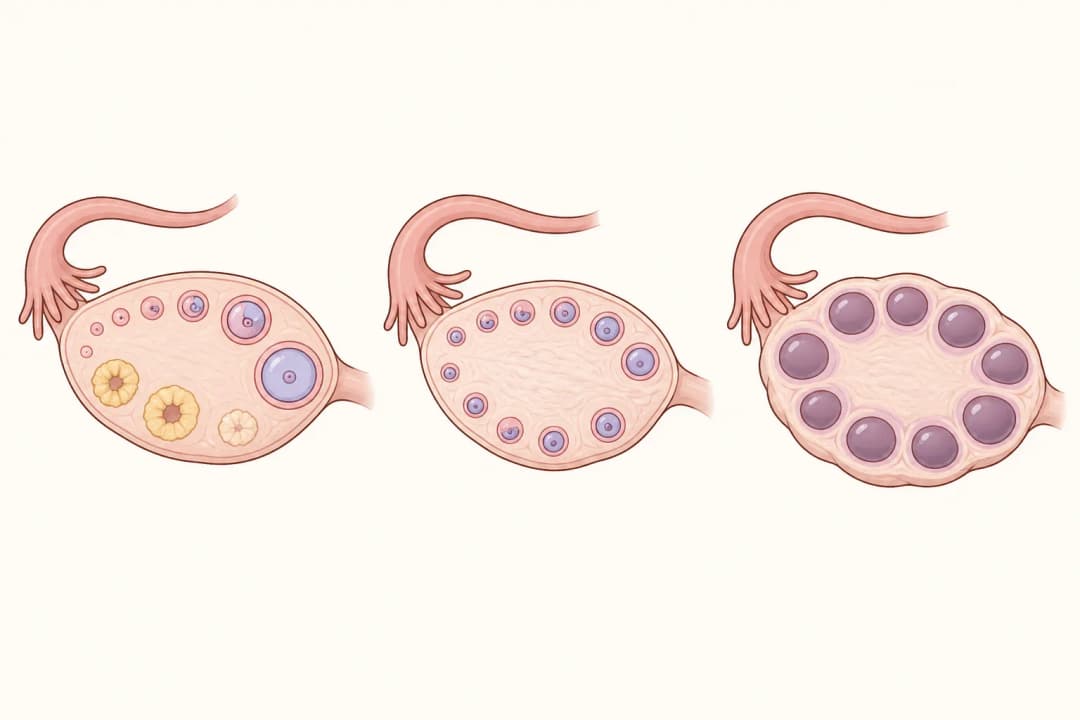
Symptoms vary: someone may have cycle changes without noticeable hair or skin changes, while another person may seek help for excess facial hair or fertility concerns. Diagnosis uses your history, examination and selected tests; an ultrasound finding alone does not establish PCOS.
Getting assessed
Book an appointment if periods are persistently irregular, facial hair or acne is changing, or pregnancy is taking longer than expected. Bring a record of cycles, bleeding, medicines and symptoms. A clinician may review blood pressure, hormone results and metabolic health. Treatment is tailored to whether your priority is cycle control, hair or skin symptoms, or pregnancy; options can include metformin for PCOS, ovulation induction or fertility care.
When to seek care promptly
Seek prompt assessment for sudden severe pelvic pain, fainting, very heavy bleeding, or rapid new changes in hair, voice or muscle. These are not typical reasons to wait for a routine PCOS review and may indicate another condition.
Questions for your appointment
Ask which features support PCOS, what other causes should be excluded, how to protect the womb lining when periods are infrequent, and which treatment matches your pregnancy plans.
Find care
General Clinics & Polyclinics in Abu Dhabi
That answer is general. If you want it applied to your own case, these are licensed general clinics & polyclinics listed in Abu Dhabi.
27 Ar Ruwwad St - Shakhbout City - MSH4 - Abu Dhabi - United Arab Emirates
Accepts: Daman, Thiqa, Cigna, MetLife +20 more
Al Ruwais, Al Dhafrah
Accepts: Daman, Thiqa, AXA, Cigna +16 more
Al Bahyah - Al Bahyah Old - Abu Dhabi - United Arab Emirates
Accepts: Daman, Thiqa, Cigna, Allianz Care +18 more
Abu Dhabi
Accepts: Daman, Thiqa, AXA, Cigna +27 more
Ordered by verification status and how complete each clinic's public record is, then alphabetically. This is a directory listing, not a ranking — Zavis does not rate or recommend providers.
A factual listing drawn from the DHA, DOH and MOHAP licence registers. It is not a referral, an endorsement, or advice that any of these providers is right for you.
Questions people ask
Does PCOS always cause ovarian cysts?
No. The name is misleading for some people; diagnosis considers symptoms, ovulation and hormone features rather than cysts alone.
Can someone with PCOS become pregnant?
Yes. Irregular ovulation can make conception harder, and treatments can support ovulation or fertility when appropriate.
Related
Related reading
Keep reading
Medical disclaimer. This page is general health information, not medical advice, and it cannot diagnose you. Always consult a licensed healthcare provider about your own symptoms and treatment. In an emergency in the UAE, call 998 for an ambulance.