
What are the symptoms of COPD?
Short answer
COPD often presents with ongoing cough, phlegm, wheezing, and shortness of breath that may worsen with activity.
This answers one question. It is not a diagnosis and does not replace an assessment by a licensed doctor.
At a glance
- Typical pattern
- Persistent cough, mucus, wheeze, and breathlessness
- Useful assessment
- Spirometry may measure airflow
- Urgent warning
- Rapidly worsening breathing or blue lips
How COPD can feel
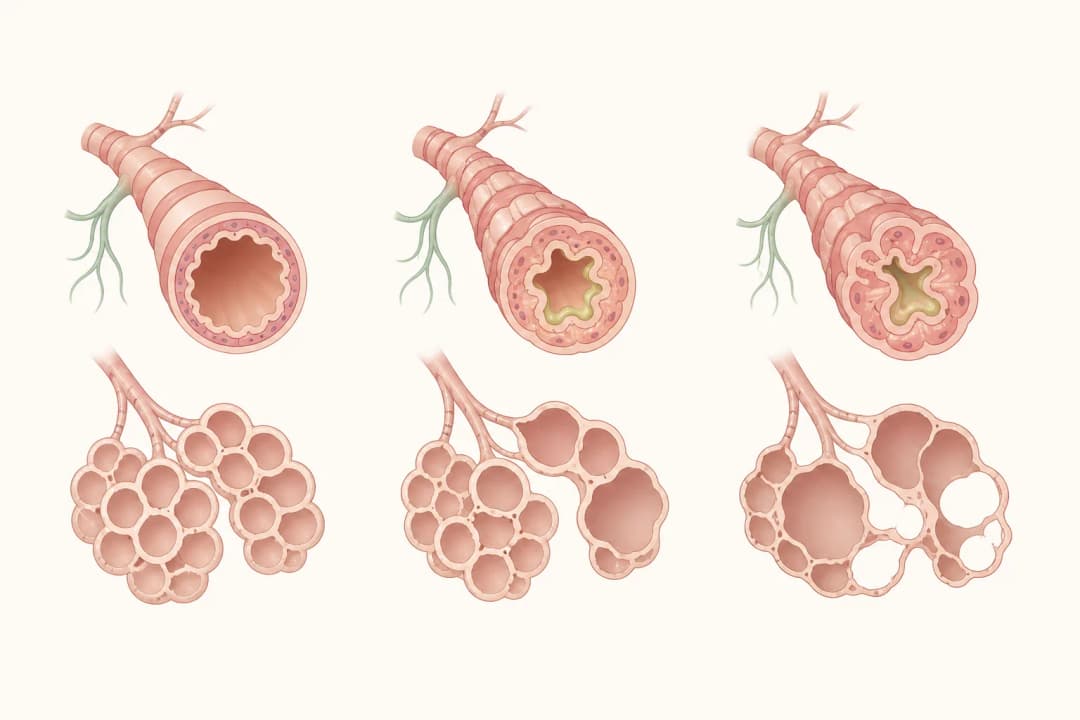
A cough may produce mucus, and breathing can sound wheezy or feel tight. Breathlessness may first appear during walking, stairs, or other exertion, then become more noticeable during ordinary activities. Some people tire easily or have repeated periods when cough and breathing symptoms suddenly worsen. Symptoms can overlap with asthma, chest infections, heart conditions, and other causes of breathlessness. A pattern over time, smoking or inhaled-irritant exposure, and examination help a clinician decide what testing is needed. COPD symptoms should not be self-diagnosed from a cough alone.
What to do next
Arrange a Chronic Disease Review or GP assessment if cough, phlegm, wheeze, or breathlessness keeps returning. Spirometry measures how air moves in and out of the lungs and may help clarify the cause. If you smoke, a Smoking Cessation Programme can support stopping. Prescribed Inhaler Therapy may ease airflow symptoms when a clinician considers it appropriate; use inhalers exactly as taught and have technique checked.
When breathing needs urgent help
Seek emergency help for severe or rapidly worsening breathlessness, inability to speak in full sentences, blue or grey lips, confusion, fainting, or chest pain. Prompt assessment is also needed when a usual cough suddenly becomes much worse, fever accompanies increased phlegm, or an inhaler prescribed for relief is not helping. Do not wait for a routine review if breathing is deteriorating.
Questions to discuss
Ask whether spirometry is suitable, what might be triggering symptoms, how to recognise a flare, and how to use each inhaler. Tell the clinician about smoking, workplace dust or fumes, activity limits, night symptoms, and changes in mucus.
Find care
General Clinics & Polyclinics in Abu Dhabi
That answer is general. If you want it applied to your own case, these are licensed general clinics & polyclinics listed in Abu Dhabi.
27 Ar Ruwwad St - Shakhbout City - MSH4 - Abu Dhabi - United Arab Emirates
Accepts: Daman, Thiqa, Cigna, MetLife +20 more
Al Ruwais, Al Dhafrah
Accepts: Daman, Thiqa, AXA, Cigna +16 more
Al Bahyah - Al Bahyah Old - Abu Dhabi - United Arab Emirates
Accepts: Daman, Thiqa, Cigna, Allianz Care +18 more
Abu Dhabi
Accepts: Daman, Thiqa, AXA, Cigna +27 more
Ordered by verification status and how complete each clinic's public record is, then alphabetically. This is a directory listing, not a ranking — Zavis does not rate or recommend providers.
A factual listing drawn from the DHA, DOH and MOHAP licence registers. It is not a referral, an endorsement, or advice that any of these providers is right for you.
Questions people ask
Is every long-term cough COPD?
No. Asthma, infection, reflux, allergies, and other conditions can cause cough, so assessment is needed.
Can COPD symptoms change from day to day?
Yes. Breathing symptoms may fluctuate, and a sudden sustained worsening can represent a flare that needs prompt advice.
Related
Related reading
Keep reading
Medical disclaimer. This page is general health information, not medical advice, and it cannot diagnose you. Always consult a licensed healthcare provider about your own symptoms and treatment. In an emergency in the UAE, call 998 for an ambulance.