
What are the risk factors for shingles?
Short answer
Shingles is more likely in people who previously had chickenpox, particularly as immune protection changes with age or illness.
This answers one question. It is not a diagnosis and does not replace an assessment by a licensed doctor.
At a glance
- Underlying virus
- Varicella-zoster virus left inactive after chickenpox
- Risk increases with
- Ageing or reduced immune protection
How shingles becomes possible
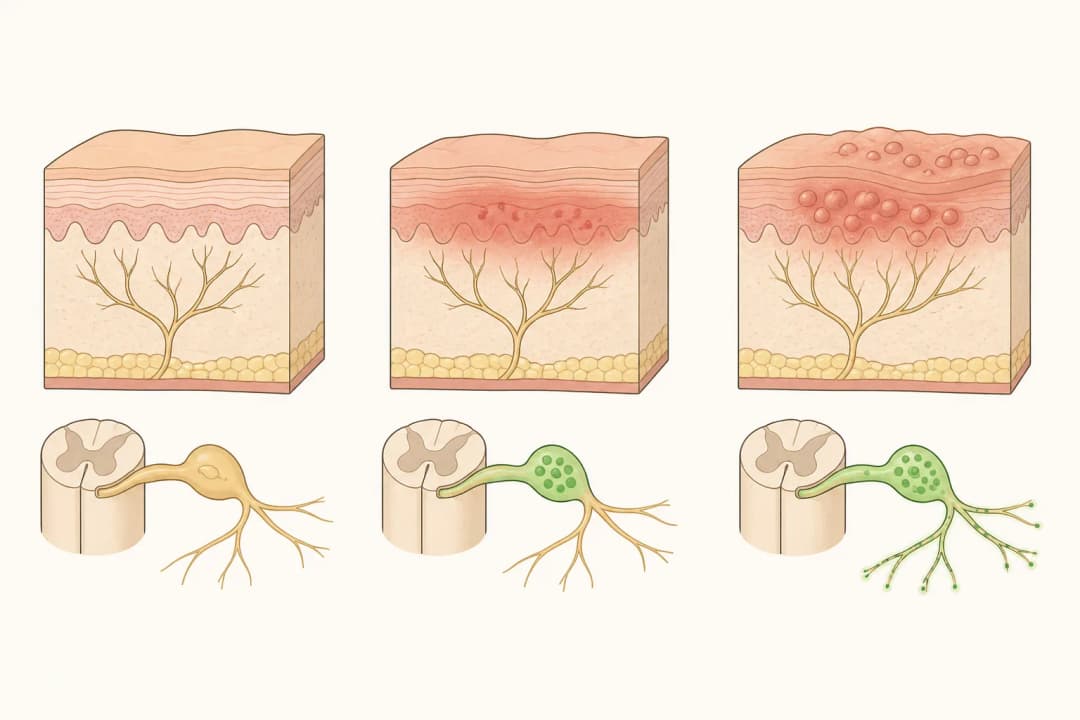
After chickenpox, the varicella-zoster virus remains inactive in nerve tissue. It can reactivate later as shingles when immune control is less effective. Risk rises with advancing age, a weakened immune system, or medicines that suppress immunity, such as some treatments for cancer, inflammatory disease, or after transplantation. Major physical stress or illness may coincide with reactivation, although many people cannot identify a single trigger. Having had chickenpox matters because shingles comes from reactivation; it is not a new episode of chickenpox.
What you can do
Ask a clinician whether shingles vaccination is appropriate for you, especially if you are in an older age group or have a condition or treatment that affects immunity. Keep a new blistering rash covered when possible, wash your hands, and avoid close contact with pregnant people who have not had chickenpox or vaccination, newborns, and people with weakened immunity until lesions crust. Do not share towels or clothing. Early medical assessment matters because antiviral treatment works best when started soon after symptoms begin.
When to seek urgent care
Contact a clinician promptly for one-sided burning pain, tingling, or a blistering rash, particularly if it is near the eye, nose, or ear. Urgent assessment is needed for eye pain, vision change, facial weakness, severe headache, confusion, or a widespread rash. People with weakened immunity should seek advice quickly even when the rash seems limited.
Questions for your doctor
Could my medicines or health condition affect my shingles risk? Am I eligible for vaccination? What should I do if a rash appears? How can I protect someone vulnerable at home?
Find care
General Clinics & Polyclinics in Abu Dhabi
That answer is general. If you want it applied to your own case, these are licensed general clinics & polyclinics listed in Abu Dhabi.
27 Ar Ruwwad St - Shakhbout City - MSH4 - Abu Dhabi - United Arab Emirates
Accepts: Daman, Thiqa, Cigna, MetLife +20 more
Al Ruwais, Al Dhafrah
Accepts: Daman, Thiqa, AXA, Cigna +16 more
Al Bahyah - Al Bahyah Old - Abu Dhabi - United Arab Emirates
Accepts: Daman, Thiqa, Cigna, Allianz Care +18 more
Abu Dhabi
Accepts: Daman, Thiqa, AXA, Cigna +27 more
Ordered by verification status and how complete each clinic's public record is, then alphabetically. This is a directory listing, not a ranking — Zavis does not rate or recommend providers.
A factual listing drawn from the DHA, DOH and MOHAP licence registers. It is not a referral, an endorsement, or advice that any of these providers is right for you.
Questions people ask
Can shingles happen without a known history of chickenpox?
A person may not remember childhood chickenpox, but shingles results from the same virus becoming active again.
Can shingles spread like chickenpox?
Shingles itself is not passed from person to person, but fluid from blisters can transmit the virus to someone without immunity.
Related
Related reading
Keep reading
Medical disclaimer. This page is general health information, not medical advice, and it cannot diagnose you. Always consult a licensed healthcare provider about your own symptoms and treatment. In an emergency in the UAE, call 998 for an ambulance.