
What are the risk factors for diabetic foot ulcer?
Short answer
The main risk factors for a diabetic foot ulcer are reduced foot sensation, diabetes-related circulation problems, previous ulcers, foot deformity, skin injury and difficulty checking or caring for the feet.
This answers one question. It is not a diagnosis and does not replace an assessment by a licensed doctor.
At a glance
- Key nerve risk
- Reduced sensation can hide pressure, heat or cuts.
- Daily habit
- Inspect both feet and inside your shoes.
- Prompt review
- Any diabetic foot wound needs professional assessment.
How risk can build
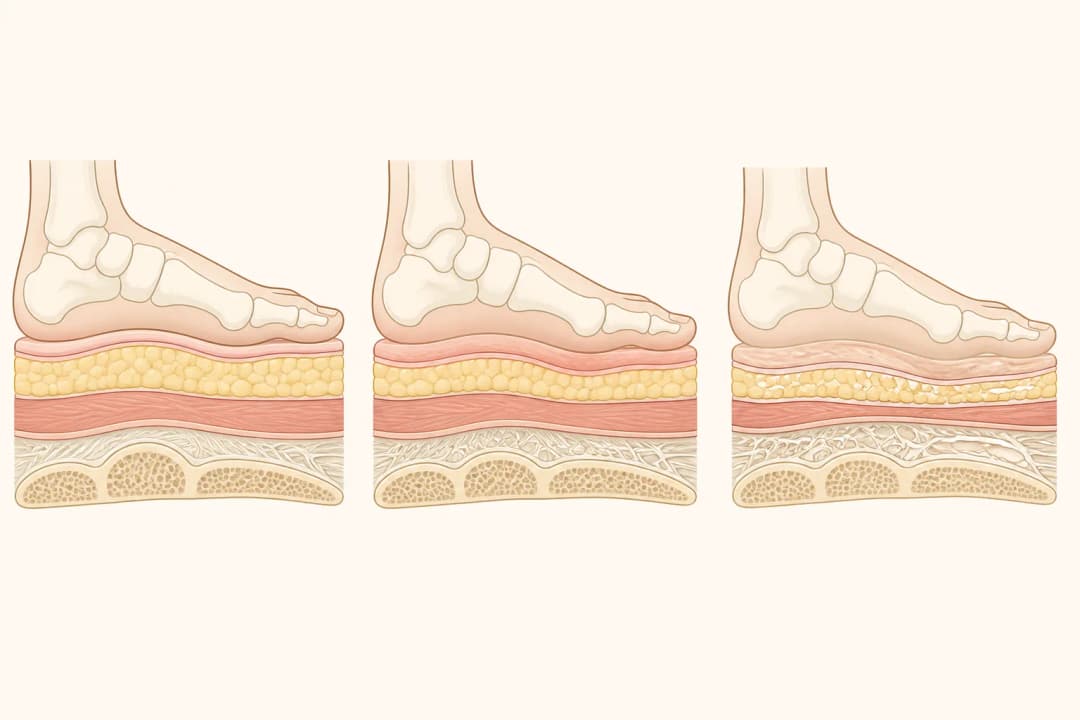
High blood glucose over time can affect nerves and blood vessels. Peripheral neuropathy may reduce the ability to feel heat, pressure, a blister or a small cut, so an injury can go unnoticed. Poor circulation can slow delivery of oxygen and healing materials to the skin.
Risk is also higher after a previous ulcer or amputation, with thickened nails, calluses, cracked skin, a change in foot shape, unsuitable shoes, walking barefoot, smoking, or an infection. Vision or movement problems may make daily foot checks harder. Having a risk factor does not mean an ulcer will develop.
Ways to protect your feet
Check both feet each day, including the soles and between the toes, for redness, swelling, warmth, cracks, blisters or drainage. Use a mirror or ask someone to help if you cannot see clearly. Wash gently, dry carefully, moisturise dry skin but keep cream between the toes, and wear well-fitting shoes and clean socks.
Do not cut corns or calluses yourself or use chemical corn treatments. Arrange regular diabetes and foot reviews, and ask about a safe nail-care plan. Better blood glucose control, stopping smoking and treating blood pressure or cholesterol can support circulation and healing.
When to seek care
Contact a healthcare professional promptly for any open area, blister, cut, colour change, swelling, warmth, pus, bad smell or new pain in a diabetic foot, even if sensation is reduced. Seek urgent care for spreading redness, fever, severe swelling, blackened skin, confusion or feeling acutely unwell. Do not wait for an injury to become painful.
Questions for your doctor
Ask: How often should my feet be examined? Do I have reduced sensation or circulation? Which shoes are suitable for me? What should I do if I find a blister or wound? Do I need a podiatry referral or a personalised foot-care plan?
Find care
General Clinics & Polyclinics in Abu Dhabi
That answer is general. If you want it applied to your own case, these are licensed general clinics & polyclinics listed in Abu Dhabi.
27 Ar Ruwwad St - Shakhbout City - MSH4 - Abu Dhabi - United Arab Emirates
Accepts: Daman, Thiqa, Cigna, MetLife +20 more
Al Ruwais, Al Dhafrah
Accepts: Daman, Thiqa, AXA, Cigna +16 more
Al Bahyah - Al Bahyah Old - Abu Dhabi - United Arab Emirates
Accepts: Daman, Thiqa, Cigna, Allianz Care +18 more
Abu Dhabi
Accepts: Daman, Thiqa, AXA, Cigna +27 more
Ordered by verification status and how complete each clinic's public record is, then alphabetically. This is a directory listing, not a ranking — Zavis does not rate or recommend providers.
A factual listing drawn from the DHA, DOH and MOHAP licence registers. It is not a referral, an endorsement, or advice that any of these providers is right for you.
Questions people ask
Can a small blister become a diabetic foot ulcer?
Yes. Repeated pressure, reduced sensation or poor healing can allow a small blister to worsen, so arrange prompt advice and keep pressure off the area.
Does a lack of foot pain make an injury less serious?
No. Nerve damage can reduce pain, while tissue injury or infection still progresses. Look for visual changes and seek medical advice.
Related
Related reading
Keep reading
Medical disclaimer. This page is general health information, not medical advice, and it cannot diagnose you. Always consult a licensed healthcare provider about your own symptoms and treatment. In an emergency in the UAE, call 998 for an ambulance.