
What Are the First Signs of Rotator Cuff Tendinitis?
Short answer
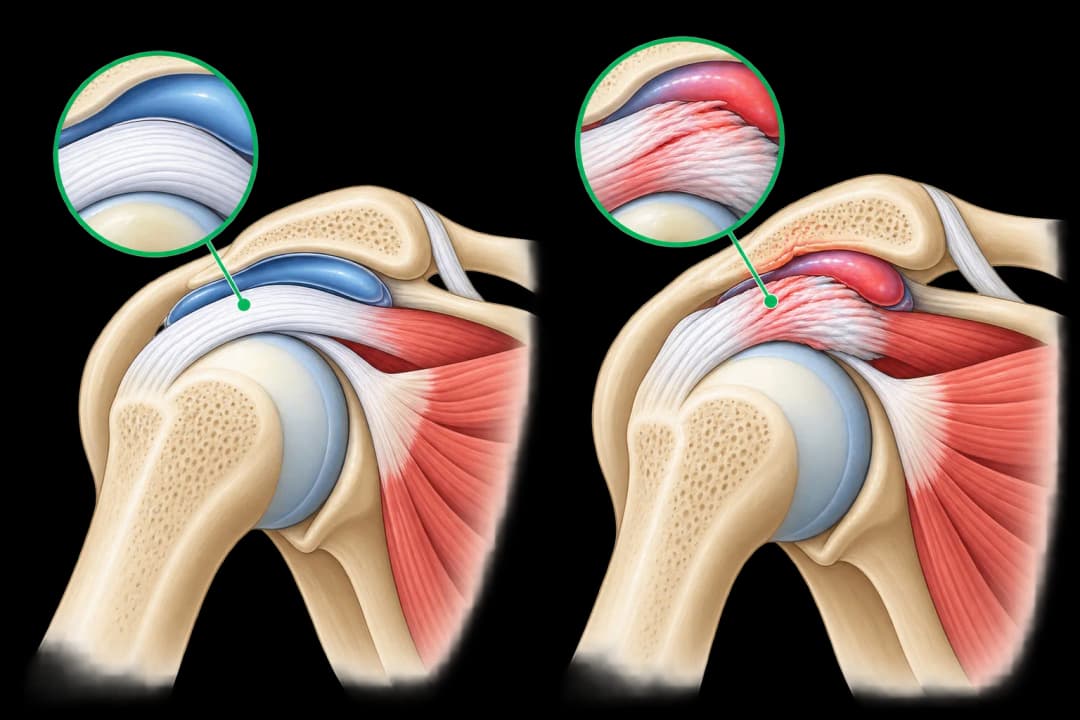
The first signs of rotator cuff tendinitis are a gradually increasing shoulder ache and pain when lifting, reaching, or lying on that side.
This answers one question. It is not a diagnosis and does not replace an assessment by a licensed doctor.
At a glance
- Typical onset
- Gradual discomfort linked to shoulder use
- Common trigger
- Lifting or repeated overhead reaching
How it may feel
The rotator cuff tendons help centre the upper arm bone while the shoulder moves. Repeated overhead work, sport, or a sudden increase in activity can irritate these tissues. Early discomfort may appear during a particular arc of lifting, when reaching behind your back, or after activity rather than at rest. The shoulder may feel tender at its outer or front portion. Pain can disturb sleep if you roll onto that side. Tendinitis usually does not create the sudden loss of strength associated with a major acute injury, though pain can temporarily make the arm feel weak.
Practical steps
Temporarily reduce repetitive overhead tasks and keep loads close to your body. Gentle, comfortable movement is usually more useful than holding the shoulder completely still. Note which activities trigger pain and whether symptoms improve with rest. Physiotherapy can guide mobility and strengthening, while exercise therapy may build shoulder control gradually. If symptoms remain troublesome, a clinician can discuss other options, including shockwave therapy, based on the examination.
When to seek care
Arrange an assessment when pain persists, worsens, limits sleep, or interferes with dressing and work. Seek prompt care after trauma if the arm suddenly becomes very weak, visibly deformed, numb, or impossible to lift. A hot, swollen joint or fever also needs timely medical review.
Questions for your doctor
Which movements are irritating the tendon? What exercises can I start safely? How can we distinguish tendinitis from a frozen shoulder or rotator cuff tear?
Find care
General Clinics & Polyclinics in Abu Dhabi
That answer is general. If you want it applied to your own case, these are licensed general clinics & polyclinics listed in Abu Dhabi.
27 Ar Ruwwad St - Shakhbout City - MSH4 - Abu Dhabi - United Arab Emirates
Accepts: Daman, Thiqa, Cigna, MetLife +20 more
Al Ruwais, Al Dhafrah
Accepts: Daman, Thiqa, AXA, Cigna +16 more
Al Bahyah - Al Bahyah Old - Abu Dhabi - United Arab Emirates
Accepts: Daman, Thiqa, Cigna, Allianz Care +18 more
Abu Dhabi
Accepts: Daman, Thiqa, AXA, Cigna +27 more
Ordered by verification status and how complete each clinic's public record is, then alphabetically. This is a directory listing, not a ranking — Zavis does not rate or recommend providers.
A factual listing drawn from the DHA, DOH and MOHAP licence registers. It is not a referral, an endorsement, or advice that any of these providers is right for you.
Questions people ask
Should I keep exercising with shoulder tendinitis?
Gentle movement may be suitable, but reduce exercises that reproduce sharp pain and obtain guidance for strengthening.
Is rotator cuff tendinitis the same as a tear?
No. Tendinitis involves irritated tendon tissue; a tear is a structural split, and symptoms can overlap.
Related
Related reading
Keep reading
Medical disclaimer. This page is general health information, not medical advice, and it cannot diagnose you. Always consult a licensed healthcare provider about your own symptoms and treatment. In an emergency in the UAE, call 998 for an ambulance.