
What are the alternatives to sacrocolpopexy?
Short answer
Alternatives to sacrocolpopexy include observation, pelvic floor rehabilitation, a vaginal pessary and other prolapse repair operations.
This answers one question. It is not a diagnosis and does not replace an assessment by a licensed doctor.
At a glance
- Non-surgical choices
- Observation, rehabilitation and a vaginal pessary
- Surgical comparison
- The operation depends on the prolapse location and support needs
Understanding the choices
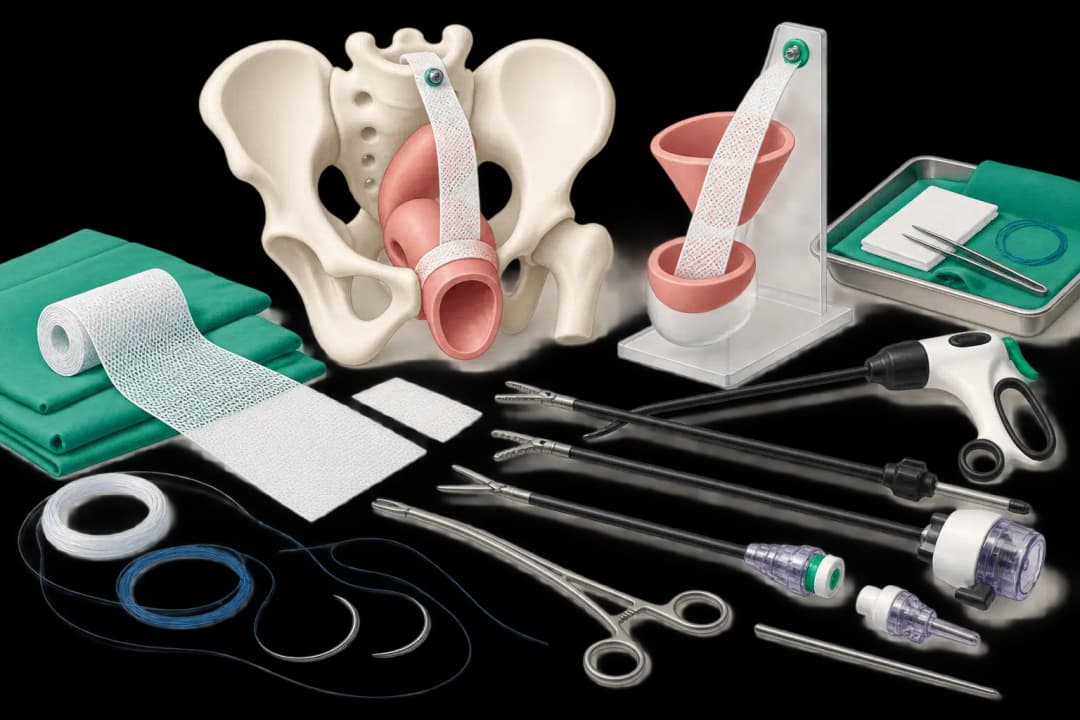
Sacrocolpopexy suspends prolapsed vaginal or uterine tissue using an abdominal route and surgical support material. It may be considered when the prolapse pattern, previous treatment and need for durable support make it suitable. It is not the only way to manage pelvic organ prolapse.
A vaginal pessary supports the prolapse from inside the vagina and can be removed for cleaning and review. Observation may suit someone whose symptoms are limited. Pelvic floor rehabilitation can improve muscle coordination and help with bladder or bowel habits, although it does not reposition every prolapsed organ. Pelvic floor repair surgery is another surgical approach; the technique depends on whether the bladder, vaginal wall, uterus or another structure is involved. Ask specifically whether surgical mesh is proposed and why.
Making an informed plan
Describe the pressure, bulge, urinary changes, bowel emptying difficulty and effect on exercise or intimacy. Tell the surgeon about previous prolapse procedures, pregnancy plans, medical conditions and whether avoiding abdominal surgery matters to you.
Compare recovery, follow-up, possible need for a pessary change and the chance that symptoms from another compartment may remain. If a pessary is chosen, fitting and ongoing checks are part of the plan. If surgery is proposed, ask what material is used, where it is placed and how complications would be managed.
When to get urgent help
Seek urgent care for inability to pass urine or stool, severe or sudden pelvic pain, heavy bleeding, fever, foul-smelling discharge or a prolapse that is very painful and cannot be gently reduced. After surgery, worsening pain, fever, wound concerns or difficulty urinating also need prompt clinical advice.
Questions for your doctor
Which type of prolapse do I have? Could a pessary or rehabilitation meet my goals? How would pelvic floor repair surgery compare with sacrocolpopexy for my anatomy? Is surgical mesh involved, and what follow-up would I need?
Find care
General Clinics & Polyclinics in Abu Dhabi
That answer is general. If you want it applied to your own case, these are licensed general clinics & polyclinics listed in Abu Dhabi.
27 Ar Ruwwad St - Shakhbout City - MSH4 - Abu Dhabi - United Arab Emirates
Accepts: Daman, Thiqa, Cigna, MetLife +20 more
Al Ruwais, Al Dhafrah
Accepts: Daman, Thiqa, AXA, Cigna +16 more
Al Bahyah - Al Bahyah Old - Abu Dhabi - United Arab Emirates
Accepts: Daman, Thiqa, Cigna, Allianz Care +18 more
Abu Dhabi
Accepts: Daman, Thiqa, AXA, Cigna +27 more
Ordered by verification status and how complete each clinic's public record is, then alphabetically. This is a directory listing, not a ranking — Zavis does not rate or recommend providers.
A factual listing drawn from the DHA, DOH and MOHAP licence registers. It is not a referral, an endorsement, or advice that any of these providers is right for you.
Questions people ask
Can a pessary be used instead of sacrocolpopexy?
Yes, a pessary may support symptoms for some people, provided it fits comfortably and is reviewed as advised.
Does pelvic floor rehabilitation remove a prolapse?
It can improve muscle control and symptom management, but it may not restore the position of a prolapsed organ.
Related
Related reading
Keep reading
Medical disclaimer. This page is general health information, not medical advice, and it cannot diagnose you. Always consult a licensed healthcare provider about your own symptoms and treatment. In an emergency in the UAE, call 998 for an ambulance.