
What should you know about urothelial carcinoma cystoscopy?
Short answer
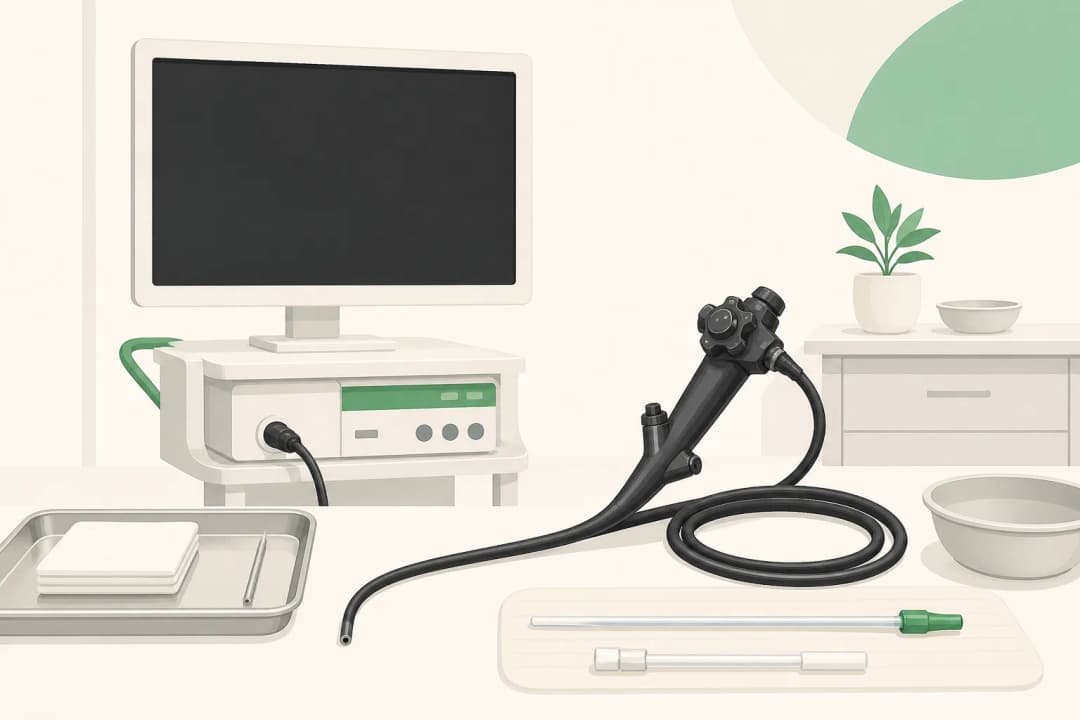
Cystoscopy gives a urologist a direct view of the bladder lining and can help assess, sample, or monitor suspected or known urothelial carcinoma.
This answers one question. It is not a diagnosis and does not replace an assessment by a licensed doctor.
At a glance
- Disease context
- Urothelial carcinoma can involve the bladder lining
- What cystoscopy provides
- A direct visual examination
- Possible next step
- Biopsy, removal, treatment, or monitoring may be discussed
What the camera may reveal
Urothelial carcinoma begins in cells lining parts of the urinary tract, including the bladder. During cystoscopy, the urologist looks for raised, flat, fragile, or otherwise unusual areas and records their location and appearance. The view can guide a biopsy or a procedure to remove visible tissue, but the final diagnosis and features of a tumour depend on laboratory examination. Cystoscopy may also be repeated to check the bladder after treatment because new or returning changes can require review.
Preparing for assessment or follow-up
Bring an up-to-date medicine list and tell the team about urinary infection symptoms, allergies, blood-thinning medicines, and previous procedures. Ask whether the visit is for inspection only or could include tissue sampling, and whether you need local or another anaesthetic. Plan around the clinic's recovery advice. Temporary stinging, urgency, or a small amount of blood may occur after the examination; follow the discharge instructions closely.
Symptoms needing prompt attention
Contact the care team promptly if you have fever, chills, worsening pain, heavy bleeding, clots, or difficulty passing urine. These symptoms can indicate infection, bleeding, or blockage and should be assessed. Seek emergency help if you become severely unwell or cannot urinate.
Questions about the next step
Ask what the cystoscopy showed, whether tissue was collected, when pathology findings will be discussed, and whether further imaging or treatment is expected. Ask how often follow-up is planned for your situation and which symptoms should prompt an earlier review.
Questions people ask
Does a cystoscopy alone stage urothelial carcinoma?
No. Staging may require tissue findings, imaging, and other clinical information in addition to the camera examination.
Why might cystoscopy be repeated?
Repeat examinations can monitor the bladder lining after an earlier abnormal finding or treatment and identify changes that need review.
Related
Related reading
Keep reading
Cancer care in the UAE
Hospitals & Medical Centers in Abu Dhabi
Most UAE cancer care is delivered inside hospital services rather than by standalone oncology clinics, so these are licensed hospitals & medical centers listed in Abu Dhabi. Confirm the specific cancer service exists before you travel, and know that asking for a second opinion is routine.
Ahalia Hospital Musaffah Building - Musaffah - Musaffah Industrial - Abu Dhabi - United Arab Emirates
Accepts: Daman, Thiqa, AXA, Cigna +26 more
Al Ruwais Industrial City - Abu Dhabi - United Arab Emirates
Accepts: Daman, Thiqa, AXA, Cigna +30 more
Abu Dhabi, Abu Dhabi
Accepts: Daman, Thiqa, AXA, Cigna +30 more
Second opinions are routine in cancer care and asking for one does not affect your treatment. How to arrange a second opinion in the UAE.
Ordered by verification status and how complete each clinic's public record is, then alphabetically. This is a directory listing, not a ranking — Zavis does not rate or recommend providers.
A factual listing drawn from the DHA, DOH and MOHAP licence registers. It is not a referral, an endorsement, or advice that any of these providers is right for you.
Medical disclaimer. This page is general health information, not medical advice, and it cannot diagnose you. Always consult a licensed healthcare provider about your own symptoms and treatment. In an emergency in the UAE, call 998 for an ambulance.