
What should you know about a urine routine and culture test?
Short answer
A urine routine and culture test combines rapid urine analysis with laboratory growth testing to investigate infection and other urinary changes.
This answers one question. It is not a diagnosis and does not replace an assessment by a licensed doctor.
At a glance
- Routine part
- Rapid chemical and visual checks
- Culture part
- Looks for organism growth
- Before testing
- Mention recent antibiotics
Routine findings and culture results
Routine analysis can identify blood, protein, white cells, nitrite and other chemical or visual changes. Culture places part of the specimen in conditions where bacteria or other organisms may grow. The report may say that no growth was detected, or may identify an organism and describe which medicines are likely to work. A negative culture does not explain every urinary symptom, and prior antibiotics can affect growth. Contamination is possible when skin bacteria enter the cup.
Giving a useful specimen
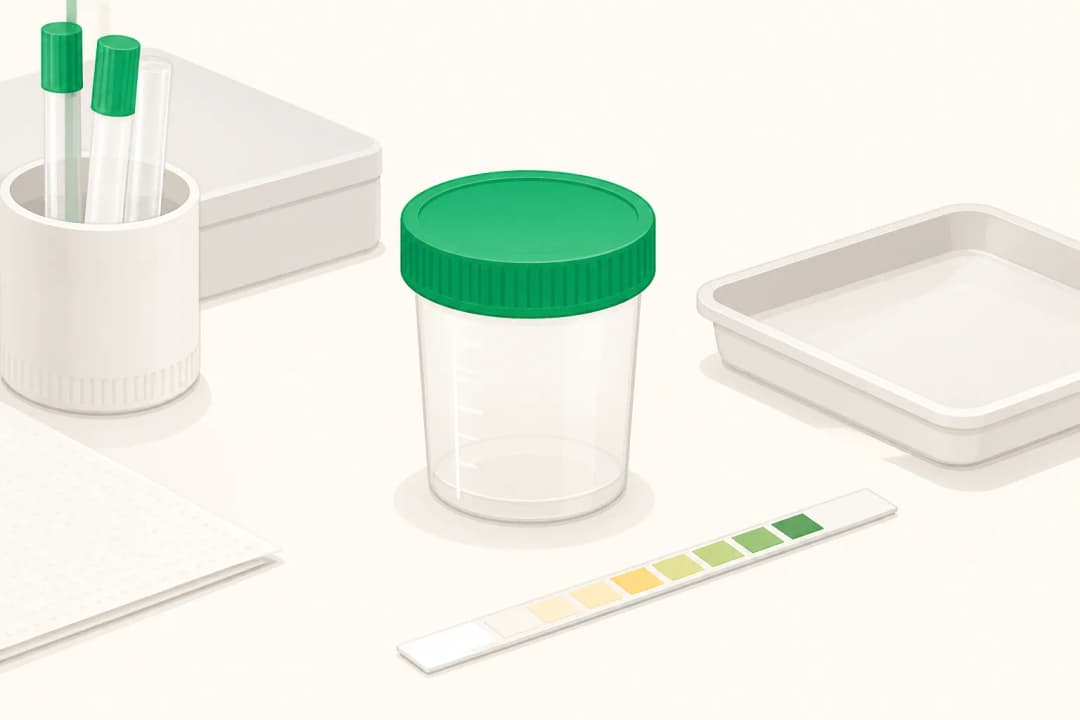
Wash your hands, use the sterile cup provided, and follow the clinic’s instructions. Collect a midstream sample if requested and deliver it within the advised time. Tell the clinician if you have already taken antibiotics, because this may alter the culture. Do not start, stop or change an antibiotic based only on a home interpretation. Read more about a [Urine Test](/treatments/diagnostics-and-screening/urine-test/) and [Antibiotic Treatment](/treatments/medical-management/antibiotic-treatment/).
When to seek care quickly
Seek prompt assessment for fever, chills, flank pain, repeated vomiting, marked weakness, confusion or difficulty passing urine. Urinary symptoms with back or side pain can signal infection involving the kidneys. A [Kidney Infection](/conditions/kidney-infection/) needs timely clinical attention, especially during pregnancy or when kidney function is already reduced.
Useful questions
Ask when the culture result will be ready, whether the sample might be contaminated, and whether treatment depends on the organism and susceptibility report. Ask what to do if symptoms continue despite a result showing no growth.
Find care
General Clinics & Polyclinics in Abu Dhabi
That answer is general. If you want it applied to your own case, these are licensed general clinics & polyclinics listed in Abu Dhabi.
27 Ar Ruwwad St - Shakhbout City - MSH4 - Abu Dhabi - United Arab Emirates
Accepts: Daman, Thiqa, Cigna, MetLife +20 more
Al Ruwais, Al Dhafrah
Accepts: Daman, Thiqa, AXA, Cigna +16 more
Al Bahyah - Al Bahyah Old - Abu Dhabi - United Arab Emirates
Accepts: Daman, Thiqa, Cigna, Allianz Care +18 more
Abu Dhabi
Accepts: Daman, Thiqa, AXA, Cigna +27 more
Ordered by verification status and how complete each clinic's public record is, then alphabetically. This is a directory listing, not a ranking — Zavis does not rate or recommend providers.
A factual listing drawn from the DHA, DOH and MOHAP licence registers. It is not a referral, an endorsement, or advice that any of these providers is right for you.
Questions people ask
Can culture and routine results disagree?
Yes. Symptoms, collection quality and recent treatment can make the two parts look different, so a clinician interprets them together.
Should antibiotics wait for culture?
That depends on symptoms, examination and clinical risk. A clinician may treat before the final culture when infection is a concern.
Related
Related reading
Keep reading
Medical disclaimer. This page is general health information, not medical advice, and it cannot diagnose you. Always consult a licensed healthcare provider about your own symptoms and treatment. In an emergency in the UAE, call 998 for an ambulance.