
What should you know about urine chemistry test?
Short answer
A urine chemistry test checks substances in urine and helps clinicians interpret symptoms, hydration, and possible disease.
This answers one question. It is not a diagnosis and does not replace an assessment by a licensed doctor.
At a glance
- Sample
- Usually a clean urine sample
- Interpretation
- Results are read with symptoms and history
What the test examines
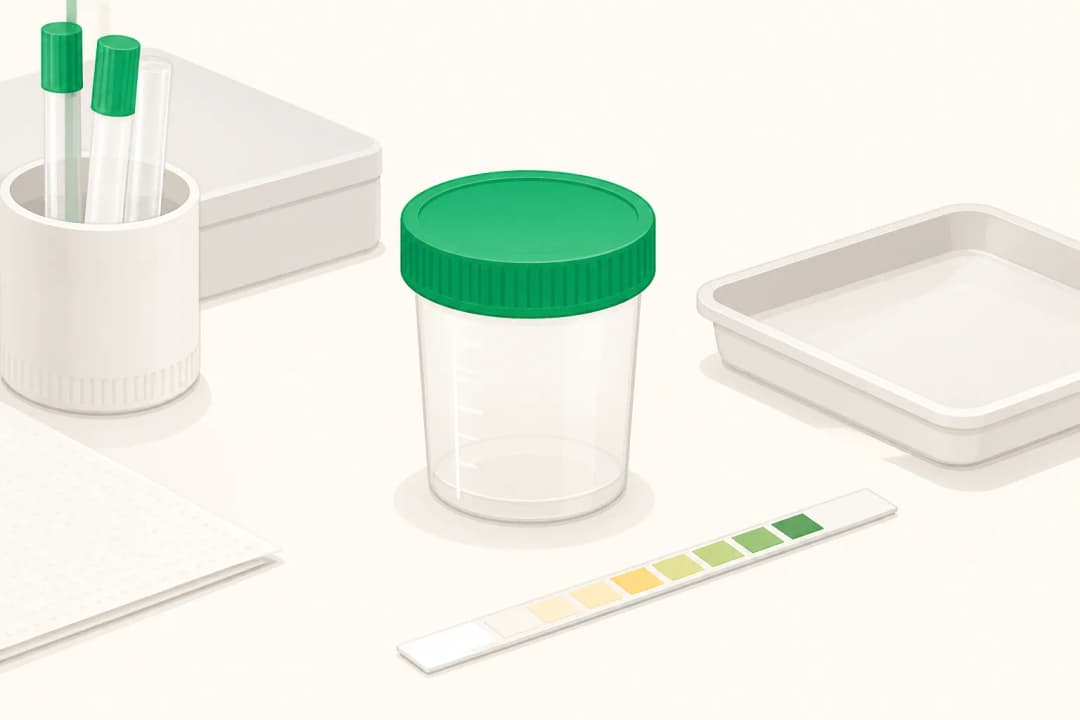
A urine sample may be assessed for acidity, concentration, glucose, protein, blood-related markers, ketones, and signs associated with infection. A dipstick can provide an initial result; a laboratory may add microscopy or culture when the clinical picture calls for it. An unusual result is interpreted alongside symptoms, medicines, fluid intake, and medical history. The test can support evaluation of a urinary tract infection, kidney infection, or urinary symptoms related to an enlarged prostate, but it does not by itself establish every diagnosis.
Preparing and giving a sample
Follow the collection instructions and use a clean container. A midstream sample may reduce contamination: begin urinating, collect the sample, then finish in the toilet. Tell the clinician about menstruation, supplements, medicines, and recent strenuous activity because these can affect interpretation. Deliver the sample as directed, since delays can change some findings.
When to seek care
Contact a clinician to discuss unexpected results, especially with burning, frequent urination, blood, swelling, or changes in urine output. Seek urgent care for fever with flank pain, repeated vomiting, confusion, or inability to pass urine. A result suggesting infection may lead to a culture or treatment decision rather than an automatic prescription.
Questions for your doctor
Ask which markers were abnormal, whether contamination could explain them, and whether repeat testing or culture is needed. Clarify how your medicines and symptoms affect the result and when you should expect follow-up.
Find care
General Clinics & Polyclinics in Abu Dhabi
That answer is general. If you want it applied to your own case, these are licensed general clinics & polyclinics listed in Abu Dhabi.
27 Ar Ruwwad St - Shakhbout City - MSH4 - Abu Dhabi - United Arab Emirates
Accepts: Daman, Thiqa, Cigna, MetLife +20 more
Al Ruwais, Al Dhafrah
Accepts: Daman, Thiqa, AXA, Cigna +16 more
Al Bahyah - Al Bahyah Old - Abu Dhabi - United Arab Emirates
Accepts: Daman, Thiqa, Cigna, Allianz Care +18 more
Abu Dhabi
Accepts: Daman, Thiqa, AXA, Cigna +27 more
Ordered by verification status and how complete each clinic's public record is, then alphabetically. This is a directory listing, not a ranking — Zavis does not rate or recommend providers.
A factual listing drawn from the DHA, DOH and MOHAP licence registers. It is not a referral, an endorsement, or advice that any of these providers is right for you.
Questions people ask
Does a urine chemistry test diagnose infection?
It can suggest infection, but symptoms and sometimes culture are needed to decide what the result means.
Can medicines affect the result?
Yes. Tell the clinician about medicines and supplements before the sample is interpreted.
Related
Related reading
Keep reading
Medical disclaimer. This page is general health information, not medical advice, and it cannot diagnose you. Always consult a licensed healthcare provider about your own symptoms and treatment. In an emergency in the UAE, call 998 for an ambulance.