
What should you know about urinalysis for uti?
Short answer
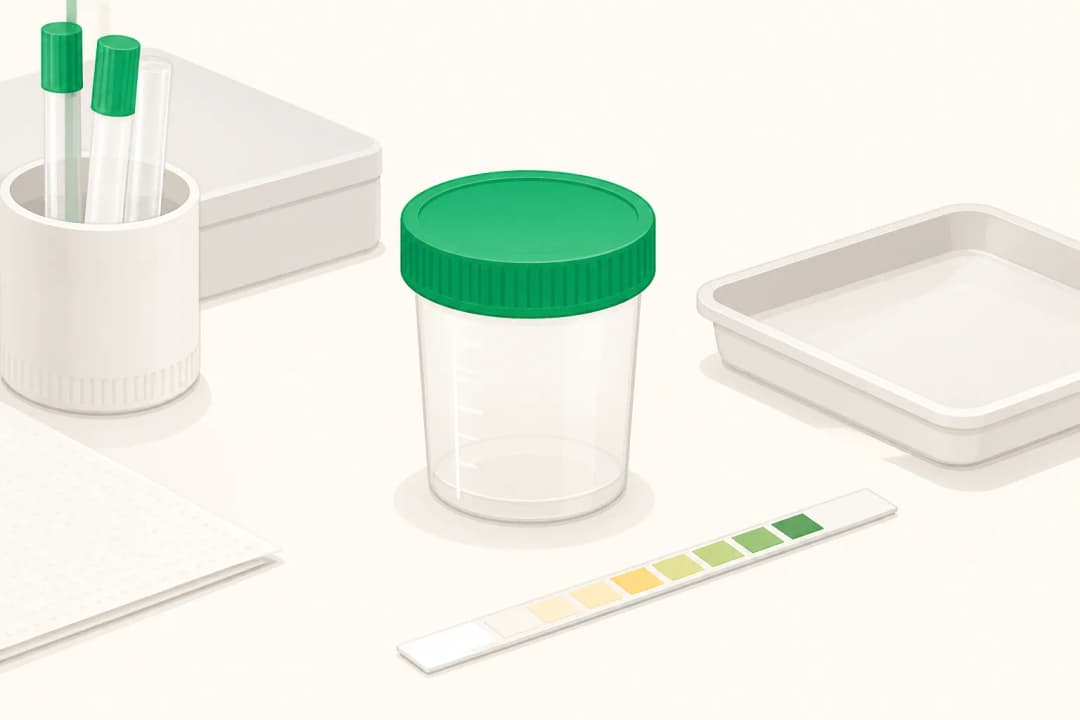
Urinalysis can support a urinary tract infection diagnosis by checking urine for inflammation, blood, and signs of bacteria.
This answers one question. It is not a diagnosis and does not replace an assessment by a licensed doctor.
At a glance
- Looks for
- Inflammation, blood, and chemical signs associated with infection
- Sample
- A clean-catch urine specimen when possible
- Treatment
- The cause and clinical picture guide treatment
How to read the result
A urine sample may be assessed for white blood cells, red blood cells, nitrites, leukocyte esterase, bacteria, concentration, and appearance. These findings can support infection, but no single result proves the cause. Symptoms such as burning, frequent urination, urgency, or lower abdominal discomfort help clinicians interpret the sample. A urine culture may be considered when symptoms are persistent, recurrent, severe, or occur during pregnancy. A urinary tract infection can sometimes extend to the kidneys, where fever, chills, side or back pain, nausea, or vomiting need prompt attention.
What to do after testing
Collect a clean-catch sample when instructed: wash as directed, start urinating, then collect the middle portion without touching the inside of the container. Tell the clinician about symptoms, pregnancy, allergies, recent antibiotics, and previous urine infections. Drink normally unless your clinician has given different advice. If antibiotic treatment is prescribed, take it exactly as directed and ask what to do if symptoms do not improve. Do not use leftover antibiotics or share them.
When to seek care quickly
Arrange prompt medical assessment for fever, shaking chills, pain in the side or back, vomiting, visible blood in urine, worsening symptoms, or feeling very unwell. Pregnancy, childhood, older age, a urinary catheter, or a weakened immune system can change how urgently symptoms should be assessed. Seek emergency help for confusion, collapse, severe weakness, or trouble breathing.
Questions to ask
Do my symptoms and urine findings support infection? Do I need a culture? When should I expect improvement? Which warning signs mean I should return urgently?
Find care
General Clinics & Polyclinics in Abu Dhabi
That answer is general. If you want it applied to your own case, these are licensed general clinics & polyclinics listed in Abu Dhabi.
27 Ar Ruwwad St - Shakhbout City - MSH4 - Abu Dhabi - United Arab Emirates
Accepts: Daman, Thiqa, Cigna, MetLife +20 more
Al Ruwais, Al Dhafrah
Accepts: Daman, Thiqa, AXA, Cigna +16 more
Al Bahyah - Al Bahyah Old - Abu Dhabi - United Arab Emirates
Accepts: Daman, Thiqa, Cigna, Allianz Care +18 more
Abu Dhabi
Accepts: Daman, Thiqa, AXA, Cigna +27 more
Ordered by verification status and how complete each clinic's public record is, then alphabetically. This is a directory listing, not a ranking — Zavis does not rate or recommend providers.
A factual listing drawn from the DHA, DOH and MOHAP licence registers. It is not a referral, an endorsement, or advice that any of these providers is right for you.
Questions people ask
Can a urinalysis miss a urinary tract infection?
It can be inconclusive, particularly after antibiotics or when symptoms and findings do not match, so follow-up testing may be needed.
Can cloudy urine confirm infection?
No. Cloudiness has several possible causes and must be interpreted with symptoms and other urine findings.
Related
Related reading
Keep reading
Medical disclaimer. This page is general health information, not medical advice, and it cannot diagnose you. Always consult a licensed healthcare provider about your own symptoms and treatment. In an emergency in the UAE, call 998 for an ambulance.