
What should you know about urethral melanoma?
Short answer
Urethral melanoma is an uncommon cancer that needs specialist assessment, tissue diagnosis and staging to guide treatment.
This answers one question. It is not a diagnosis and does not replace an assessment by a licensed doctor.
At a glance
- Cancer type
- Melanoma arising in urethral tissue
- Key test
- Biopsy with specialist pathology review
- Care pathway
- Urology, oncology and coordinated staging
What urethral melanoma means
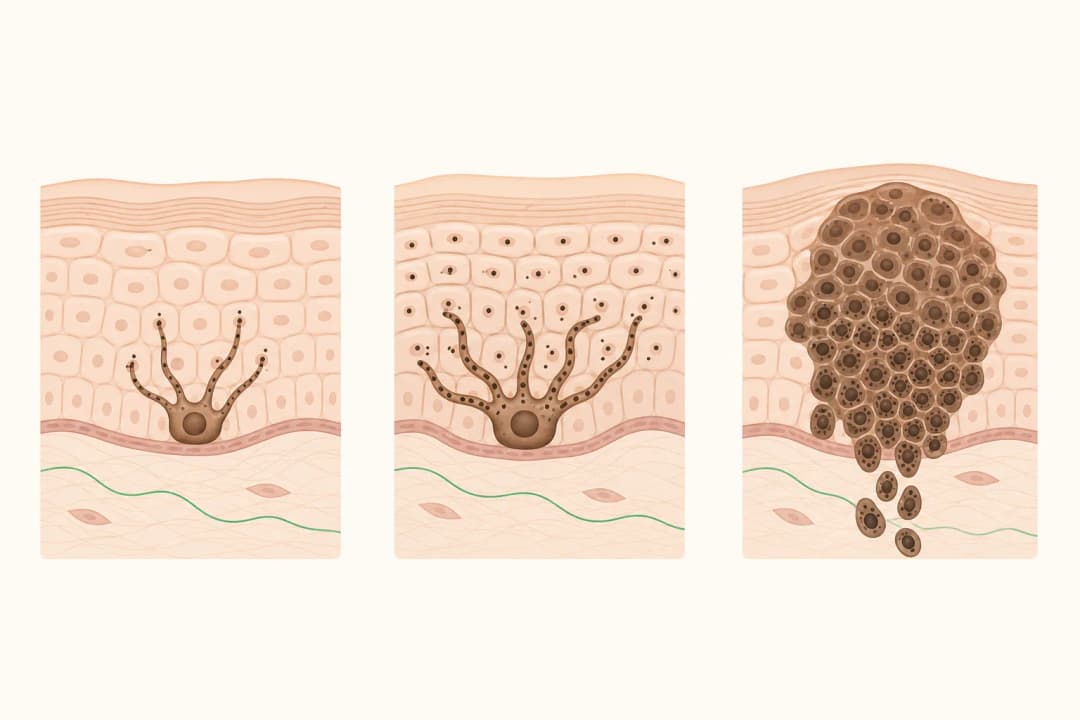
Melanoma begins in melanocytes, the cells that make pigment. In the urethra, it can cause bleeding, a visible lesion, discomfort, altered urine flow or a persistent urinary symptom, although these signs can have other causes. A clinician may examine the urethra and nearby tissues, then take a biopsy so a pathologist can identify the tumour and describe its features.
Staging checks whether disease is confined to its original site or has reached nearby lymph nodes or other organs. The findings help the team discuss local removal, lymph-node assessment, systemic treatment or combinations of these approaches. The melanoma overview provides broader context about the condition.
What to do after a concern is found
Arrange prompt review with a urologist and an oncology team experienced in rare mucosal melanomas. Bring previous reports, medication details and a clear timeline of bleeding, pain, a lump, urinary blockage or changes in urine flow. Do not delay review because a symptom has eased.
Treatment depends on the tumour’s position, depth, spread and your general health. Possible discussions include surgical excision or tumour removal surgery, with imaging and sometimes sentinel lymph node biopsy. Immunotherapy may be considered when the clinical team believes treatment directed at the immune system is appropriate.
When to seek urgent care
Seek urgent medical help for inability to pass urine, heavy or continuing bleeding, severe pelvic pain, faintness, fever with urinary symptoms, or rapidly worsening swelling. These problems can require immediate treatment even before the cause is confirmed.
A confirmed diagnosis also needs planned follow-up. Ask how surveillance will check the original area, lymph nodes and symptoms elsewhere, and what changes should trigger an earlier appointment. Follow-up after cancer treatment can help organise this monitoring.
Questions for your doctor
Ask where the lesion is, how the biopsy confirms melanoma, whether staging scans or lymph-node assessment are needed, which treatments are realistic, and how treatment could affect urination, sexual function and recovery. Ask who will coordinate appointments and which warning signs should prompt contact.
Find care
General Clinics & Polyclinics in Abu Dhabi
That answer is general. If you want it applied to your own case, these are licensed general clinics & polyclinics listed in Abu Dhabi.
27 Ar Ruwwad St - Shakhbout City - MSH4 - Abu Dhabi - United Arab Emirates
Accepts: Daman, Thiqa, Cigna, MetLife +20 more
Al Ruwais, Al Dhafrah
Accepts: Daman, Thiqa, AXA, Cigna +16 more
Al Bahyah - Al Bahyah Old - Abu Dhabi - United Arab Emirates
Accepts: Daman, Thiqa, Cigna, Allianz Care +18 more
Abu Dhabi
Accepts: Daman, Thiqa, AXA, Cigna +27 more
Ordered by verification status and how complete each clinic's public record is, then alphabetically. This is a directory listing, not a ranking — Zavis does not rate or recommend providers.
A factual listing drawn from the DHA, DOH and MOHAP licence registers. It is not a referral, an endorsement, or advice that any of these providers is right for you.
Questions people ask
Is urethral melanoma the same as ordinary skin melanoma?
It is the same broad cancer family, but it develops in mucosal tissue rather than typical sun-exposed skin, so assessment and treatment planning can differ.
Can urinary bleeding be caused by something other than melanoma?
Yes. Infection, stones, inflammation and other urinary conditions can also cause bleeding, so testing is needed rather than assuming one diagnosis.
Related
Related reading
Keep reading
Medical disclaimer. This page is general health information, not medical advice, and it cannot diagnose you. Always consult a licensed healthcare provider about your own symptoms and treatment. In an emergency in the UAE, call 998 for an ambulance.