
What should you know about ulcerated melanoma?
Short answer
Ulcerated melanoma has a broken surface and needs prompt specialist assessment because examination and staging guide treatment.
This answers one question. It is not a diagnosis and does not replace an assessment by a licensed doctor.
At a glance
- Surface change
- The skin over the melanoma has broken down.
- Assessment
- Examination and tissue diagnosis are central.
- Next steps
- Treatment depends on pathology and stage.
What ulceration means
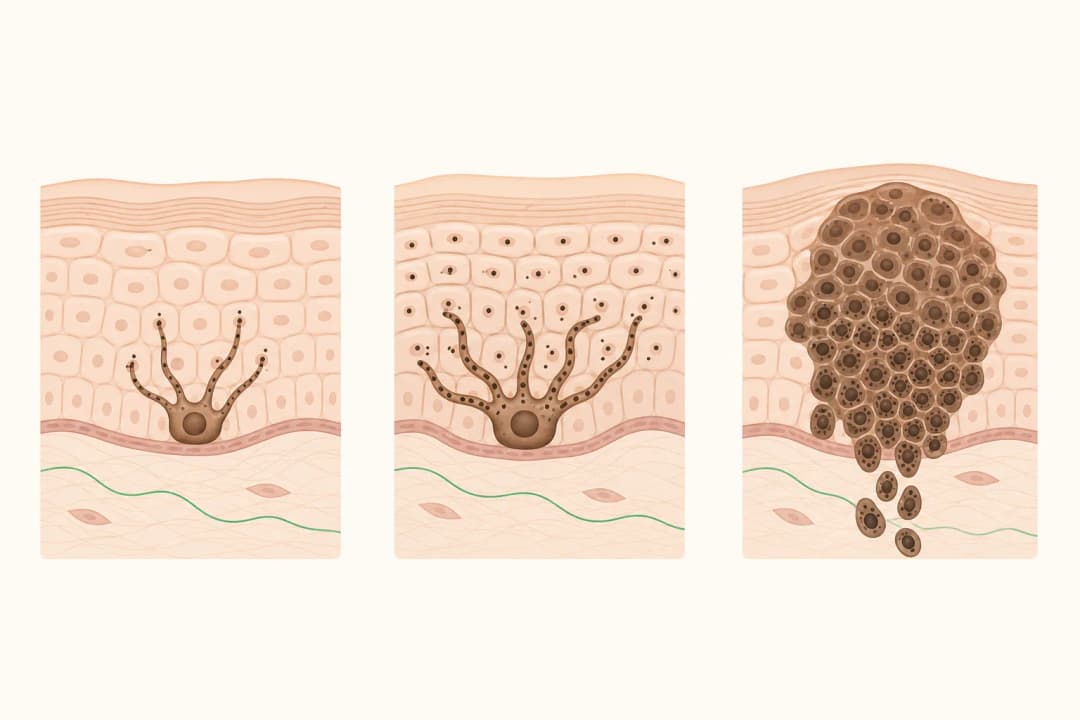
Ulceration means the skin covering a melanoma is no longer intact. It may look like an open sore, crust, bleeding area or moist break in a changing mole. The finding describes the tumour surface; it does not by itself show whether melanoma has spread.
A clinician usually examines the lesion and nearby lymph nodes, then removes or samples tissue so a pathologist can assess the melanoma. The report may help describe depth and other features that influence staging. Further assessment can include a sentinel lymph node biopsy or imaging when clinically appropriate.
What to do next
Arrange an urgent dermatology or skin-cancer assessment for a new or changing ulcerated spot. Do not pick the crust, apply caustic home products or repeatedly cover it with adhesive. Keep the area clean, use a light dressing if it rubs against clothing, and note changes in size, colour, bleeding or pain.
Treatment is planned from the examination and pathology results. It may include surgical excision or other skin cancer surgery, with additional treatment such as immunotherapy considered for some stages. The specialist can explain whether a wider operation, lymph-node assessment or surveillance is appropriate.
When to seek care
Seek prompt medical care for an ulcerated or bleeding mole, especially when it is changing, enlarging, painful or not healing. Seek same-day help if bleeding does not settle with firm gentle pressure, or if the wound becomes increasingly red, swollen, hot or produces pus. New severe headache, weakness, confusion or seizures require emergency assessment because they can signal a serious problem unrelated to the skin surface.
Questions for your doctor
Ask what the biopsy shows, whether the melanoma is ulcerated on pathology, what its stage is, and whether nearby lymph nodes need assessment. Ask how the wound should be dressed, which treatment is recommended, what symptoms should trigger a call, and how follow-up after cancer treatment will be organised.
Find care
General Clinics & Polyclinics in Abu Dhabi
That answer is general. If you want it applied to your own case, these are licensed general clinics & polyclinics listed in Abu Dhabi.
27 Ar Ruwwad St - Shakhbout City - MSH4 - Abu Dhabi - United Arab Emirates
Accepts: Daman, Thiqa, Cigna, MetLife +20 more
Al Ruwais, Al Dhafrah
Accepts: Daman, Thiqa, AXA, Cigna +16 more
Al Bahyah - Al Bahyah Old - Abu Dhabi - United Arab Emirates
Accepts: Daman, Thiqa, Cigna, Allianz Care +18 more
Abu Dhabi
Accepts: Daman, Thiqa, AXA, Cigna +27 more
Ordered by verification status and how complete each clinic's public record is, then alphabetically. This is a directory listing, not a ranking — Zavis does not rate or recommend providers.
A factual listing drawn from the DHA, DOH and MOHAP licence registers. It is not a referral, an endorsement, or advice that any of these providers is right for you.
Questions people ask
Does ulceration prove that melanoma has spread?
No. Ulceration is a feature of the lesion surface. Tissue findings, examination and staging tests are used to assess spread.
Can an ulcerated melanoma heal on its own?
A crust may come and go, but a suspicious changing or ulcerated lesion still needs medical assessment rather than home treatment.
Related
Related reading
Keep reading
Medical disclaimer. This page is general health information, not medical advice, and it cannot diagnose you. Always consult a licensed healthcare provider about your own symptoms and treatment. In an emergency in the UAE, call 998 for an ambulance.