
Types of Sickle Cell Disease
Short answer
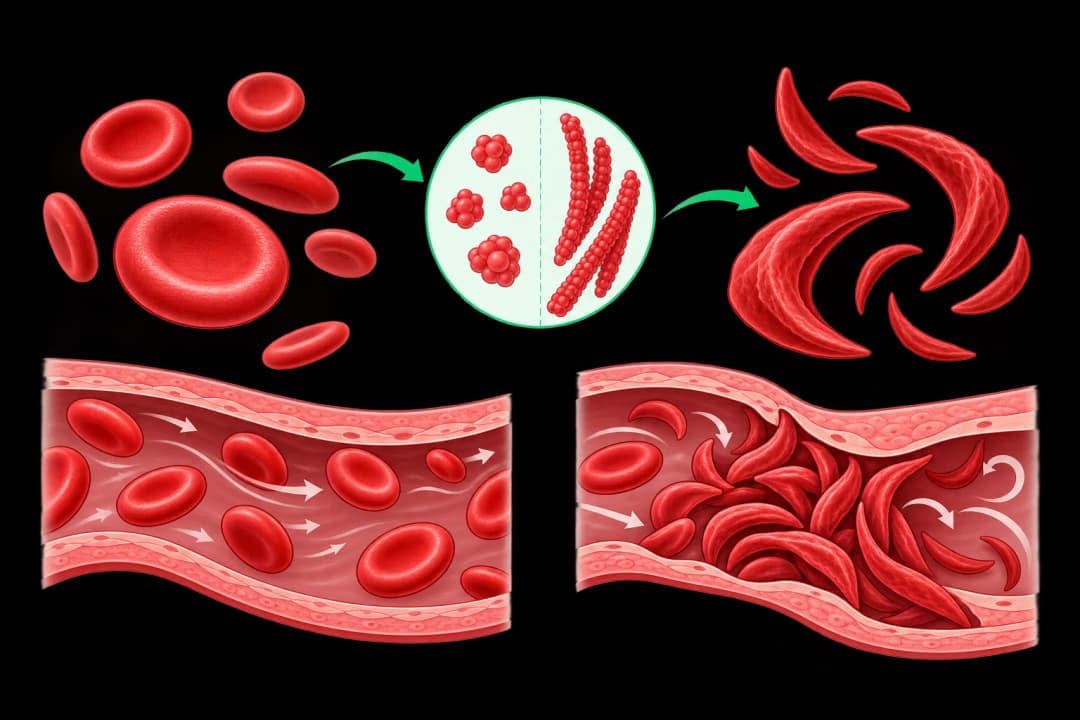
Sickle cell disease includes inherited blood conditions that make red blood cells change shape, with symptoms and complications varying by the gene changes involved.
This answers one question. It is not a diagnosis and does not replace an assessment by a licensed doctor.
At a glance
- Cause
- Inherited changes affecting haemoglobin
- Diagnosis
- Haemoglobin testing through a blood sample
- Care focus
- Preventing complications and managing symptoms early
The short answer
The changed cells can become stiff and may slow or block blood flow. This can contribute to pain episodes, anaemia, and problems affecting different parts of the body.
How the types differ
The type depends on which haemoglobin genes a person inherits. HbSS is often called sickle cell anaemia and occurs when a person inherits a sickle haemoglobin gene from each parent. Other forms include HbSC disease and sickle beta thalassaemia, where a sickle gene is inherited alongside another haemoglobin variant.
People with any type can have symptoms, but their pattern can differ. Fatigue or pale skin can occur when anaemia is present, while pain may involve bones or joints. A blood test can identify the haemoglobin pattern and help the care team explain what it means for the individual.
Steps after a diagnosis
Keep regular appointments with a clinician experienced in sickle cell care, even when you feel well. Your plan may cover vaccines, medicines, pain management, hydration, and how to respond when symptoms change. Share the diagnosis with healthcare professionals before treatment or procedures.
Family planning discussions can be useful because the condition is inherited. Premarital screening or genetic counselling can clarify carrier status and support informed decisions for couples and families.
When to get medical help
Seek urgent medical assessment for fever, chest pain, trouble breathing, sudden weakness, severe headache, confusion, or an unusually painful episode that is not settling with your agreed plan. These symptoms need prompt assessment because sickle cell disease can sometimes cause serious complications.
Contact your usual clinical team promptly for new or worsening tiredness, marked paleness, joint pain, or a change in your usual symptoms. They can advise whether you need an examination or blood testing.
Questions to bring to your appointment
Ask which haemoglobin type you have, how it was confirmed, and which symptoms should trigger urgent care for you. You can also ask for a written pain plan, whether your medicines need review, and what screening or specialist follow-up is appropriate.
Find care
General Clinics & Polyclinics in Abu Dhabi
That answer is general. If you want it applied to your own case, these are licensed general clinics & polyclinics listed in Abu Dhabi.
27 Ar Ruwwad St - Shakhbout City - MSH4 - Abu Dhabi - United Arab Emirates
Accepts: Daman, Thiqa, Cigna, MetLife +20 more
Al Ruwais, Al Dhafrah
Accepts: Daman, Thiqa, AXA, Cigna +16 more
Al Bahyah - Al Bahyah Old - Abu Dhabi - United Arab Emirates
Accepts: Daman, Thiqa, Cigna, Allianz Care +18 more
Abu Dhabi
Accepts: Daman, Thiqa, AXA, Cigna +27 more
Ordered by verification status and how complete each clinic's public record is, then alphabetically. This is a directory listing, not a ranking — Zavis does not rate or recommend providers.
A factual listing drawn from the DHA, DOH and MOHAP licence registers. It is not a referral, an endorsement, or advice that any of these providers is right for you.
Questions people ask
Is sickle cell trait the same as sickle cell disease?
No. Sickle cell trait means a person carries a sickle haemoglobin gene, while sickle cell disease refers to inherited combinations that can cause the condition. Testing can distinguish them.
Can the type of sickle cell disease change over time?
No. The inherited haemoglobin type does not change, although symptoms and care needs may change over time.
Why might relatives be offered testing?
Testing can identify haemoglobin traits or conditions in family members and can inform conversations about inherited risk and family planning.
Related
Related reading
Keep reading
Medical disclaimer. This page is general health information, not medical advice, and it cannot diagnose you. Always consult a licensed healthcare provider about your own symptoms and treatment. In an emergency in the UAE, call 998 for an ambulance.