
Types of crises in sickle cell disease
Short answer
Sickle cell crises include pain, anaemia, infection-related, chest, and splenic emergencies, each needing prompt assessment when symptoms are severe or new.
This answers one question. It is not a diagnosis and does not replace an assessment by a licensed doctor.
At a glance
- Common crisis pattern
- Vaso-occlusive pain from blocked small blood vessels
- Emergency clue
- New breathing difficulty or chest pain
- Useful record
- Symptoms, temperature, timing, and medicines
What the types mean
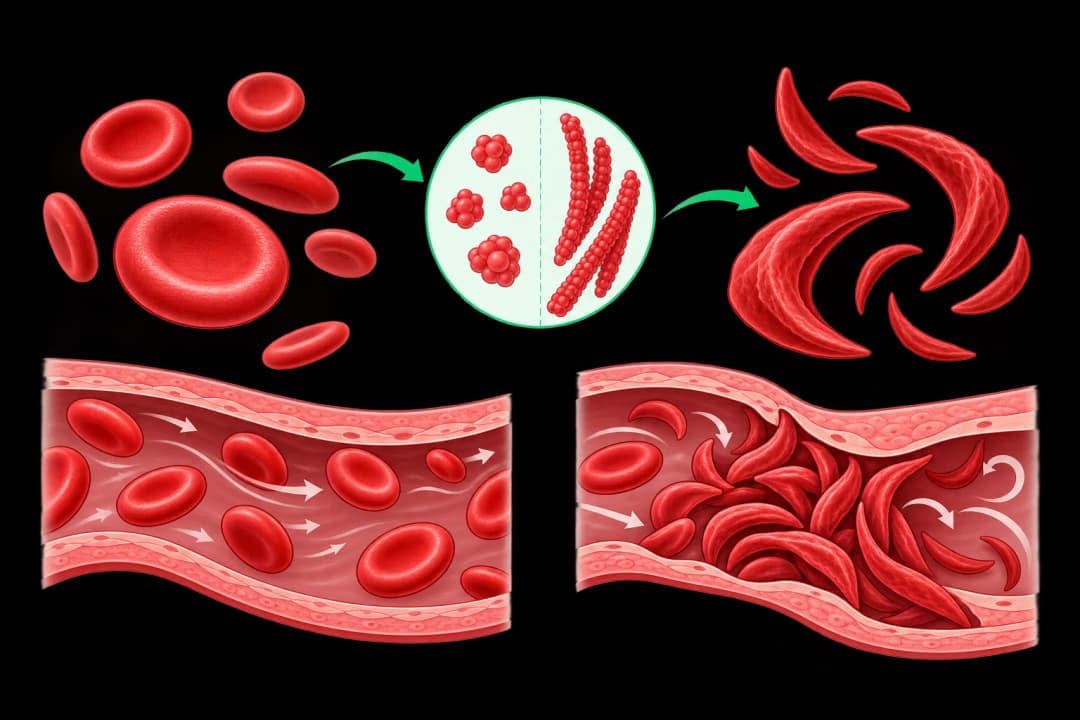
A vaso-occlusive crisis happens when sickled red cells obstruct small blood vessels, causing deep pain in bones, joints, the chest, or abdomen. An aplastic or haemolytic crisis can reduce the red-cell supply, leading to marked tiredness, breathlessness, dizziness, or pale skin. Infection can trigger fever and a rapid deterioration. Acute chest syndrome involves chest pain, cough, breathing difficulty, or low oxygen and is an emergency. Splenic sequestration, mainly in children with a spleen that still works, can cause sudden weakness, a swollen abdomen, and shock.
The same person may have different crises at different times. Pain and fatigue can also occur outside a crisis, so a change from the usual pattern matters.
What you can do during symptoms
Follow the personalised plan from your sickle cell team, drink fluids if you can keep them down, rest, and use prescribed pain medicine exactly as directed. Avoid taking extra doses or medicines such as anti-inflammatory tablets unless your clinician has advised them. Record when symptoms began, their location, temperature, medicines taken, and any breathing change. A blood test may help clinicians assess anaemia, infection, or another complication.
When to seek urgent care
Seek emergency help for chest pain, trouble breathing, fainting, confusion, severe weakness, a seizure, sudden abdominal swelling, or pain that is not controlled by your plan. Fever in someone with sickle cell disease needs urgent medical advice because infection can worsen quickly. Do not wait for a crisis to become severe if symptoms feel different from usual.
Questions for your doctor
Ask which crisis symptoms are most relevant to you, what your written home plan says, which medicines are safe, and which hospital or sickle cell service to contact day or night.
Find care
General Clinics & Polyclinics in Abu Dhabi
That answer is general. If you want it applied to your own case, these are licensed general clinics & polyclinics listed in Abu Dhabi.
27 Ar Ruwwad St - Shakhbout City - MSH4 - Abu Dhabi - United Arab Emirates
Accepts: Daman, Thiqa, Cigna, MetLife +20 more
Al Ruwais, Al Dhafrah
Accepts: Daman, Thiqa, AXA, Cigna +16 more
Al Bahyah - Al Bahyah Old - Abu Dhabi - United Arab Emirates
Accepts: Daman, Thiqa, Cigna, Allianz Care +18 more
Abu Dhabi
Accepts: Daman, Thiqa, AXA, Cigna +27 more
Ordered by verification status and how complete each clinic's public record is, then alphabetically. This is a directory listing, not a ranking — Zavis does not rate or recommend providers.
A factual listing drawn from the DHA, DOH and MOHAP licence registers. It is not a referral, an endorsement, or advice that any of these providers is right for you.
Questions people ask
Can a crisis happen without severe pain?
Yes. Anaemia, infection, acute chest syndrome, or splenic problems may begin with weakness, fever, breathing symptoms, or abdominal swelling rather than severe pain.
Should fever be checked urgently?
Yes. Contact urgent medical care promptly for fever because infection can become serious in sickle cell disease.
Related
Related reading
Keep reading
Medical disclaimer. This page is general health information, not medical advice, and it cannot diagnose you. Always consult a licensed healthcare provider about your own symptoms and treatment. In an emergency in the UAE, call 998 for an ambulance.