
How do you get type 2 diabetes?
Short answer
Type 2 diabetes develops when the body becomes less responsive to insulin and the pancreas cannot keep glucose controlled over time.
This answers one question. It is not a diagnosis and does not replace an assessment by a licensed doctor.
At a glance
- Core mechanism
- Reduced insulin response plus limited insulin supply
- Not contagious
- Type 2 diabetes cannot be caught from another person
How it develops
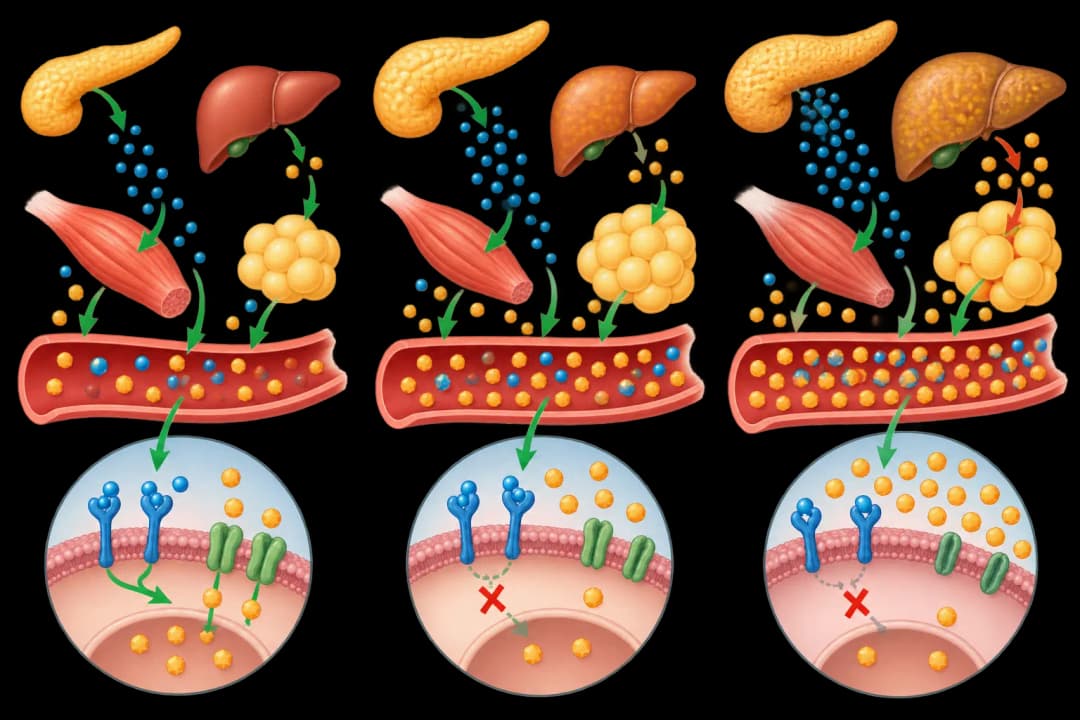
Insulin helps move glucose from the blood into cells for energy. In type 2 diabetes, cells respond less effectively to insulin, so the pancreas produces more to compensate. Over time, that supply may no longer meet the body's needs and glucose stays higher in the bloodstream.
Family history, age, previous Prediabetes, Obesity, limited activity, sleep problems and some medicines can influence risk. These factors do not predict an individual's outcome, and type 2 diabetes is not a personal failure. It is also different from an infection and cannot be caught from another person.
What may help
If you have risk factors or symptoms, arrange testing rather than trying to diagnose yourself. Regular movement, nourishing meals, adequate sleep, stopping smoking and taking prescribed treatment can improve glucose management. Small, sustainable changes are more practical than sudden restrictions. Ask for support if pain, mobility, work patterns or stress make changes difficult.
When to arrange medical care
Arrange a review for ongoing thirst, frequent urination, unexplained tiredness, blurred vision, recurrent infections or a wound that heals slowly. Seek urgent help for confusion, fainting, severe vomiting, difficult breathing or sudden weakness and speech trouble. Peripheral Neuropathy and Chronic Kidney Disease are examples of problems clinicians may screen for after diagnosis.
Questions worth asking
Ask which test is appropriate, whether Prediabetes is present, how family history changes your monitoring, and which lifestyle or medicine options fit your health. Discuss foot checks, kidney checks and warning signs of Hypoglycaemia if treatment is started.
Find care
General Clinics & Polyclinics in Abu Dhabi
That answer is general. If you want it applied to your own case, these are licensed general clinics & polyclinics listed in Abu Dhabi.
27 Ar Ruwwad St - Shakhbout City - MSH4 - Abu Dhabi - United Arab Emirates
Accepts: Daman, Thiqa, Cigna, MetLife +20 more
Al Ruwais, Al Dhafrah
Accepts: Daman, Thiqa, AXA, Cigna +16 more
Al Bahyah - Al Bahyah Old - Abu Dhabi - United Arab Emirates
Accepts: Daman, Thiqa, Cigna, Allianz Care +18 more
Abu Dhabi
Accepts: Daman, Thiqa, AXA, Cigna +27 more
Ordered by verification status and how complete each clinic's public record is, then alphabetically. This is a directory listing, not a ranking — Zavis does not rate or recommend providers.
A factual listing drawn from the DHA, DOH and MOHAP licence registers. It is not a referral, an endorsement, or advice that any of these providers is right for you.
Questions people ask
Is type 2 diabetes caused by eating sugar alone?
No. Food is one influence among inherited, metabolic, activity, sleep, medicine and other factors.
Can type 2 diabetes be prevented in everyone?
No. Risk can sometimes be reduced, but family history and other influences cannot always be changed.
Related
Related reading
Keep reading
Medical disclaimer. This page is general health information, not medical advice, and it cannot diagnose you. Always consult a licensed healthcare provider about your own symptoms and treatment. In an emergency in the UAE, call 998 for an ambulance.