
What should you know about two vertical lines on forehead?
Short answer
Two vertical lines on the forehead can reflect repeated facial movement or normal skin texture, but a new changing mark deserves a clinical look.
This answers one question. It is not a diagnosis and does not replace an assessment by a licensed doctor.
At a glance
- Possible contributor
- Repeated frowning or brow movement
- Daily care
- Gentle cleansing, moisturiser, and sun protection
- Prompt for review
- A rough, bleeding, crusted, or changing mark
Understanding their appearance
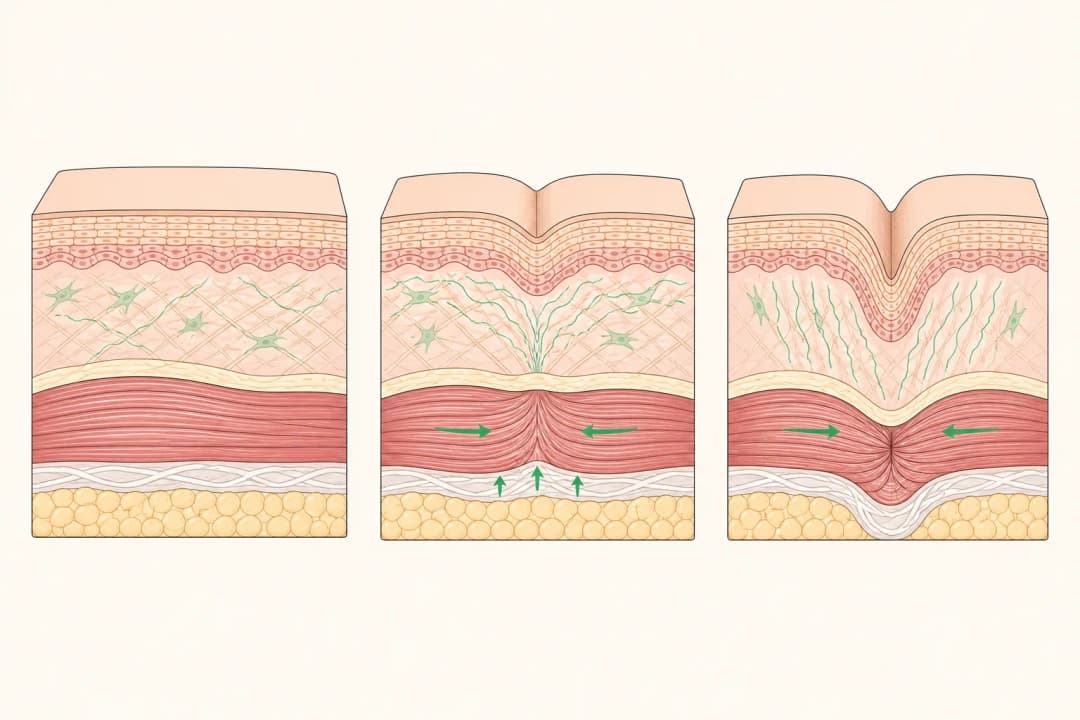
Vertical grooves may be seen between or near the eyebrows when facial muscles contract. They can become more noticeable with frowning, concentration, sunlight exposure, dryness, and gradual loss of elasticity. If the lines soften when you relax your face, movement is likely contributing. If they remain unchanged at rest, surface texture may have become established.
The word line can also describe a different type of skin mark. A rough patch, scaly area, mole, wound, or pigmented streak should not be assumed to be a wrinkle from its shape alone. A clinician can inspect the surface and ask when it began.
What you can do
Apply sunscreen to the forehead when it is exposed and use a moisturiser suited to your skin. Keep cleansing gentle, especially if the area is dry or sensitive. Do not repeatedly pinch, scrape, or massage a line in an effort to remove it, because irritation can make the area more noticeable.
For expression-related lines, a dermatologist may discuss botulinum toxin injections or other options after reviewing your brow movement, facial balance, and treatment aims. The consultation should cover timing, temporary effects, possible bruising or asymmetry, and alternatives. A procedure should not be chosen until the mark itself has been identified.
When to seek medical care
Book a routine appointment for a line that is new, one-sided, rough, itchy, tender, bleeding, crusted, or changing in size or colour. Seek urgent help if a sudden facial change occurs with weakness, speech difficulty, severe headache, or vision loss. These warning signs call for medical assessment rather than cosmetic treatment.
Questions for your doctor
Ask what the lines represent, whether they change with eyebrow movement, and whether any examination or monitoring is needed. If treatment is appropriate, ask which muscles or skin layers it targets, what results are reasonable, and what aftercare or temporary reactions to expect.
Find care
General Clinics & Polyclinics in Abu Dhabi
That answer is general. If you want it applied to your own case, these are licensed general clinics & polyclinics listed in Abu Dhabi.
27 Ar Ruwwad St - Shakhbout City - MSH4 - Abu Dhabi - United Arab Emirates
Accepts: Daman, Thiqa, Cigna, MetLife +20 more
Al Ruwais, Al Dhafrah
Accepts: Daman, Thiqa, AXA, Cigna +16 more
Al Bahyah - Al Bahyah Old - Abu Dhabi - United Arab Emirates
Accepts: Daman, Thiqa, Cigna, Allianz Care +18 more
Abu Dhabi
Accepts: Daman, Thiqa, AXA, Cigna +27 more
Ordered by verification status and how complete each clinic's public record is, then alphabetically. This is a directory listing, not a ranking — Zavis does not rate or recommend providers.
A factual listing drawn from the DHA, DOH and MOHAP licence registers. It is not a referral, an endorsement, or advice that any of these providers is right for you.
Questions people ask
Why are my forehead lines vertical?
Lines near the eyebrows may follow the direction of repeated muscle contraction, although a vertical skin mark can have other causes and may need examination.
Should I treat a vertical forehead line at home?
Use gentle skin care and sun protection, but avoid scraping or tying anything around it; have a new or changing mark assessed before cosmetic treatment.
Related
Related reading
Medical disclaimer. This page is general health information, not medical advice, and it cannot diagnose you. Always consult a licensed healthcare provider about your own symptoms and treatment. In an emergency in the UAE, call 998 for an ambulance.