
Trigger finger splint for the middle finger: what to know
Short answer
A middle-finger splint can limit painful bending and give the irritated tendon sheath time to settle, but fit and medical advice matter.
This answers one question. It is not a diagnosis and does not replace an assessment by a licensed doctor.
At a glance
- Target
- Middle finger catching, clicking or stiffness
- Purpose
- Limit aggravating movement and support tendon comfort
- Check
- No numbness, colour change or skin damage
How a splint may help
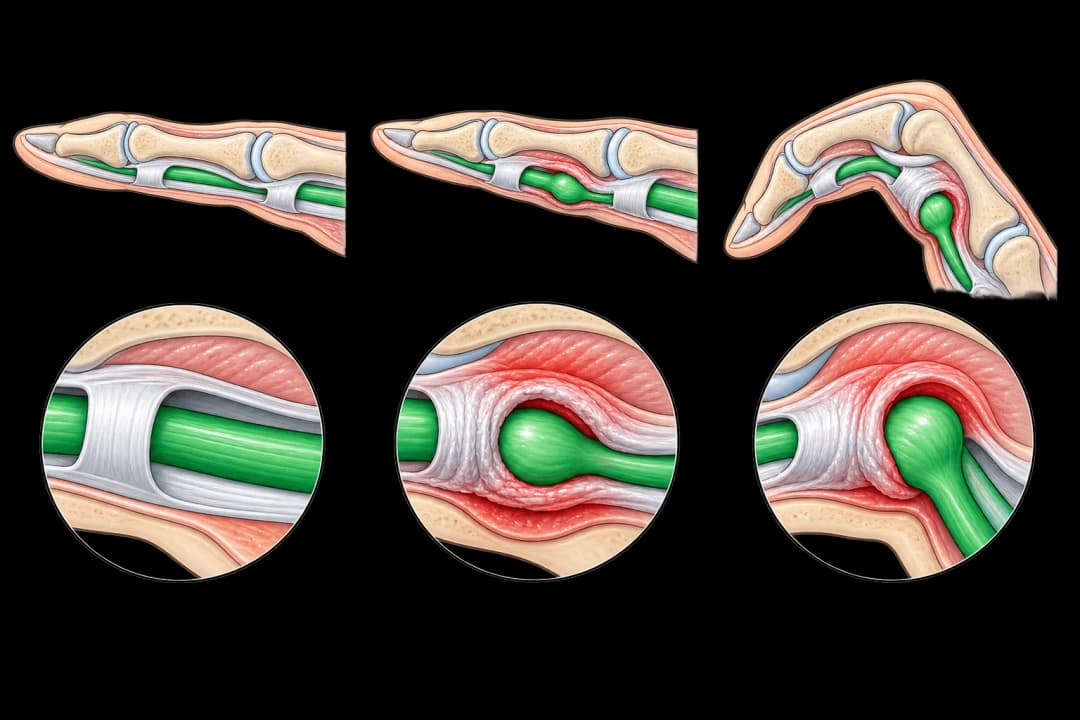
Trigger finger develops when a finger tendon does not glide smoothly through its pulley. The middle finger may catch, click or feel stiff, especially after rest. A splint can hold the finger straighter or restrict the movement that repeatedly provokes catching. It supports symptoms; it does not remove every possible cause.
A clinician or hand therapist can choose a night splint, a daytime support or a design that protects movement while reducing irritation. The splint should not cause numbness, colour change, rubbing or increasing swelling.
Using the support safely
Follow the recommended wearing schedule and keep the skin clean and dry. Check the middle finger and nearby skin after removing the splint. Gentle movement of the other fingers helps prevent unnecessary stiffness, while forceful stretching or repeatedly testing the click can aggravate symptoms.
If symptoms continue, options may include activity changes, hand therapy or a Cortisone Injection. Splinting is explained in more detail under Splinting; persistent catching may lead to discussion of Trigger Finger Release.
When to seek care
Arrange an assessment if the finger remains locked, daily tasks are becoming difficult, or pain and swelling are worsening. Seek prompt care for a blue or very pale finger, new numbness, marked swelling, fever, or an injury that changed the finger’s shape.
Questions for your doctor
Ask whether the catching is coming from trigger finger, how long to wear the splint, and which movements to limit. Also ask how to check the fit, when hand exercises should begin, and what to consider if symptoms remain after splinting.
Find care
General Clinics & Polyclinics in Abu Dhabi
That answer is general. If you want it applied to your own case, these are licensed general clinics & polyclinics listed in Abu Dhabi.
27 Ar Ruwwad St - Shakhbout City - MSH4 - Abu Dhabi - United Arab Emirates
Accepts: Daman, Thiqa, Cigna, MetLife +20 more
Al Ruwais, Al Dhafrah
Accepts: Daman, Thiqa, AXA, Cigna +16 more
Al Bahyah - Al Bahyah Old - Abu Dhabi - United Arab Emirates
Accepts: Daman, Thiqa, Cigna, Allianz Care +18 more
Abu Dhabi
Accepts: Daman, Thiqa, AXA, Cigna +27 more
Ordered by verification status and how complete each clinic's public record is, then alphabetically. This is a directory listing, not a ranking — Zavis does not rate or recommend providers.
A factual listing drawn from the DHA, DOH and MOHAP licence registers. It is not a referral, an endorsement, or advice that any of these providers is right for you.
Questions people ask
Can I wear a trigger-finger splint all day?
Only follow an all-day schedule if a clinician recommends it; prolonged restriction can add stiffness and the fit needs regular skin checks.
What if my finger catches while wearing the splint?
Stop forcing it and arrange an assessment, particularly if the finger cannot straighten or becomes numb, pale or increasingly swollen.
Related
Related reading
Keep reading
Medical disclaimer. This page is general health information, not medical advice, and it cannot diagnose you. Always consult a licensed healthcare provider about your own symptoms and treatment. In an emergency in the UAE, call 998 for an ambulance.