
Treatment of Stroke in Sickle Cell Disease
Short answer
Treatment of stroke in sickle cell disease requires emergency hospital assessment, brain imaging, and specialist blood treatment as soon as possible.
This answers one question. It is not a diagnosis and does not replace an assessment by a licensed doctor.
At a glance
- Response
- Call emergency services immediately for sudden neurological symptoms.
- At hospital
- Assessment may include brain imaging, oxygen checks, and blood testing.
- Do not delay
- Improving symptoms still need urgent evaluation.
Why stroke can occur
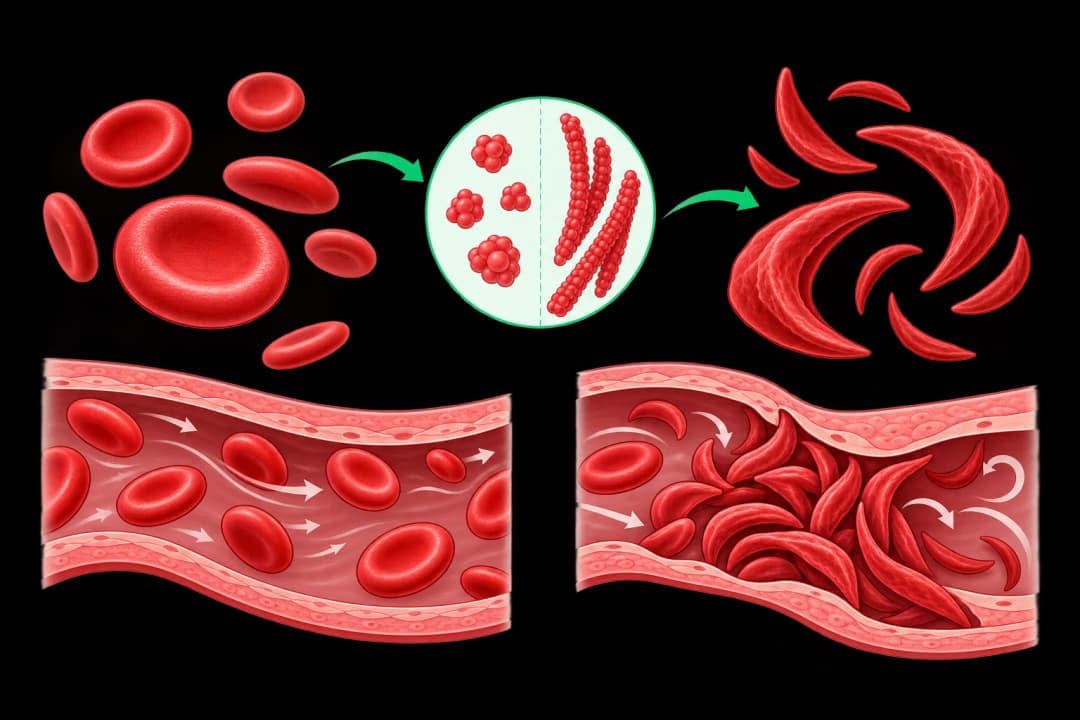
Sickle cell disease changes the shape and flexibility of red blood cells. They can obstruct small blood vessels, reduce oxygen delivery, and contribute to brain injury. Stroke may cause sudden weakness or numbness on one side, facial drooping, trouble speaking, confusion, vision change, severe headache, loss of balance, or a seizure.
Symptoms such as fatigue, joint pain, or pale skin can occur with sickle cell disease but do not explain away a sudden neurological change. Learn more about Sickle Cell Disease and keep the person’s usual emergency plan available.
What to do immediately
Call emergency services for any sudden stroke warning sign, even if it improves. Note the time the person was last known to be well. Keep them safe, loosen tight clothing, and do not give food, drink, or tablets if swallowing is affected. Take their medicines and sickle cell records if this will not delay departure.
In hospital, clinicians may check oxygen, glucose, blood counts, and brain images. A blood transfusion or exchange transfusion may be considered by the specialist team, alongside treatment for the specific type of stroke and support for breathing or seizures. Do not arrange a home blood test instead of emergency care.
When emergency care is needed
Every suspected stroke symptom is an emergency in a person with sickle cell disease: weakness, facial asymmetry, speech difficulty, new confusion, severe headache, seizure, or sudden loss of coordination needs immediate help. Do not wait for pain, fever, or fatigue to appear.
After recovery, the haematology and neurology teams may discuss preventive care, treatment adherence, hydration guidance, and monitoring for another event. Ask how follow-up imaging or blood testing will be scheduled and which symptoms require a direct call to the specialist team.
Questions for your doctor
What is the emergency plan for future neurological symptoms? Would transfusion or exchange transfusion be appropriate for this event? Which medicines, tests, and follow-up visits reduce the chance of another stroke? Should relatives discuss Blood Test or Premarital Screening options?
Find care
General Clinics & Polyclinics in Abu Dhabi
That answer is general. If you want it applied to your own case, these are licensed general clinics & polyclinics listed in Abu Dhabi.
27 Ar Ruwwad St - Shakhbout City - MSH4 - Abu Dhabi - United Arab Emirates
Accepts: Daman, Thiqa, Cigna, MetLife +20 more
Al Ruwais, Al Dhafrah
Accepts: Daman, Thiqa, AXA, Cigna +16 more
Al Bahyah - Al Bahyah Old - Abu Dhabi - United Arab Emirates
Accepts: Daman, Thiqa, Cigna, Allianz Care +18 more
Abu Dhabi
Accepts: Daman, Thiqa, AXA, Cigna +27 more
Ordered by verification status and how complete each clinic's public record is, then alphabetically. This is a directory listing, not a ranking — Zavis does not rate or recommend providers.
A factual listing drawn from the DHA, DOH and MOHAP licence registers. It is not a referral, an endorsement, or advice that any of these providers is right for you.
Questions people ask
Can stroke symptoms disappear in sickle cell disease?
They can improve temporarily, but this does not make them safe to monitor at home. Emergency assessment is still needed.
What information should I take to hospital?
Take the person’s medicine list, sickle cell records, allergies, and the time symptoms began, provided gathering them does not delay emergency care.
Related
Related reading
Keep reading
Medical disclaimer. This page is general health information, not medical advice, and it cannot diagnose you. Always consult a licensed healthcare provider about your own symptoms and treatment. In an emergency in the UAE, call 998 for an ambulance.