
What does topical retinoids mean in pregnancy?
Short answer
Topical retinoids are generally avoided during pregnancy, so discuss current or planned use with your maternity or dermatology clinician.
This answers one question. It is not a diagnosis and does not replace an assessment by a licensed doctor.
At a glance
- Usual approach
- Avoid topical retinoids during pregnancy unless your clinician directs otherwise
- After accidental use
- Stop and share the product details with your maternity team
- Bring to review
- Ingredient list, strength, body area, and dates of use
Why pregnancy changes the advice
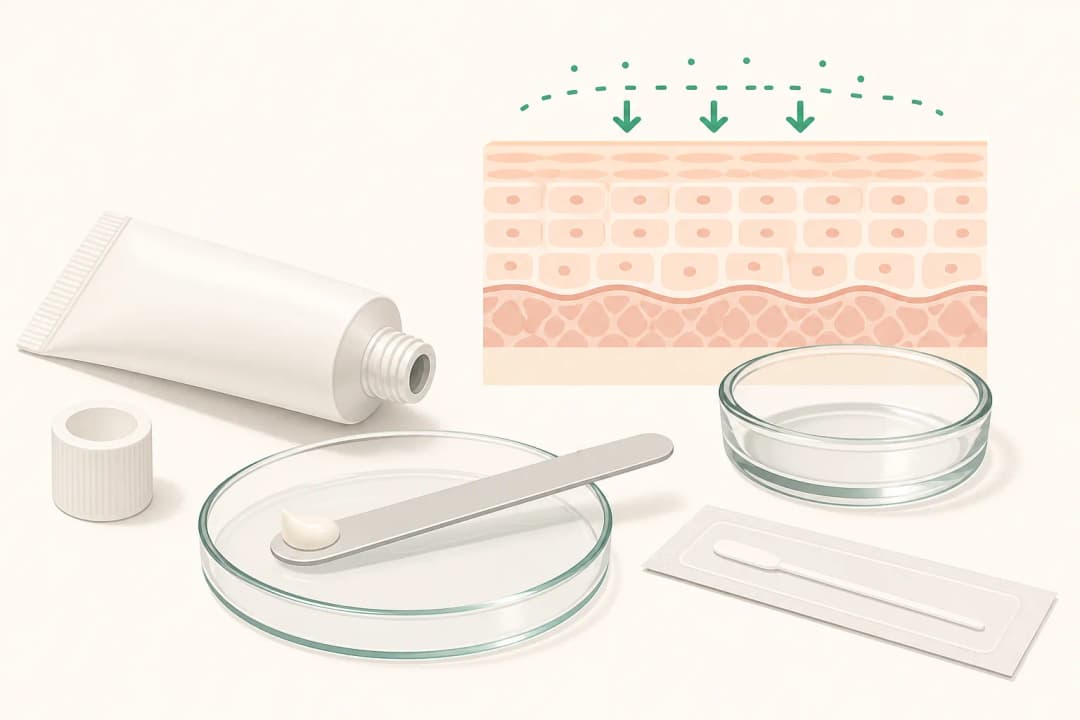
Topical retinoids include medicines related to vitamin A, such as tretinoin and adapalene. Skin absorption is usually lower than with an oral retinoid, but avoidance is advised because pregnancy is a time to limit medicines whose safety is uncertain. The advice applies to prescription creams and gels as well as products marketed for acne or skin renewal.
If you used a retinoid before realising you were pregnant, stop using it and tell your maternity clinician what product, strength, body area, and dates were involved. Do not panic or restart it without personalised advice; a clinician can place the exposure in context and recommend an acne plan.
Practical next steps
Check labels for retinol, retinal, tretinoin, adapalene, or other retinoid ingredients, and pause products that contain them until your clinician advises otherwise. Avoid sharing another person's prescription. Use a gentle cleanser, non-irritating moisturiser, and sun protection while you arrange advice.
Tell your clinician about pregnancy stage, breastfeeding plans, allergies, and the skin problem you are treating. They can help select an alternative that fits your situation. Keep the product packaging or a clear photograph of the ingredients available for the consultation.
When to contact your care team
Contact your maternity or dermatology team soon after discovering use during pregnancy so they can advise you based on the exact product and exposure. Seek urgent care for a severe allergic reaction, such as facial swelling, breathing difficulty, or widespread blistering; these symptoms are emergencies regardless of the skincare product.
Questions for your doctor
Ask whether your exact ingredient should remain stopped, what pregnancy-compatible option can address your skin concern, and whether any follow-up is needed after use. Ask how advice changes after delivery or during breastfeeding.
Find care
General Clinics & Polyclinics in Abu Dhabi
That answer is general. If you want it applied to your own case, these are licensed general clinics & polyclinics listed in Abu Dhabi.
27 Ar Ruwwad St - Shakhbout City - MSH4 - Abu Dhabi - United Arab Emirates
Accepts: Daman, Thiqa, Cigna, MetLife +20 more
Al Ruwais, Al Dhafrah
Accepts: Daman, Thiqa, AXA, Cigna +16 more
Al Bahyah - Al Bahyah Old - Abu Dhabi - United Arab Emirates
Accepts: Daman, Thiqa, Cigna, Allianz Care +18 more
Abu Dhabi
Accepts: Daman, Thiqa, AXA, Cigna +27 more
Ordered by verification status and how complete each clinic's public record is, then alphabetically. This is a directory listing, not a ranking — Zavis does not rate or recommend providers.
A factual listing drawn from the DHA, DOH and MOHAP licence registers. It is not a referral, an endorsement, or advice that any of these providers is right for you.
Questions people ask
What if I used a topical retinoid before I knew I was pregnant?
Stop using it and contact your maternity or dermatology clinician with the product details; they can give individual advice.
Are all vitamin A skincare products the same?
No. Ingredients and formulations differ, so check the label and ask a clinician rather than assuming a product is suitable.
Related
Related reading
Keep reading
Medical disclaimer. This page is general health information, not medical advice, and it cannot diagnose you. Always consult a licensed healthcare provider about your own symptoms and treatment. In an emergency in the UAE, call 998 for an ambulance.