
Topical antibiotics for pitted keratolysis
Short answer
Topical antibiotics can reduce the bacteria that cause pitted keratolysis, while keeping feet dry helps prevent the problem from returning.
This answers one question. It is not a diagnosis and does not replace an assessment by a licensed doctor.
At a glance
- Typical site
- Pressure-bearing areas of the soles
- Helpful habit
- Dry feet and footwear thoroughly
- Common clue
- Pits with noticeable foot odour
What is happening on the feet
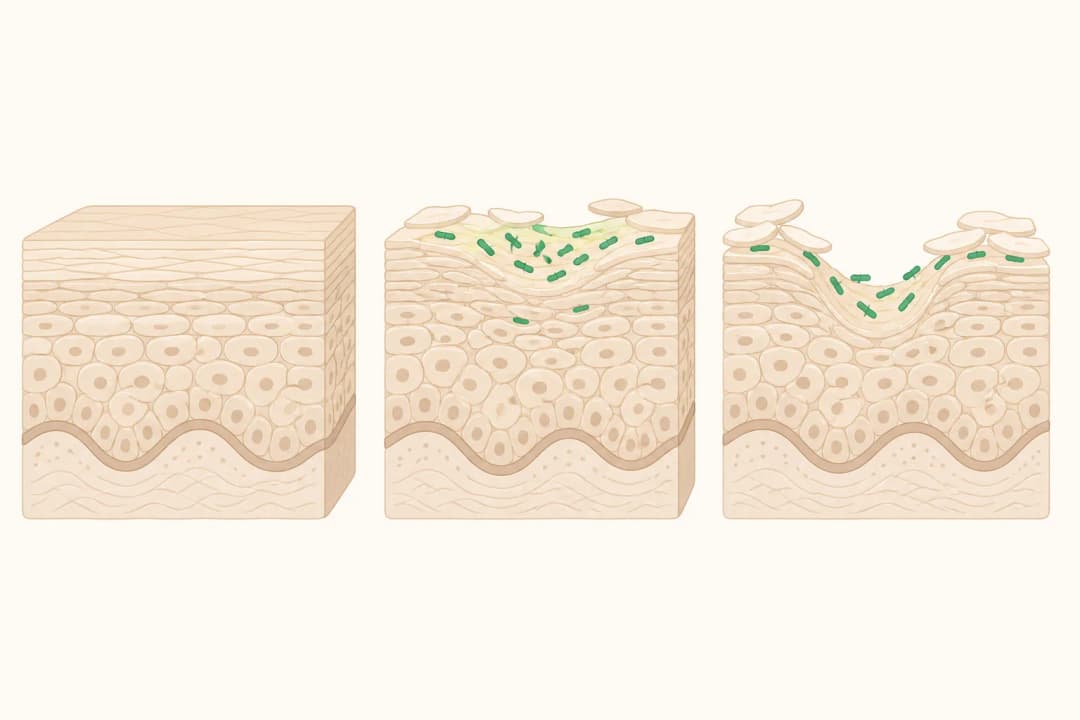
Pitted keratolysis is a superficial bacterial infection that affects the pressure-bearing soles. Tiny shallow pits may appear, and the skin can look softened or pale after sweating. A strong foot odour is common because bacteria break down sweat and keratin on the skin surface.
A topical antibiotic is usually selected for the affected area and used as directed. It does not replace moisture control: warm, enclosed footwear and prolonged dampness can support bacterial growth even after the skin looks better.
Practical foot care
Wash the feet, dry carefully between the toes and across the soles, and change damp socks promptly. Rotate shoes so they can dry fully. Use the prescribed medicine on clean, dry skin and avoid sharing towels, socks, or footwear.
A clinician may also recommend a product that reduces sweating when moisture is a major trigger. Stop and seek advice if treatment causes marked burning, swelling, or a new rash. Do not apply antibiotics to cracked or extensively damaged skin unless instructed.
When to seek care
Book a review if odour and pits persist despite careful treatment, if pain develops, or if redness spreads beyond the sole. Prompt assessment is sensible for diabetes, poor circulation, reduced sensation, or an open sore because foot problems can become harder to notice and manage.
Questions for your doctor
Ask how often to apply the antibiotic, how long to use it, and whether both feet need treatment. Ask whether excess sweating is contributing, how to dry or disinfect footwear safely, and what changes would suggest another foot condition.
Find care
General Clinics & Polyclinics in Abu Dhabi
That answer is general. If you want it applied to your own case, these are licensed general clinics & polyclinics listed in Abu Dhabi.
27 Ar Ruwwad St - Shakhbout City - MSH4 - Abu Dhabi - United Arab Emirates
Accepts: Daman, Thiqa, Cigna, MetLife +20 more
Al Ruwais, Al Dhafrah
Accepts: Daman, Thiqa, AXA, Cigna +16 more
Al Bahyah - Al Bahyah Old - Abu Dhabi - United Arab Emirates
Accepts: Daman, Thiqa, Cigna, Allianz Care +18 more
Abu Dhabi
Accepts: Daman, Thiqa, AXA, Cigna +27 more
Ordered by verification status and how complete each clinic's public record is, then alphabetically. This is a directory listing, not a ranking — Zavis does not rate or recommend providers.
A factual listing drawn from the DHA, DOH and MOHAP licence registers. It is not a referral, an endorsement, or advice that any of these providers is right for you.
Questions people ask
Will the odour improve when the infection settles?
It often becomes less noticeable as bacterial activity and moisture decrease, but persistent odour deserves a clinical review.
Can I keep wearing the same shoes?
Shoes that remain damp can encourage recurrence, so allow footwear to dry and consider alternating pairs.
Related
Related reading
Keep reading
Medical disclaimer. This page is general health information, not medical advice, and it cannot diagnose you. Always consult a licensed healthcare provider about your own symptoms and treatment. In an emergency in the UAE, call 998 for an ambulance.