
Swelling in feet and ankles during pregnancy
Short answer
Swelling in the feet and ankles is common during pregnancy, but sudden or marked swelling needs prompt assessment.
This answers one question. It is not a diagnosis and does not replace an assessment by a licensed doctor.
At a glance
- Often noticed
- After standing or later in the day
- Helpful habit
- Raise your feet while resting
- Check promptly
- Sudden swelling or warning symptoms
What the swelling can mean
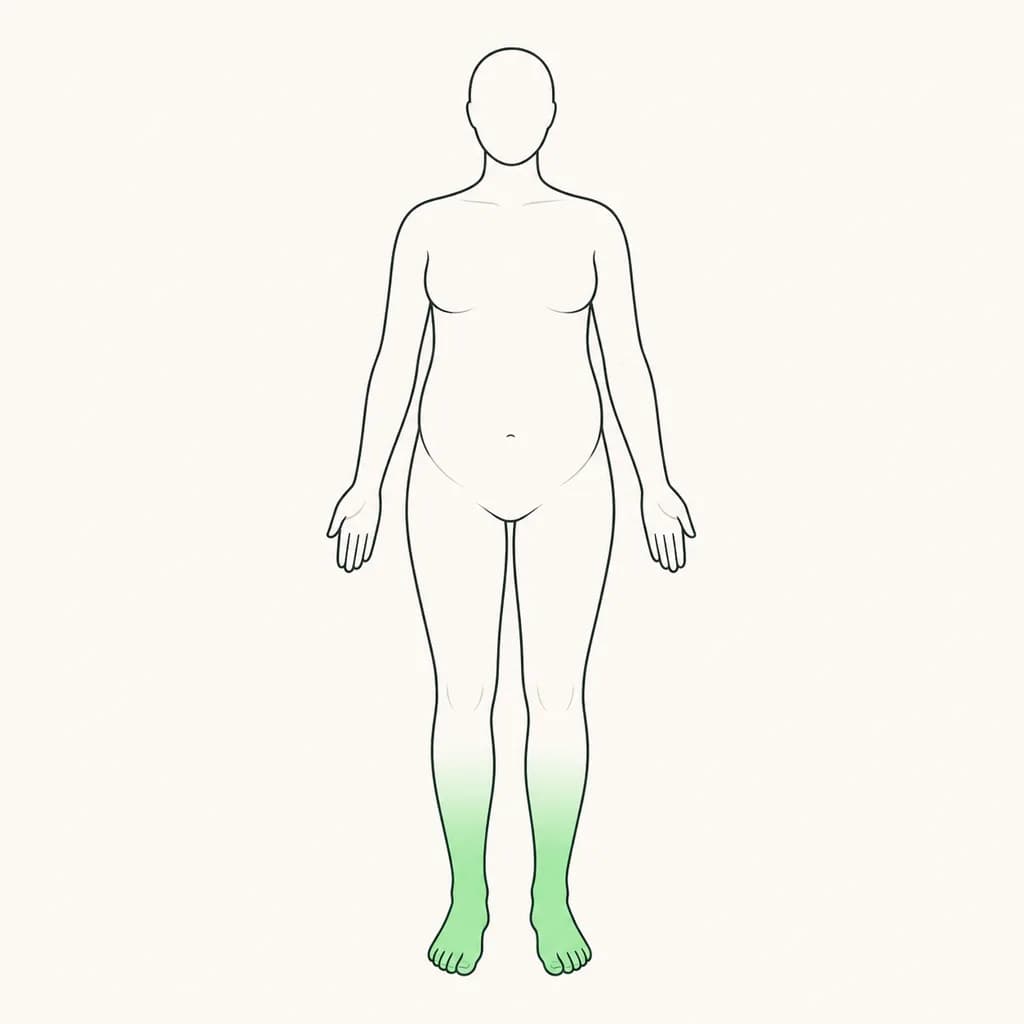
Pregnancy increases the amount of fluid in the body. As the uterus grows, pressure on pelvic blood vessels can also slow the return of blood from the legs. Fluid may collect around the ankles and feet, especially after standing, walking, or sitting for a long time. It often improves after rest and may be more noticeable later in the day.
Swelling in both feet that develops gradually can fit this pattern. Swelling on one side, particularly with warmth, redness, tenderness, or calf pain, has a different urgency and should be assessed rather than explained away as ordinary pregnancy oedema.
Ways to ease everyday swelling
Change position regularly and take gentle walks if your maternity clinician says activity is suitable. When resting, raise your feet on a cushion and avoid crossing your legs. Choose roomy shoes and socks that do not leave tight marks. Sleeping on your side may be more comfortable than lying flat on your back.
Drink to thirst and continue your usual balanced meals; do not take water tablets or herbal products for swelling unless prescribed. Mention persistent swelling at your next antenatal visit so your blood pressure and urine can be checked.
When to seek care quickly
Contact your maternity team promptly if swelling appears suddenly, becomes pronounced in your face or hands, or comes with a severe headache, blurred vision, pain beneath the ribs, vomiting, or feeling very unwell. These symptoms can occur with pre-eclampsia, which needs medical assessment.
Seek urgent help for one-sided leg swelling with pain, warmth, or redness, or for chest pain, sudden breathlessness, coughing blood, or fainting. Do not wait for a routine appointment in these situations.
Questions for your doctor or midwife
Ask whether the pattern is expected for your stage of pregnancy, whether your blood pressure and urine need checking, and which activity or support stockings are suitable for you. Ask what changes should lead you to call the maternity unit.
Find care
General Clinics & Polyclinics in Abu Dhabi
That answer is general. If you want it applied to your own case, these are licensed general clinics & polyclinics listed in Abu Dhabi.
27 Ar Ruwwad St - Shakhbout City - MSH4 - Abu Dhabi - United Arab Emirates
Accepts: Daman, Thiqa, Cigna, MetLife +20 more
Al Ruwais, Al Dhafrah
Accepts: Daman, Thiqa, AXA, Cigna +16 more
Al Bahyah - Al Bahyah Old - Abu Dhabi - United Arab Emirates
Accepts: Daman, Thiqa, Cigna, Allianz Care +18 more
Abu Dhabi
Accepts: Daman, Thiqa, AXA, Cigna +27 more
Ordered by verification status and how complete each clinic's public record is, then alphabetically. This is a directory listing, not a ranking — Zavis does not rate or recommend providers.
A factual listing drawn from the DHA, DOH and MOHAP licence registers. It is not a referral, an endorsement, or advice that any of these providers is right for you.
Questions people ask
Can normal pregnancy swelling affect both ankles?
Gradual swelling affecting both ankles can occur as fluid balance and circulation change during pregnancy.
Should I ignore swelling if it is painless?
No. Report sudden or rapidly worsening swelling, even without pain, because your maternity team may need to check blood pressure and urine.
Related
Related reading
Keep reading
Medical disclaimer. This page is general health information, not medical advice, and it cannot diagnose you. Always consult a licensed healthcare provider about your own symptoms and treatment. In an emergency in the UAE, call 998 for an ambulance.