
What should you know about surgical removal of melanoma?
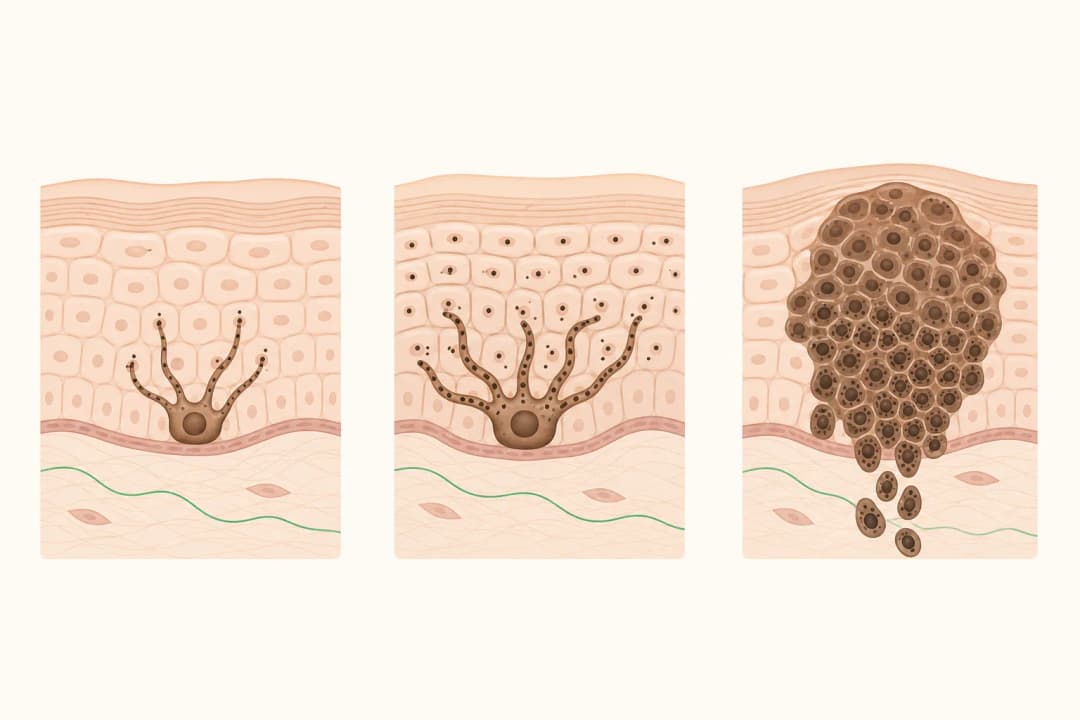
Short answer
Surgical removal of melanoma takes out the tumour with a margin of surrounding skin, and pathology guides whether further care is needed.
This answers one question. It is not a diagnosis and does not replace an assessment by a licensed doctor.
At a glance
- What is removed
- The melanoma and a planned margin of surrounding skin.
- What guides next steps
- Pathology findings, examination, and the clinical stage.
What surgery involves
A clinician removes the suspected or confirmed melanoma and a planned margin around it. The specimen is examined to describe features that affect staging and next decisions. Depending on the tumour and examination findings, the operation may be a wider excision after an initial biopsy, or a more involved tumour removal procedure. A Sentinel Lymph Node Biopsy may be discussed for selected melanomas to assess nearby lymphatic spread. Surgery treats the area removed; it does not replace assessment of the rest of the skin or lymph nodes. Melanoma can also require systemic treatment such as Immunotherapy in some situations.
Preparing and follow-up
Ask which operation is planned, how much skin may be removed, how the wound will close, and when pathology results will be reviewed. Share medicines, allergies, bleeding problems, and previous scars. Keep the wound protected as instructed, avoid strain across the closure, and attend every review. Once healed, protect the scar and examine your skin as advised. Follow-up may include skin checks, lymph-node assessment, and discussion of additional treatment when findings warrant it.
When to seek prompt help
Contact the surgical team for increasing redness, warmth, swelling, pain, drainage, wound separation, or bleeding that does not settle with pressure. Seek urgent help for fever with severe illness, fainting, breathing difficulty, or rapidly worsening swelling. A new changing spot, enlarged lymph node, persistent unexplained pain, or neurological symptoms should be reported during follow-up; severe sudden neurological symptoms require emergency care.
Questions to ask
Ask what the pathology shows, whether the margin is clear, whether lymph-node assessment is appropriate, and what surveillance schedule you need. Discuss scar care, activity limits, signs of recurrence, and when Skin Cancer Surgery, Tumour Removal Surgery, or additional treatment might be considered.
Find care
General Clinics & Polyclinics in Abu Dhabi
That answer is general. If you want it applied to your own case, these are licensed general clinics & polyclinics listed in Abu Dhabi.
27 Ar Ruwwad St - Shakhbout City - MSH4 - Abu Dhabi - United Arab Emirates
Accepts: Daman, Thiqa, Cigna, MetLife +20 more
Al Ruwais, Al Dhafrah
Accepts: Daman, Thiqa, AXA, Cigna +16 more
Al Bahyah - Al Bahyah Old - Abu Dhabi - United Arab Emirates
Accepts: Daman, Thiqa, Cigna, Allianz Care +18 more
Abu Dhabi
Accepts: Daman, Thiqa, AXA, Cigna +27 more
Ordered by verification status and how complete each clinic's public record is, then alphabetically. This is a directory listing, not a ranking — Zavis does not rate or recommend providers.
A factual listing drawn from the DHA, DOH and MOHAP licence registers. It is not a referral, an endorsement, or advice that any of these providers is right for you.
Questions people ask
Does removing the visible melanoma finish all care?
Not always. Pathology and staging determine whether monitoring, lymph-node assessment, or additional treatment is appropriate.
Why might a second operation be needed?
A wider excision may be recommended when the first removal did not include the planned margin.
Related
Related reading
Keep reading
Medical disclaimer. This page is general health information, not medical advice, and it cannot diagnose you. Always consult a licensed healthcare provider about your own symptoms and treatment. In an emergency in the UAE, call 998 for an ambulance.