
Superficial spreading melanoma treatment
Short answer
Treatment for superficial spreading melanoma usually begins with complete surgical removal, while further care depends on depth, margins, lymph nodes, and spread.
This answers one question. It is not a diagnosis and does not replace an assessment by a licensed doctor.
At a glance
- Main local treatment
- Surgical removal with a margin planned from pathology findings
- Additional options
- Lymph-node assessment or systemic therapy when staging indicates a need
Why treatment is tailored
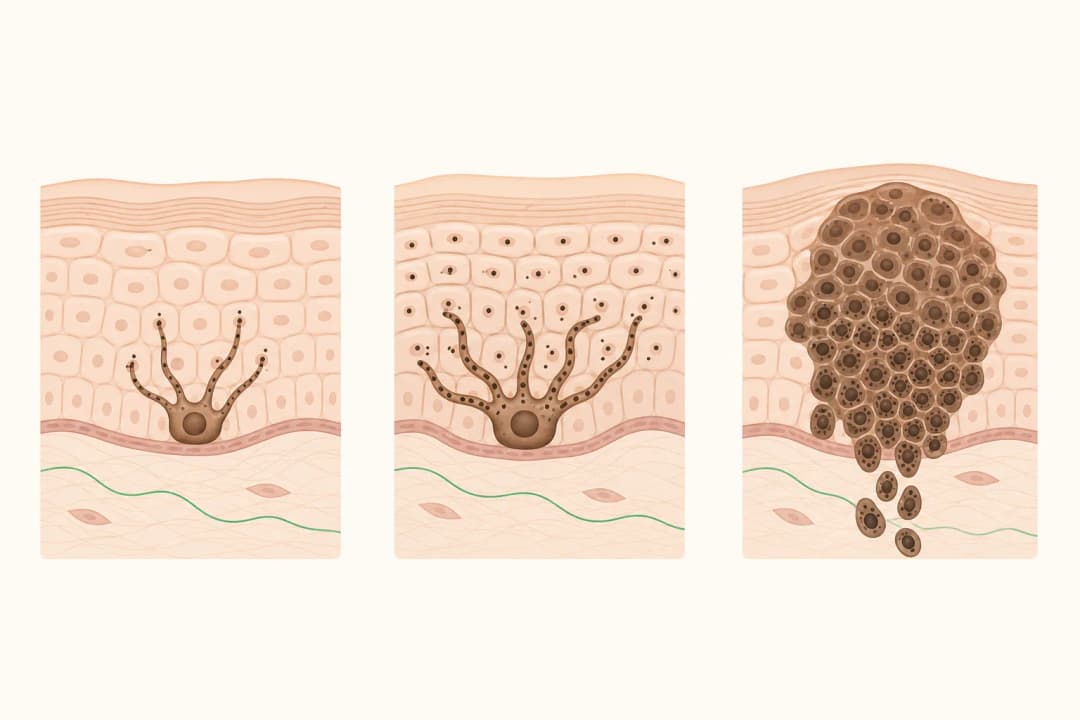
The first biopsy confirms melanoma and supplies features used to plan care. A second operation may remove a wider border of normal-looking skin around the original site. This is called a wide local excision and aims to reduce the chance that melanoma cells remain at the edge. The amount of tissue depends on the tumour’s pathology and location.
For selected melanomas, a sentinel lymph node biopsy checks the first draining lymph nodes for microscopic spread. If melanoma has travelled beyond the original area, an oncology team may discuss immunotherapy or other systemic treatment. A treatment plan can involve dermatology, surgical, pathology, radiology, and oncology specialists.
Preparing for treatment
Bring the pathology report, medication list, allergies, and previous procedure details to your appointment. Ask whether the visible lesion was fully removed, whether further excision is needed, and whether lymph-node testing or scans are appropriate. Follow wound-care instructions closely; avoid picking a scab or applying unapproved products. Protect healed skin from strong sun exposure and continue the skin checks recommended by your team. Explore Melanoma, Surgical Excision, and Immunotherapy for related information.
When to seek care promptly
After surgery, call the clinic for spreading redness, increasing warmth, worsening pain, pus, fever, wound separation, or bleeding that continues despite pressure. During systemic treatment, promptly report new breathing problems, severe diarrhoea, marked rash, yellowing of the skin, or unusual weakness because treatment-related inflammation may need assessment. Sudden neurological symptoms require urgent medical help.
Questions for your doctor
What operation do I need, and how will the scar be managed? Are my margins clear? Is sentinel lymph node biopsy suitable? Do I need imaging or oncology review? What side effects should I report immediately?
Find care
General Clinics & Polyclinics in Abu Dhabi
That answer is general. If you want it applied to your own case, these are licensed general clinics & polyclinics listed in Abu Dhabi.
27 Ar Ruwwad St - Shakhbout City - MSH4 - Abu Dhabi - United Arab Emirates
Accepts: Daman, Thiqa, Cigna, MetLife +20 more
Al Ruwais, Al Dhafrah
Accepts: Daman, Thiqa, AXA, Cigna +16 more
Al Bahyah - Al Bahyah Old - Abu Dhabi - United Arab Emirates
Accepts: Daman, Thiqa, Cigna, Allianz Care +18 more
Abu Dhabi
Accepts: Daman, Thiqa, AXA, Cigna +27 more
Ordered by verification status and how complete each clinic's public record is, then alphabetically. This is a directory listing, not a ranking — Zavis does not rate or recommend providers.
A factual listing drawn from the DHA, DOH and MOHAP licence registers. It is not a referral, an endorsement, or advice that any of these providers is right for you.
Questions people ask
Is one biopsy always the complete treatment?
Not always. The initial biopsy may need to be followed by wider excision, depending on the margins and pathology.
When is immunotherapy considered?
An oncology team may consider it when staging shows a risk or extent of disease for which systemic treatment could help.
Related
Related reading
Keep reading
Medical disclaimer. This page is general health information, not medical advice, and it cannot diagnose you. Always consult a licensed healthcare provider about your own symptoms and treatment. In an emergency in the UAE, call 998 for an ambulance.