
What should you know about stop alopecia areata spreading?
Short answer
To help limit active alopecia areata, arrange a dermatology assessment, protect the scalp and discuss treatments suited to the pattern and extent of hair loss.
This answers one question. It is not a diagnosis and does not replace an assessment by a licensed doctor.
At a glance
- Typical sign
- Smooth, clearly defined bald patches
- Useful record
- dated photographs showing change over time
How spreading is assessed
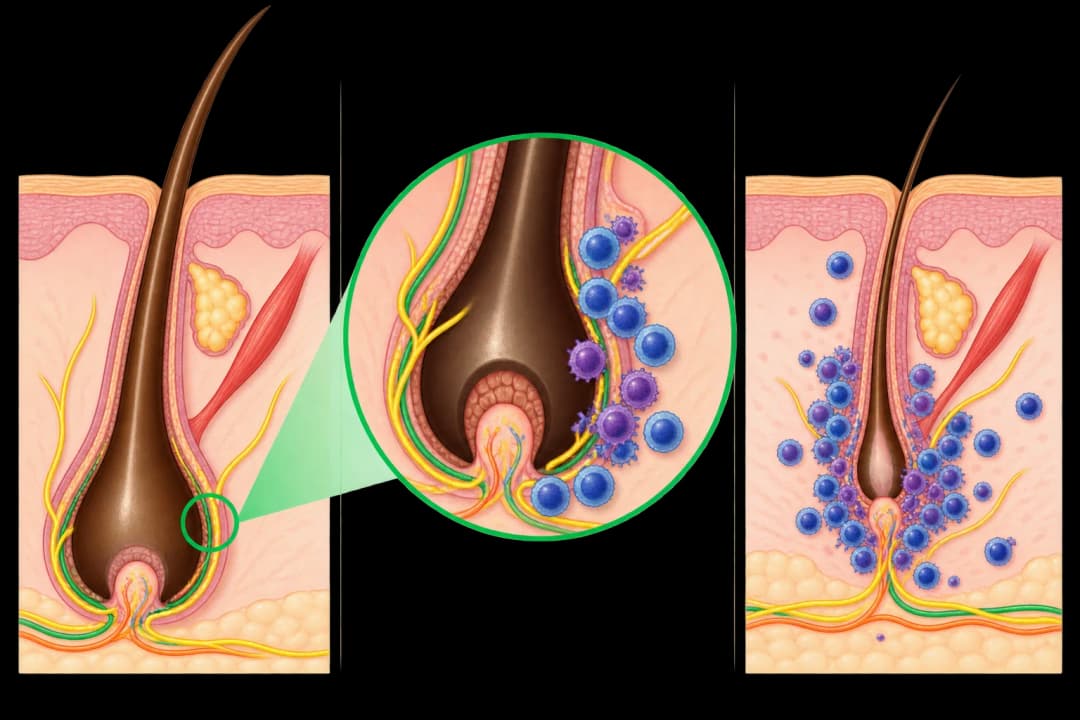
Alopecia areata is an immune-related condition in which hair follicles become targets of inflammation. It often presents as smooth bald patches, but activity can change over time and may involve the scalp, beard or other hair-bearing sites. New patches, widening edges, short broken hairs or eyebrow and eyelash changes can signal ongoing activity. Hair loss can have other causes, so a clinician may examine the skin, nails and hair pattern before recommending a plan.
Steps that support a plan
Book an assessment when patches are new, expanding or recurring. Handle hair gently, avoid tight styles and harsh chemicals, and use sun protection on exposed scalp skin. Take clear photographs over time so changes are easier to describe. Depending on the pattern, options may include steroid injection into the skin, topical corticosteroids, oral corticosteroid treatment or a JAK inhibitor treatment. These require clinician selection and monitoring; do not borrow medicines or apply them near the eyes without instructions.
When to seek prompt advice
Arrange prompt review for rapidly expanding bald patches, widespread scalp or body hair loss, eyebrow or eyelash loss, nail changes, or scalp pain and scaling. Seek urgent help for facial swelling, breathing trouble or a severe reaction after treatment. Faster review can clarify whether this is active alopecia areata or another condition and can address the practical effects of sudden hair loss.
Questions for your appointment
Does my pattern fit alopecia areata, and how active does it appear? Which treatment is appropriate for the affected areas? What monitoring is needed, and when should progress be reviewed? How can I protect exposed skin and manage eyebrow or beard changes?
Find care
General Clinics & Polyclinics in Abu Dhabi
That answer is general. If you want it applied to your own case, these are licensed general clinics & polyclinics listed in Abu Dhabi.
27 Ar Ruwwad St - Shakhbout City - MSH4 - Abu Dhabi - United Arab Emirates
Accepts: Daman, Thiqa, Cigna, MetLife +20 more
Al Ruwais, Al Dhafrah
Accepts: Daman, Thiqa, AXA, Cigna +16 more
Al Bahyah - Al Bahyah Old - Abu Dhabi - United Arab Emirates
Accepts: Daman, Thiqa, Cigna, Allianz Care +18 more
Abu Dhabi
Accepts: Daman, Thiqa, AXA, Cigna +27 more
Ordered by verification status and how complete each clinic's public record is, then alphabetically. This is a directory listing, not a ranking — Zavis does not rate or recommend providers.
A factual listing drawn from the DHA, DOH and MOHAP licence registers. It is not a referral, an endorsement, or advice that any of these providers is right for you.
Questions people ask
Can stress alone prove that patches will spread?
Stress may be discussed as a possible contributor, but it cannot predict an individual course or replace examination.
Will rubbing the patch make it spread?
Ordinary gentle handling does not diagnose activity, but avoid traction, harsh chemicals and repeated irritation.
Related
Related reading
Keep reading
Medical disclaimer. This page is general health information, not medical advice, and it cannot diagnose you. Always consult a licensed healthcare provider about your own symptoms and treatment. In an emergency in the UAE, call 998 for an ambulance.