
Steps of Frozen Embryo Transfer: What to Expect
Short answer
A frozen embryo transfer prepares the uterine lining, thaws a chosen embryo, places it through a catheter, and checks for pregnancy later.
This answers one question. It is not a diagnosis and does not replace an assessment by a licensed doctor.
At a glance
- Embryo source
- An embryo preserved from an earlier treatment cycle is used.
- Main checks
- The lining and timing are assessed before transfer.
How a frozen transfer is organised
Your clinic may follow a natural cycle, using ovulation timing, or a medicated cycle that prepares the lining with hormones. Ultrasound and sometimes blood tests help identify the transfer window. Progesterone is often part of the support plan once ovulation has occurred or the lining is ready.
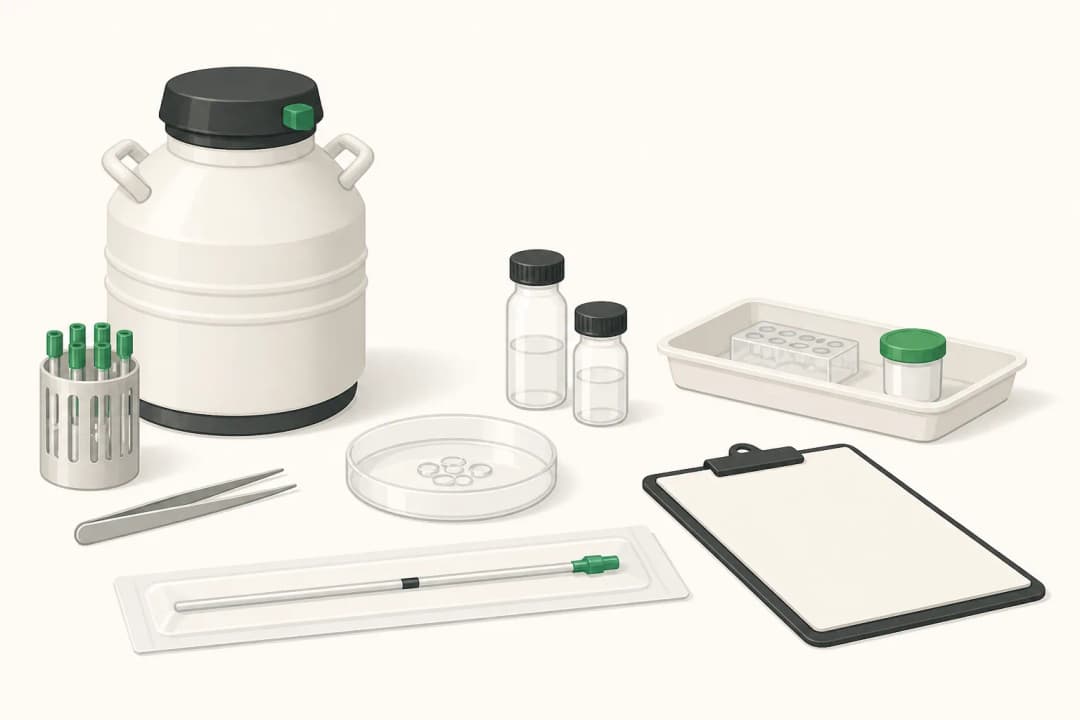
The embryology team warms the selected embryo and checks it before transfer. A clinician passes a soft catheter through the cervix and releases the embryo into the uterus. The transfer does not require egg collection in that cycle. The clinic gives a date for pregnancy testing and explains the next scan if the test is positive.
Practical preparation
Use medicines exactly as prescribed and report missed doses, new medicines or unusual symptoms. Attend lining checks and follow instructions about bladder preparation, food and drink. Arrange a calm journey home if you prefer, but strict bed rest is not routinely required unless your clinician gives different advice.
Keep taking prescribed progesterone or other support until the team advises a change. Test on the scheduled day, since an early result can be misleading. Emotional strain is common during the waiting period; ask the clinic what support is available.
When to seek medical help
Get urgent help for severe pelvic pain, heavy bleeding, fainting, fever, breathing difficulty or rapidly increasing abdominal swelling. Call the fertility clinic about ongoing pain or bleeding. After a positive test, one-sided pain, shoulder-tip pain, dizziness or bleeding needs prompt assessment.
Useful questions
Ask why a natural or medicated cycle is recommended, how the embryo was selected, when medicines begin and end, what to do after a missed dose, and when the pregnancy test and scan will occur. Ask which activities are suitable for you during the waiting period.
Find care
General Clinics & Polyclinics in Abu Dhabi
That answer is general. If you want it applied to your own case, these are licensed general clinics & polyclinics listed in Abu Dhabi.
27 Ar Ruwwad St - Shakhbout City - MSH4 - Abu Dhabi - United Arab Emirates
Accepts: Daman, Thiqa, Cigna, MetLife +20 more
Al Ruwais, Al Dhafrah
Accepts: Daman, Thiqa, AXA, Cigna +16 more
Al Bahyah - Al Bahyah Old - Abu Dhabi - United Arab Emirates
Accepts: Daman, Thiqa, Cigna, Allianz Care +18 more
Abu Dhabi
Accepts: Daman, Thiqa, AXA, Cigna +27 more
Ordered by verification status and how complete each clinic's public record is, then alphabetically. This is a directory listing, not a ranking — Zavis does not rate or recommend providers.
A factual listing drawn from the DHA, DOH and MOHAP licence registers. It is not a referral, an endorsement, or advice that any of these providers is right for you.
Questions people ask
Does frozen embryo transfer include egg collection?
No. The embryo has already been created and preserved; the cycle focuses on preparing the uterus and timing transfer.
What if the pregnancy test is negative?
The clinic will explain when to stop support medicines and review possible next steps with you.
Related
Related reading
Keep reading
Medical disclaimer. This page is general health information, not medical advice, and it cannot diagnose you. Always consult a licensed healthcare provider about your own symptoms and treatment. In an emergency in the UAE, call 998 for an ambulance.