
What should you know about stage two chronic kidney disease?
Short answer
Stage two chronic kidney disease usually reflects mildly reduced kidney function or other evidence of kidney damage, making regular review worthwhile.
This answers one question. It is not a diagnosis and does not replace an assessment by a licensed doctor.
At a glance
- Often noticed
- No symptoms, with findings on testing
- Useful review
- Kidney blood tests, urine tests, blood pressure, and medicines
Understanding the stage
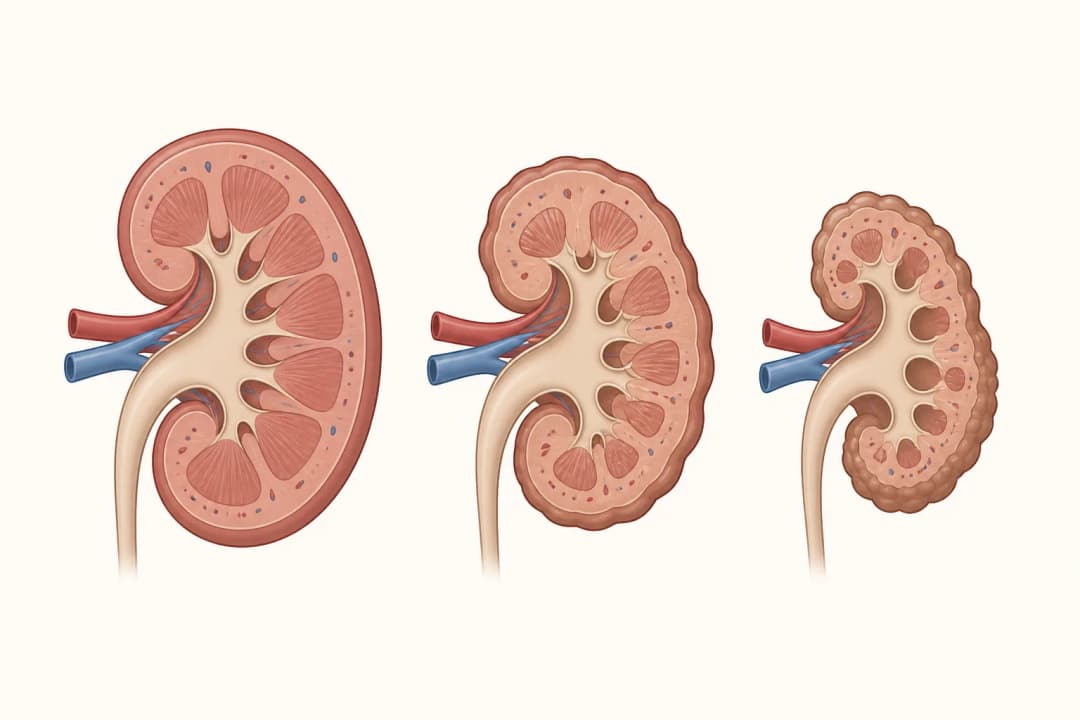
A stage is assigned using kidney filtration estimates and related findings, especially urine results. A single abnormal result does not always explain the full picture; clinicians consider whether the finding persists and whether there is protein or blood in the urine.
Many people at this stage feel well. Fatigue or excessive thirst is not specific to kidney disease and may relate to anaemia, diabetes, medicines, heat, or another condition. Stage two is a reason to understand your results, not a prediction of what must happen next.
Protecting kidney function
Attend planned blood and urine testing and keep blood pressure in the range your clinician recommends. If you have type 2 diabetes or hypertension, careful treatment can reduce strain on the kidneys. Do not start supplements or frequent anti-inflammatory painkillers without checking first, and never stop prescribed medicines on your own.
Choose practical habits you can maintain: avoid smoking, stay active as appropriate, and follow individual advice about salt, fluids, and weight. Bring all medicines, including non-prescription products, to reviews so doses and interactions can be checked.
When to get help
Arrange medical review for new swelling, a persistent change in urination, repeated vomiting, unusual weakness, or breathlessness. Seek urgent care for severe breathlessness, fainting, chest pain, confusion, or inability to keep fluids down. Urgency depends on the symptom and its cause, not on the stage label alone.
Useful questions
Ask whether your result reflects reduced filtration, urine protein, or another finding; when it should be rechecked; and what trend would concern your team. Ask how blood pressure, diabetes, pain relief, and hydration should be managed for you.
Find care
General Clinics & Polyclinics in Abu Dhabi
That answer is general. If you want it applied to your own case, these are licensed general clinics & polyclinics listed in Abu Dhabi.
27 Ar Ruwwad St - Shakhbout City - MSH4 - Abu Dhabi - United Arab Emirates
Accepts: Daman, Thiqa, Cigna, MetLife +20 more
Al Ruwais, Al Dhafrah
Accepts: Daman, Thiqa, AXA, Cigna +16 more
Al Bahyah - Al Bahyah Old - Abu Dhabi - United Arab Emirates
Accepts: Daman, Thiqa, Cigna, Allianz Care +18 more
Abu Dhabi
Accepts: Daman, Thiqa, AXA, Cigna +27 more
Ordered by verification status and how complete each clinic's public record is, then alphabetically. This is a directory listing, not a ranking — Zavis does not rate or recommend providers.
A factual listing drawn from the DHA, DOH and MOHAP licence registers. It is not a referral, an endorsement, or advice that any of these providers is right for you.
Questions people ask
Does stage two mean my kidneys will keep getting worse?
Not necessarily. The cause, urine findings, blood pressure, and changes over time all affect the outlook.
Should I change how much water I drink?
Follow personalised advice. Drinking very large amounts is not a treatment, and fluid needs vary with health conditions and medicines.
Related
Related reading
Keep reading
Medical disclaimer. This page is general health information, not medical advice, and it cannot diagnose you. Always consult a licensed healthcare provider about your own symptoms and treatment. In an emergency in the UAE, call 998 for an ambulance.