
What should you know about SS sickle cell disease?
Short answer
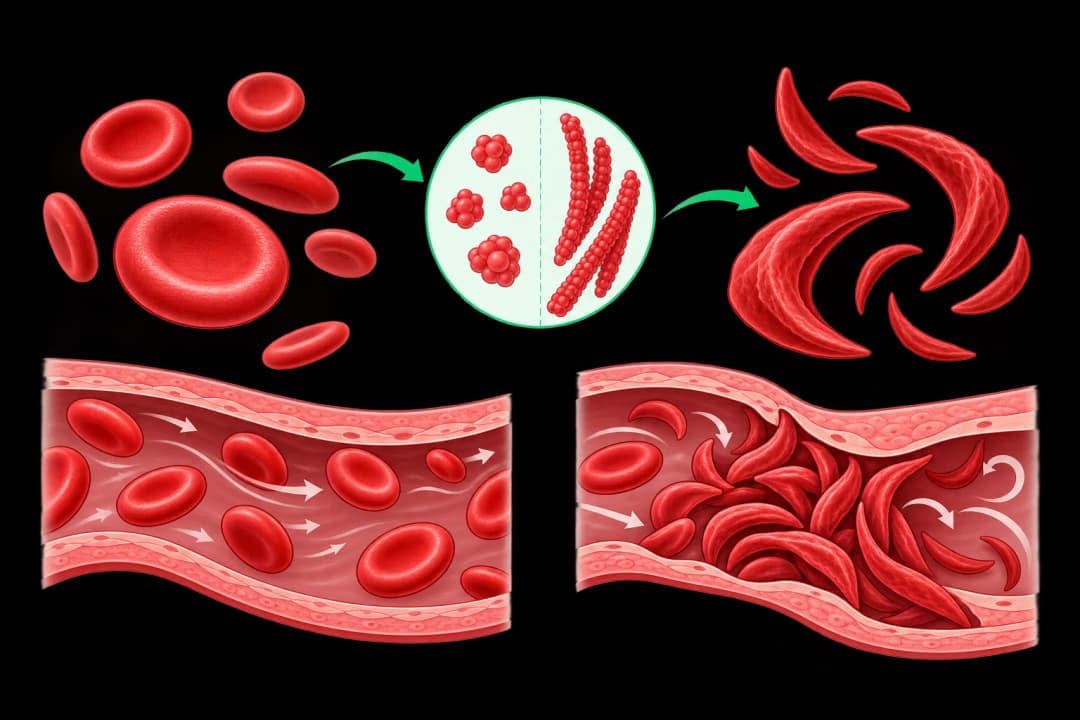
SS sickle cell disease is an inherited condition in which red blood cells can become rigid and sickle-shaped, causing anaemia and episodes of pain.
This answers one question. It is not a diagnosis and does not replace an assessment by a licensed doctor.
At a glance
- Type
- Inherited haemoglobin condition
- Main effects
- Anaemia and painful episodes
- Confirmation
- Specialised blood testing
What it means
The haemoglobin inside red blood cells is altered. These cells may break down sooner than usual and can obstruct small blood vessels, reducing oxygen delivery to tissues. This can lead to fatigue, pale skin, breathlessness or joint and bone pain. The pattern differs between people, and symptoms may be absent between episodes. A diagnosis is confirmed with specialised blood testing rather than symptoms alone.
What to do next
Arrange ongoing care with a clinician familiar with sickle cell disease. Keep a personal record of pain episodes, fever, medicines and triggers such as dehydration or illness. Drink regularly, follow your prescribed treatment plan, and discuss vaccines and routine checks. If you are planning a pregnancy, ask about genetic counselling and screening for both partners. A blood test can clarify the haemoglobin pattern when the diagnosis is uncertain.
When to seek care
Seek urgent medical help for severe or unusual pain, fever, chest pain, trouble breathing, sudden weakness, confusion, a severe headache, or marked swelling. Prompt assessment matters because a blocked blood vessel or infection can worsen quickly. Contact your care team when pain is not controlled by your agreed plan, vomiting prevents drinking, or tiredness is becoming much worse.
Questions for your doctor
Ask which tests confirmed the SS pattern, how to use your pain plan, which symptoms require emergency care, and whether family or premarital screening would be useful. Also ask how often you need blood counts, kidney checks, eye reviews and vaccinations.
Find care
General Clinics & Polyclinics in Abu Dhabi
That answer is general. If you want it applied to your own case, these are licensed general clinics & polyclinics listed in Abu Dhabi.
27 Ar Ruwwad St - Shakhbout City - MSH4 - Abu Dhabi - United Arab Emirates
Accepts: Daman, Thiqa, Cigna, MetLife +20 more
Al Ruwais, Al Dhafrah
Accepts: Daman, Thiqa, AXA, Cigna +16 more
Al Bahyah - Al Bahyah Old - Abu Dhabi - United Arab Emirates
Accepts: Daman, Thiqa, Cigna, Allianz Care +18 more
Abu Dhabi
Accepts: Daman, Thiqa, AXA, Cigna +27 more
Ordered by verification status and how complete each clinic's public record is, then alphabetically. This is a directory listing, not a ranking — Zavis does not rate or recommend providers.
A factual listing drawn from the DHA, DOH and MOHAP licence registers. It is not a referral, an endorsement, or advice that any of these providers is right for you.
Questions people ask
Can SS sickle cell disease cause fatigue?
Yes. Ongoing anaemia can reduce oxygen delivery and contribute to fatigue, although tiredness may have other causes too.
Can sickle cell pain be treated at home?
Some people have an agreed home plan for milder episodes, but severe, unusual or unrelieved pain needs urgent assessment.
Related
Related reading
Keep reading
Medical disclaimer. This page is general health information, not medical advice, and it cannot diagnose you. Always consult a licensed healthcare provider about your own symptoms and treatment. In an emergency in the UAE, call 998 for an ambulance.