
Side effects of radioactive iodine for hyperthyroidism
Short answer
Radioactive iodine can briefly worsen symptoms of hyperthyroidism and later make the thyroid underactive, so follow-up blood tests and medical advice are essential.
This answers one question. It is not a diagnosis and does not replace an assessment by a licensed doctor.
At a glance
- Early possibility
- Existing overactive-thyroid symptoms may briefly persist
- Longer-term possibility
- The thyroid may become underactive
Possible treatment effects
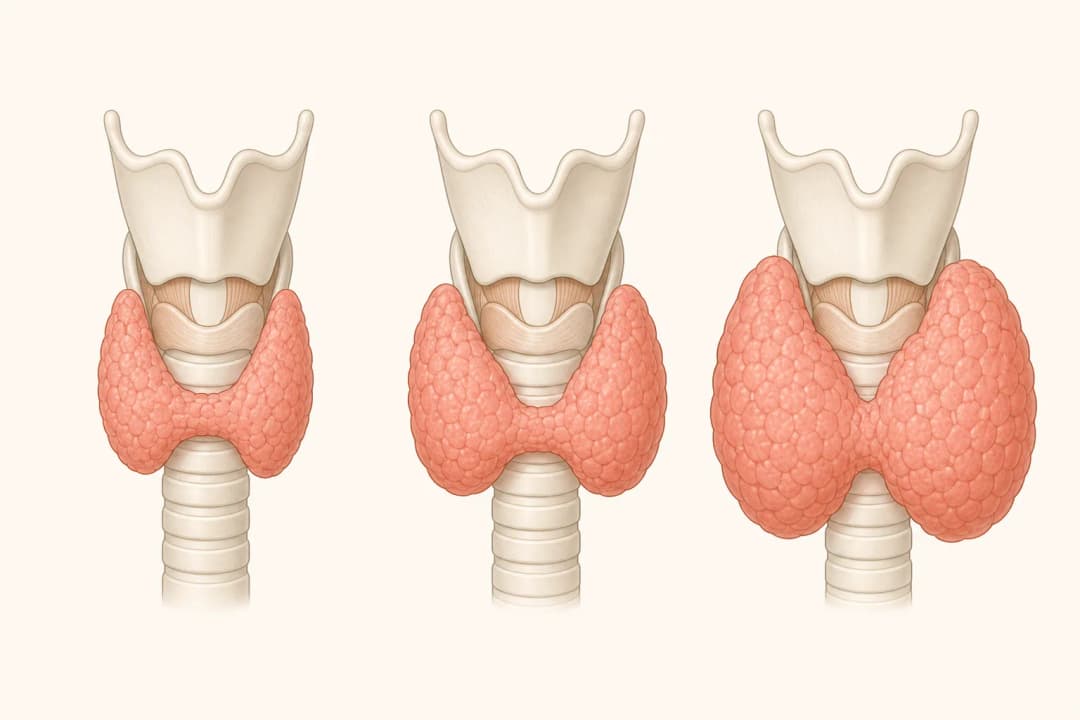
Radioactive iodine is taken up by thyroid cells and gradually reduces their activity. During the early phase, symptoms such as palpitations, sweating, heat intolerance, anxiety, loose stools or difficulty sleeping may persist or temporarily feel stronger.
The intended reduction in thyroid activity can eventually go further than needed, leaving too little thyroid hormone. This is called an underactive thyroid and may cause tiredness, feeling cold, constipation, dry skin or low mood. It is managed with clinician-prescribed hormone replacement when appropriate.
What to do after treatment
Attend every blood-test appointment, even if you feel well, because symptoms alone cannot show how thyroid levels are changing. Take or stop other thyroid medicines only according to the nuclear-medicine or endocrinology team's instructions.
Follow the service's radiation-safety advice about close contact, hygiene and pregnancy. Tell the team promptly if you are pregnant, breastfeeding, or planning pregnancy. Keep a record of new palpitations, [Excessive Sweating](/symptoms/excessive-sweating/) or [Feeling Anxious](/symptoms/feeling-anxious/).
When to seek care
Seek urgent help for chest pain, fainting, severe breathlessness, a very rapid or irregular heartbeat, or marked agitation, confusion or weakness. These symptoms need prompt assessment rather than waiting for the next planned test.
Contact your treating team if diarrhoea, [Night Sweats](/symptoms/night-sweats/), [Palpitations](/symptoms/palpitations/) or other symptoms are persistent or worsening. Your team may adjust monitoring or treatment for [Hyperthyroidism](/conditions/hyperthyroidism/).
Questions for your doctor
Ask when your blood tests will be checked, which symptoms should prompt a call, and how long to follow radiation-safety precautions. Ask what would happen if your thyroid becomes underactive and how pregnancy plans affect treatment.
Find care
General Clinics & Polyclinics in Abu Dhabi
That answer is general. If you want it applied to your own case, these are licensed general clinics & polyclinics listed in Abu Dhabi.
27 Ar Ruwwad St - Shakhbout City - MSH4 - Abu Dhabi - United Arab Emirates
Accepts: Daman, Thiqa, Cigna, MetLife +20 more
Al Ruwais, Al Dhafrah
Accepts: Daman, Thiqa, AXA, Cigna +16 more
Al Bahyah - Al Bahyah Old - Abu Dhabi - United Arab Emirates
Accepts: Daman, Thiqa, Cigna, Allianz Care +18 more
Abu Dhabi
Accepts: Daman, Thiqa, AXA, Cigna +27 more
Ordered by verification status and how complete each clinic's public record is, then alphabetically. This is a directory listing, not a ranking — Zavis does not rate or recommend providers.
A factual listing drawn from the DHA, DOH and MOHAP licence registers. It is not a referral, an endorsement, or advice that any of these providers is right for you.
Questions people ask
Can radioactive iodine make symptoms worse at first?
Some overactive-thyroid symptoms can persist or briefly feel stronger while thyroid activity changes; report significant symptoms to the treating team.
Why are blood tests needed after radioactive iodine?
Thyroid activity changes gradually, and blood tests show whether hormone levels are still high, have reached the target, or are becoming too low.
Related
Related reading
Keep reading
Medical disclaimer. This page is general health information, not medical advice, and it cannot diagnose you. Always consult a licensed healthcare provider about your own symptoms and treatment. In an emergency in the UAE, call 998 for an ambulance.