
Side Effects of Melanoma: Symptoms and When to Seek Care
Short answer
Melanoma may cause changes in a mole or skin area, while advanced disease and its treatments can produce different symptoms and side effects that need medical review.
This answers one question. It is not a diagnosis and does not replace an assessment by a licensed doctor.
At a glance
- Early skin changes
- A mole or patch may evolve in shape, border, colour, size, or symptoms.
- Treatment effects
- Surgery and immunotherapy can cause different problems from the cancer itself.
- Urgent warning
- Breathing difficulty or sudden neurological symptoms need emergency assessment.
What should you know about side effects of melanoma?
Melanoma may cause changes in a mole or skin area, while advanced disease and its treatments can produce different symptoms and side effects that need medical review. The cancer itself may be quiet at first, so a changing spot deserves assessment even when it does not hurt. Side effects can also come from surgery, immunotherapy, or other cancer treatment rather than from melanoma directly.
What melanoma-related changes can mean
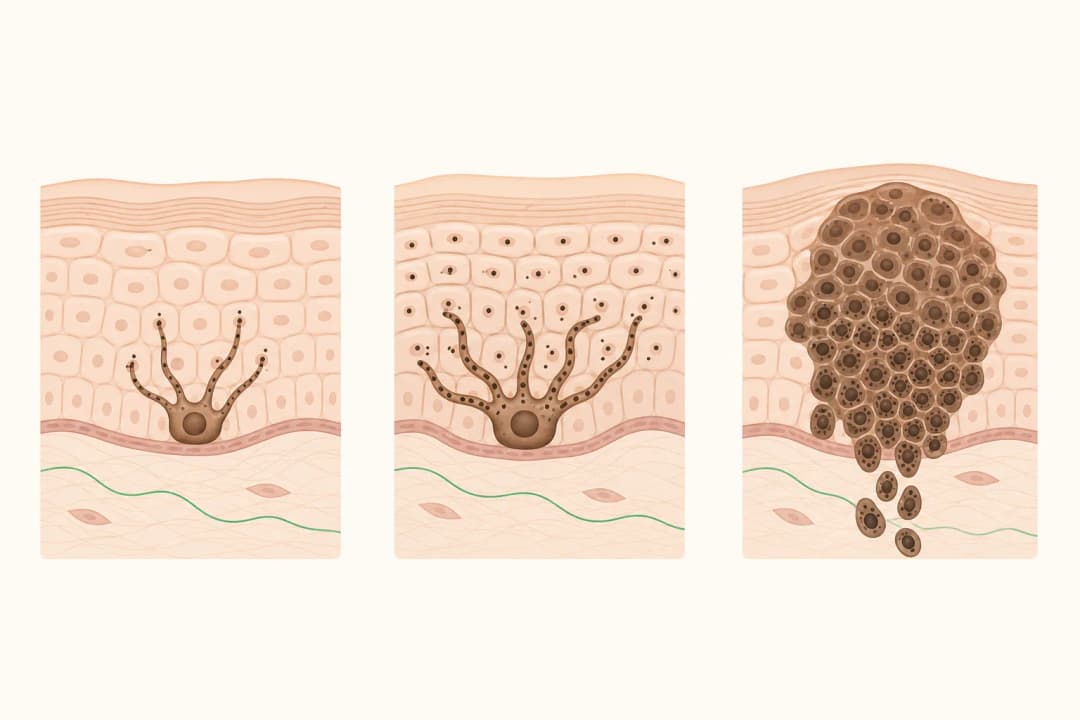
A melanoma can show a mole or patch becoming asymmetrical, developing an uneven border, changing colour, enlarging, or evolving in another noticeable way. It may itch, bleed, crust, become tender, or form an area that does not heal, although none of these changes proves that a spot is melanoma. If melanoma spreads, symptoms depend on the organ involved. Persistent tiredness, unexplained weight loss, swollen lymph nodes, persistent pain, cough, headaches, weakness, or changes in vision can have many causes but should be reported when melanoma is known or suspected. Brain metastases can cause neurological symptoms and require prompt assessment.
Treatment effects follow a different pattern. Excision can leave soreness, bruising, swelling, numbness, tightness, or a scar near the wound. Immunotherapy can activate the immune system against healthy organs, leading to diarrhoea, rash, itching, joint pain, fatigue, cough, shortness of breath, or changes in thyroid and other hormone function. Tell the oncology team about new symptoms early; do not wait for them to become severe.
What to do after noticing a change
Arrange a dermatology review for a changing, bleeding, or non-healing spot. Do not pick at it or remove it yourself. Photographing the area beside a ruler can help show change over time, but a photograph cannot replace examination. A clinician may inspect the whole skin surface, feel nearby lymph nodes, and recommend a biopsy or other staging assessment.
If you are receiving treatment, keep a simple record of when symptoms began, how often they occur, medicines you take, bowel changes, temperature, and any breathing or neurological symptoms. Contact the treating team using its out-of-hours instructions before taking a new medicine for a suspected treatment reaction.
When to seek urgent care
Seek emergency care for severe trouble breathing, chest pain, fainting, sudden confusion, a seizure, new weakness on one side, difficulty speaking, or a sudden severe headache. During immunotherapy, urgent advice is also needed for rapidly worsening diarrhoea, blood in the stool, severe abdominal pain, yellowing of the skin or eyes, very little urine, or a widespread blistering rash.
Contact your melanoma or oncology team promptly for a fever, a new or worsening symptom, marked fatigue, persistent vomiting, new cough, vision changes, or a wound that becomes increasingly red, hot, swollen, painful, or draining. The urgency depends on the symptom and treatment, not on how likely a symptom is to represent melanoma.
Questions for your doctor
Ask which symptoms could come from melanoma, which could be treatment effects, and whom to contact outside clinic hours. You can also ask what changes in a surgical wound are expected, whether you need skin and lymph-node checks, how symptoms will be investigated, and which medicines or supplements should be avoided during treatment.
Find care
General Clinics & Polyclinics in Abu Dhabi
That answer is general. If you want it applied to your own case, these are licensed general clinics & polyclinics listed in Abu Dhabi.
27 Ar Ruwwad St - Shakhbout City - MSH4 - Abu Dhabi - United Arab Emirates
Accepts: Daman, Thiqa, Cigna, MetLife +20 more
Al Ruwais, Al Dhafrah
Accepts: Daman, Thiqa, AXA, Cigna +16 more
Al Bahyah - Al Bahyah Old - Abu Dhabi - United Arab Emirates
Accepts: Daman, Thiqa, Cigna, Allianz Care +18 more
Abu Dhabi
Accepts: Daman, Thiqa, AXA, Cigna +27 more
Ordered by verification status and how complete each clinic's public record is, then alphabetically. This is a directory listing, not a ranking — Zavis does not rate or recommend providers.
A factual listing drawn from the DHA, DOH and MOHAP licence registers. It is not a referral, an endorsement, or advice that any of these providers is right for you.
Questions people ask
Does melanoma always cause pain?
No. A suspicious melanoma may not hurt, so a changing or unusual skin mark should be examined even without pain.
How can I tell whether a symptom is from immunotherapy?
You usually cannot identify the cause safely at home. Report new symptoms to your oncology team, because immune-related reactions can affect the skin, bowel, lungs, liver, nerves, or hormone glands.
Can a melanoma treatment wound feel numb?
Yes. Numbness, tightness, soreness, or a scar can occur near an excision, but increasing redness, heat, swelling, pain, or drainage needs prompt review.
Related
Related reading
Keep reading
Medical disclaimer. This page is general health information, not medical advice, and it cannot diagnose you. Always consult a licensed healthcare provider about your own symptoms and treatment. In an emergency in the UAE, call 998 for an ambulance.