
Who can have sickle cell disease?
Short answer
Sickle cell disease can affect people who inherit altered haemoglobin genes from their parents, regardless of their age or gender.
This answers one question. It is not a diagnosis and does not replace an assessment by a licensed doctor.
At a glance
- Cause
- Inherited haemoglobin genes
- Who can be affected
- People of any age or gender who inherit relevant gene changes
- Testing
- Blood testing can identify the haemoglobin pattern
How inheritance matters
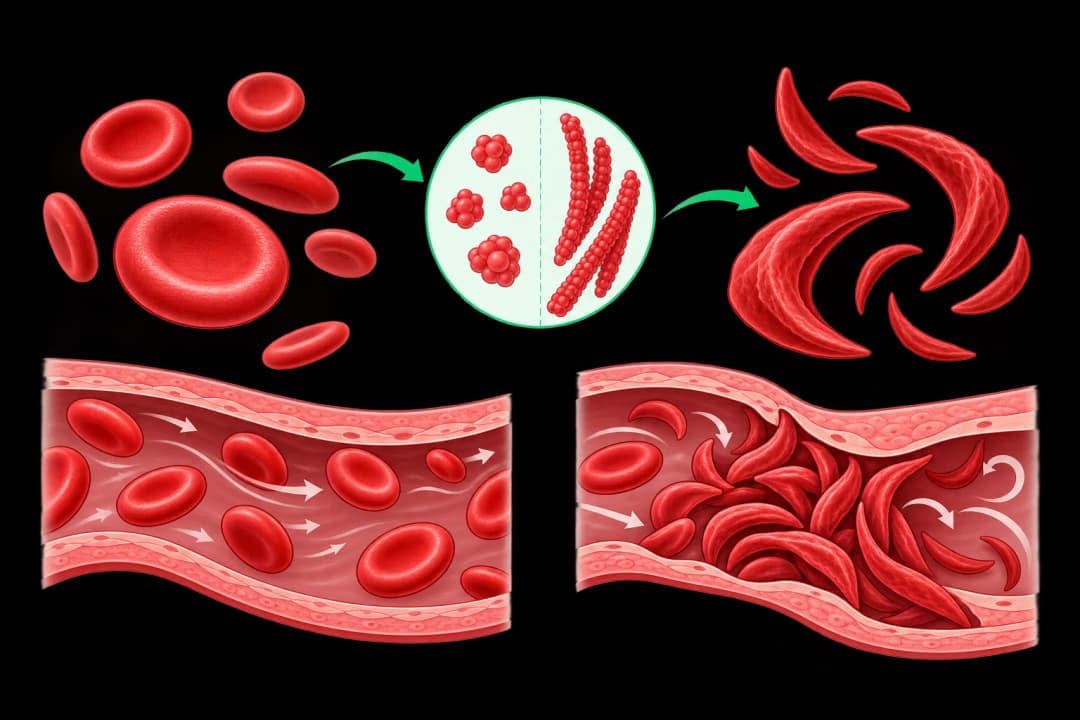
A person develops sickle cell disease when inherited haemoglobin changes affect red blood cells. Someone with one altered gene may have a carrier state rather than the disease, while a child who inherits relevant changes from both parents may be affected. Family history can be helpful, but its absence does not rule out the condition. Symptoms and severity differ between individuals; some people are diagnosed in childhood, while others are recognised later.
How to find out
A blood test can identify haemoglobin types and help distinguish sickle cell disease from a carrier state. Discuss testing if a relative has the condition, if symptoms include recurrent pain or fatigue, or before pregnancy. Premarital screening may identify inherited haemoglobin traits and supports informed family planning. Bring any previous test results and details of relatives with blood disorders to the appointment.
When to seek care
Get urgent help for severe pain, chest symptoms, breathing difficulty, sudden weakness, confusion, fever or unusual sleepiness in someone known or suspected to have sickle cell disease. A child with concerning symptoms should be assessed promptly, especially when drinking poorly or becoming less responsive.
Questions for your doctor
Ask whether testing is needed for you or relatives, what your result means for future children, how a carrier state differs from disease, and which symptoms require same-day care.
Find care
General Clinics & Polyclinics in Abu Dhabi
That answer is general. If you want it applied to your own case, these are licensed general clinics & polyclinics listed in Abu Dhabi.
27 Ar Ruwwad St - Shakhbout City - MSH4 - Abu Dhabi - United Arab Emirates
Accepts: Daman, Thiqa, Cigna, MetLife +20 more
Al Ruwais, Al Dhafrah
Accepts: Daman, Thiqa, AXA, Cigna +16 more
Al Bahyah - Al Bahyah Old - Abu Dhabi - United Arab Emirates
Accepts: Daman, Thiqa, Cigna, Allianz Care +18 more
Abu Dhabi
Accepts: Daman, Thiqa, AXA, Cigna +27 more
Ordered by verification status and how complete each clinic's public record is, then alphabetically. This is a directory listing, not a ranking — Zavis does not rate or recommend providers.
A factual listing drawn from the DHA, DOH and MOHAP licence registers. It is not a referral, an endorsement, or advice that any of these providers is right for you.
Questions people ask
Can someone have sickle cell disease without a family history?
Yes. A family history may be unknown or relatives may carry a gene without obvious symptoms.
Does carrying a sickle gene mean having the disease?
No. A carrier state and sickle cell disease are different findings and should be explained using the blood test result.
Related
Related reading
Keep reading
Medical disclaimer. This page is general health information, not medical advice, and it cannot diagnose you. Always consult a licensed healthcare provider about your own symptoms and treatment. In an emergency in the UAE, call 998 for an ambulance.