
Sickle Cell Disease Vaso-Occlusive Crisis
Short answer
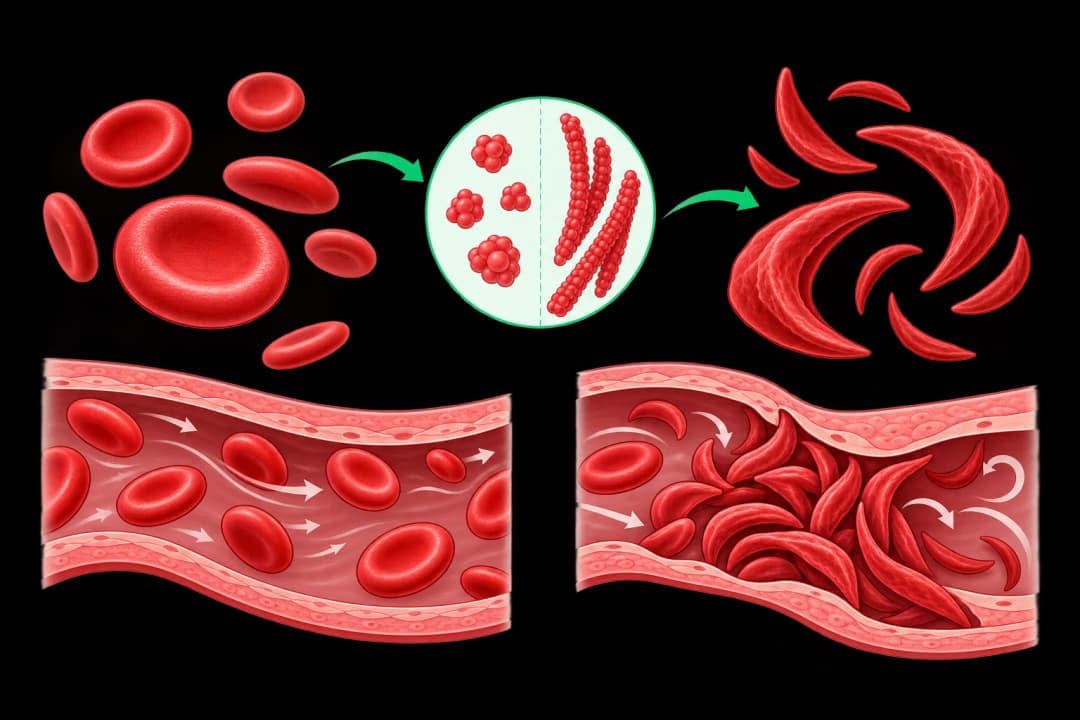
A vaso-occlusive crisis happens when sickle-shaped cells obstruct small blood vessels, causing pain and sometimes urgent organ complications.
This answers one question. It is not a diagnosis and does not replace an assessment by a licensed doctor.
At a glance
- Main mechanism
- Blocked small blood vessels
- Typical feature
- Sudden or worsening pain
- Emergency symptoms
- Chest, breathing, fever, or neurological changes
What is happening
The obstruction reduces blood flow and oxygen delivery to tissues. Pain may be sudden or build over time, and can affect the back, chest, abdomen, arms, legs, or joints. The episode may occur with fatigue or pale skin, but those symptoms alone do not establish a crisis.
A crisis can range from manageable at home under an established plan to a medical emergency. Infection, dehydration, cold exposure, stress, or low oxygen may contribute, although a clear trigger is not always found. A clinician may check vital signs, examine for complications, and use a blood test or other tests when needed.
During a suspected crisis
Follow the personalised pain plan from your sickle cell team, drink fluids if you can keep them down, rest in a comfortable environment, and seek advice early if pain is not improving. Use prescribed medicines exactly as directed; avoid taking someone else’s pain medicine or exceeding the advised dose.
Bring your medication list and tell the team when pain began, where it is located, what you have taken, and whether fever, vomiting, breathlessness, or reduced urine is present.
Emergency warning signs
Get urgent medical help for chest pain, breathing difficulty, fever, sudden weakness, confusion, seizure, severe headache, collapse, persistent vomiting, or pain that is severe or unlike previous episodes. A painful erection lasting several hours also requires emergency assessment.
Plan ahead with your doctor
Ask when to call your care team, which medicines to keep available, how to measure a fever, and where to go after hours. Discuss prevention, follow-up blood tests, and whether family screening is appropriate.
Find care
General Clinics & Polyclinics in Abu Dhabi
That answer is general. If you want it applied to your own case, these are licensed general clinics & polyclinics listed in Abu Dhabi.
27 Ar Ruwwad St - Shakhbout City - MSH4 - Abu Dhabi - United Arab Emirates
Accepts: Daman, Thiqa, Cigna, MetLife +20 more
Al Ruwais, Al Dhafrah
Accepts: Daman, Thiqa, AXA, Cigna +16 more
Al Bahyah - Al Bahyah Old - Abu Dhabi - United Arab Emirates
Accepts: Daman, Thiqa, Cigna, Allianz Care +18 more
Abu Dhabi
Accepts: Daman, Thiqa, AXA, Cigna +27 more
Ordered by verification status and how complete each clinic's public record is, then alphabetically. This is a directory listing, not a ranking — Zavis does not rate or recommend providers.
A factual listing drawn from the DHA, DOH and MOHAP licence registers. It is not a referral, an endorsement, or advice that any of these providers is right for you.
Questions people ask
Is every pain episode a vaso-occlusive crisis?
Not necessarily. Pain can have other causes, but new or significant pain in someone with sickle cell disease should be assessed according to their care plan.
Can a crisis affect more than one body area?
Yes. Reduced blood flow can cause pain in several areas, and symptoms may change during the episode. Chest or neurological symptoms need urgent attention.
Related
Related reading
Keep reading
Medical disclaimer. This page is general health information, not medical advice, and it cannot diagnose you. Always consult a licensed healthcare provider about your own symptoms and treatment. In an emergency in the UAE, call 998 for an ambulance.