
Sickle Cell Disease Symptoms in Adults
Short answer
Adults with sickle cell disease may experience pain episodes, fatigue, pale skin, breathlessness, or complications affecting organs.
This answers one question. It is not a diagnosis and does not replace an assessment by a licensed doctor.
At a glance
- Common patterns
- Pain, fatigue, pallor, breathlessness
- Symptoms may change
- New adult symptoms need review
- Emergency signs
- Chest or neurological symptoms
Adult symptoms can change
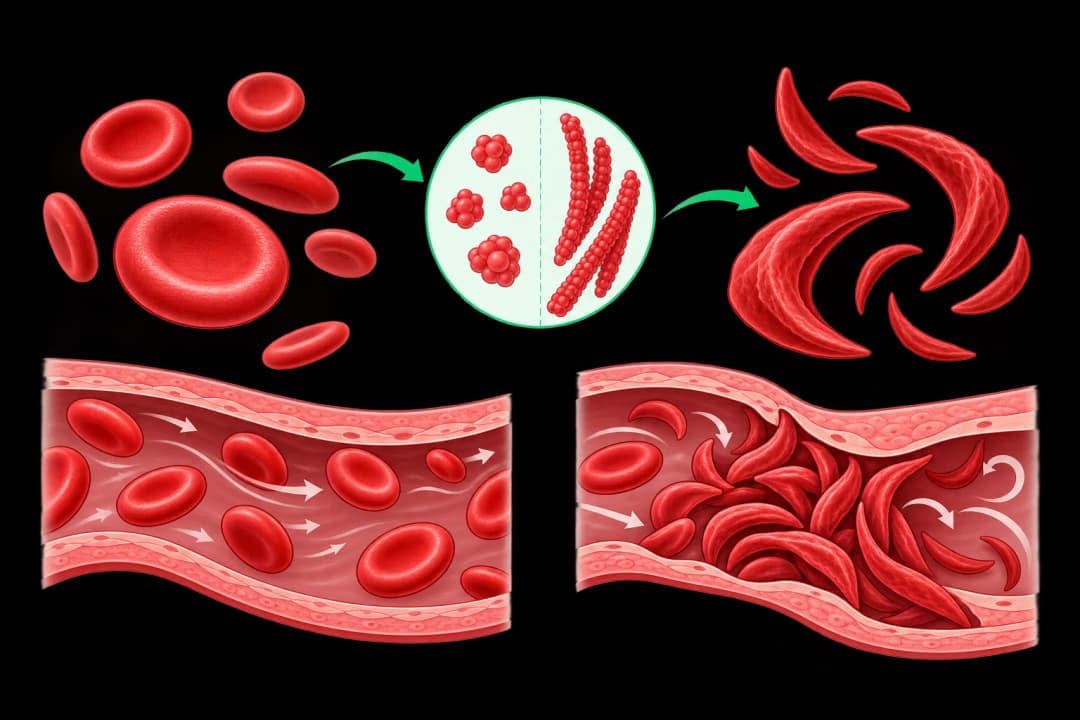
Adults may have a long-established pattern of symptoms, or they may notice new problems after years of relatively few episodes. Anaemia can contribute to tiredness, pale skin, dizziness, or shortness of breath. Blocked blood flow can cause pain in bones and joints, abdominal discomfort, or problems involving the lungs, eyes, kidneys, or brain.
A new symptom should not automatically be attributed to sickle cell disease. Infection, medication effects, pregnancy, and other health conditions can look similar. A clinician may compare symptoms with previous results and arrange a blood test or other targeted assessment.
Managing changes safely
Keep a record of pain locations, fatigue, fever, breathlessness, vision changes, and possible triggers. Maintain the care plan supplied by your haematology team, including prescribed medicines and hydration advice. Arrange review when symptoms are recurring, becoming harder to control, or interfering with work, sleep, or daily activities.
Adults who have not previously been tested but have a relevant family background can ask about a blood test. Couples planning children may also ask about premarital screening and genetic counselling.
Do not wait with these symptoms
Seek emergency help for chest pain, difficulty breathing, sudden weakness, speech or vision changes, seizure, collapse, confusion, or severe dehydration. Fever during a suspected sickle cell complication needs prompt medical advice, even when other symptoms seem manageable.
Discuss at your appointment
Ask whether a new symptom could indicate anaemia, a pain episode, infection, or an organ complication. Clarify which tests are needed, who to contact after hours, and whether your prevention plan needs updating as an adult.
Find care
General Clinics & Polyclinics in Abu Dhabi
That answer is general. If you want it applied to your own case, these are licensed general clinics & polyclinics listed in Abu Dhabi.
27 Ar Ruwwad St - Shakhbout City - MSH4 - Abu Dhabi - United Arab Emirates
Accepts: Daman, Thiqa, Cigna, MetLife +20 more
Al Ruwais, Al Dhafrah
Accepts: Daman, Thiqa, AXA, Cigna +16 more
Al Bahyah - Al Bahyah Old - Abu Dhabi - United Arab Emirates
Accepts: Daman, Thiqa, Cigna, Allianz Care +18 more
Abu Dhabi
Accepts: Daman, Thiqa, AXA, Cigna +27 more
Ordered by verification status and how complete each clinic's public record is, then alphabetically. This is a directory listing, not a ranking — Zavis does not rate or recommend providers.
A factual listing drawn from the DHA, DOH and MOHAP licence registers. It is not a referral, an endorsement, or advice that any of these providers is right for you.
Questions people ask
Can adults develop new sickle cell complications?
Yes. A person can develop new complications or a changed symptom pattern in adulthood, which is why continuing specialist follow-up matters.
Is fatigue always from sickle cell disease?
No. Fatigue may have several causes, including anaemia, infection, sleep problems, or another condition, so assessment is useful when it persists or worsens.
Related
Related reading
Keep reading
Medical disclaimer. This page is general health information, not medical advice, and it cannot diagnose you. Always consult a licensed healthcare provider about your own symptoms and treatment. In an emergency in the UAE, call 998 for an ambulance.