
What is a sickle cell pain crisis?
Short answer
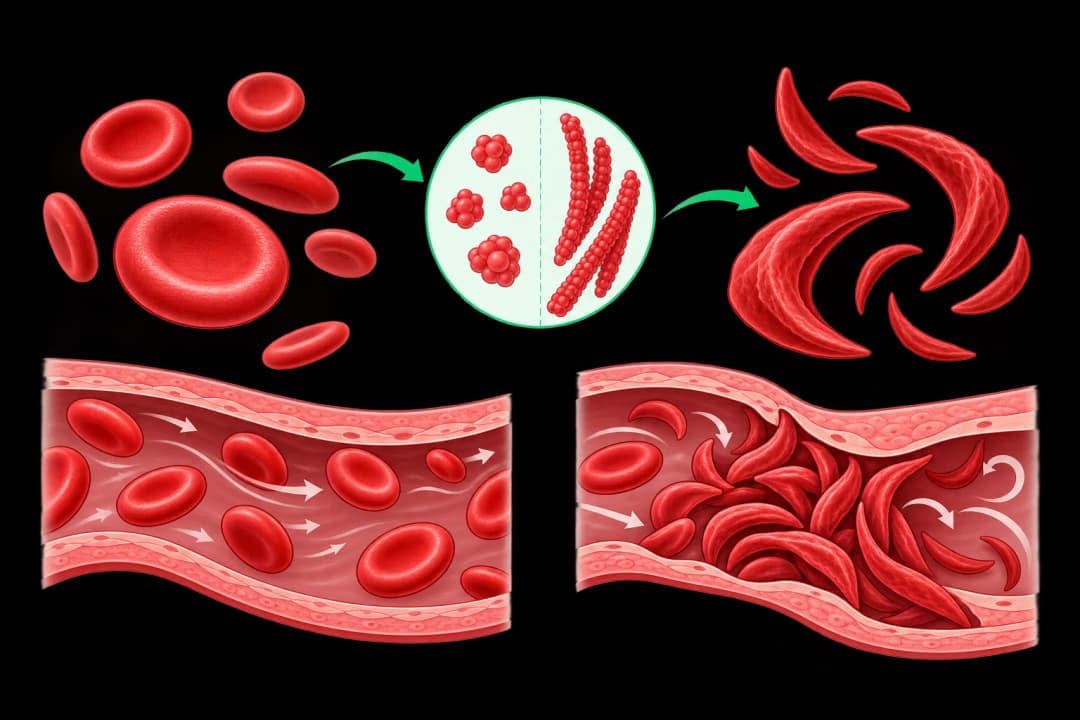
A sickle cell pain crisis is an episode of significant pain caused by sickled cells blocking small blood vessels.
This answers one question. It is not a diagnosis and does not replace an assessment by a licensed doctor.
At a glance
- Cause
- Blocked small blood vessels reduce oxygen delivery to tissues.
- Plan
- Use your personalised pain plan and seek help if it fails.
What happens during a crisis
Sickled red blood cells are less flexible and can obstruct circulation in tissues. Pain may affect the bones, chest, abdomen, back or limbs and may last for hours or longer. The intensity and location can change, and there may be no clear trigger.
A crisis can occur alongside fatigue, pale skin or joint pain. Infection, dehydration, cold, low oxygen and exertion may increase risk for some people. A crisis is more than ordinary muscle soreness when the pain is severe, persistent or unlike your usual symptoms.
What to do during an episode
Use the written plan from your sickle cell team, including prescribed pain medicine. Sip fluids if safe, keep warm and avoid strenuous activity. Contact your clinical team early if the plan is not controlling the pain. In hospital, clinicians may check oxygen, hydration, infection and chest symptoms while treating pain.
Emergency warning signs
Seek emergency care for chest pain, difficulty breathing, a high temperature, confusion, fainting, sudden weakness, severe headache, a seizure or pain that is rapidly worsening. A painful erection lasting several hours is also an emergency. Do not delay because a previous crisis settled at home.
Questions for your doctor
Ask for a written crisis plan, the correct dose and timing of prescribed medicines, and the nearest suitable emergency service. Ask how to recognise acute chest problems and what information to bring when seeking care.
Find care
General Clinics & Polyclinics in Abu Dhabi
That answer is general. If you want it applied to your own case, these are licensed general clinics & polyclinics listed in Abu Dhabi.
27 Ar Ruwwad St - Shakhbout City - MSH4 - Abu Dhabi - United Arab Emirates
Accepts: Daman, Thiqa, Cigna, MetLife +20 more
Al Ruwais, Al Dhafrah
Accepts: Daman, Thiqa, AXA, Cigna +16 more
Al Bahyah - Al Bahyah Old - Abu Dhabi - United Arab Emirates
Accepts: Daman, Thiqa, Cigna, Allianz Care +18 more
Abu Dhabi
Accepts: Daman, Thiqa, AXA, Cigna +27 more
Ordered by verification status and how complete each clinic's public record is, then alphabetically. This is a directory listing, not a ranking — Zavis does not rate or recommend providers.
A factual listing drawn from the DHA, DOH and MOHAP licence registers. It is not a referral, an endorsement, or advice that any of these providers is right for you.
Questions people ask
Can a crisis happen without a trigger?
Yes. Triggers can contribute, but some episodes begin without an identifiable cause.
When should a crisis be treated in hospital?
Urgent assessment is needed for severe or unusual pain, poor response to your plan, or warning signs such as chest symptoms or fever.
Related
Related reading
Keep reading
Medical disclaimer. This page is general health information, not medical advice, and it cannot diagnose you. Always consult a licensed healthcare provider about your own symptoms and treatment. In an emergency in the UAE, call 998 for an ambulance.