
Sickle Cell Disease Crisis: What to Do
Short answer
A sickle cell crisis is an acute episode caused by reduced blood flow, often bringing severe pain and requiring prompt assessment.
This answers one question. It is not a diagnosis and does not replace an assessment by a licensed doctor.
At a glance
- Typical feature
- Pain from reduced blood flow, often in bones or joints.
- First step
- Use the prescribed plan and contact the care team if it is not working.
- Emergency signs
- Chest pain, breathing difficulty, fever, confusion, or sudden weakness.
What happens during a crisis
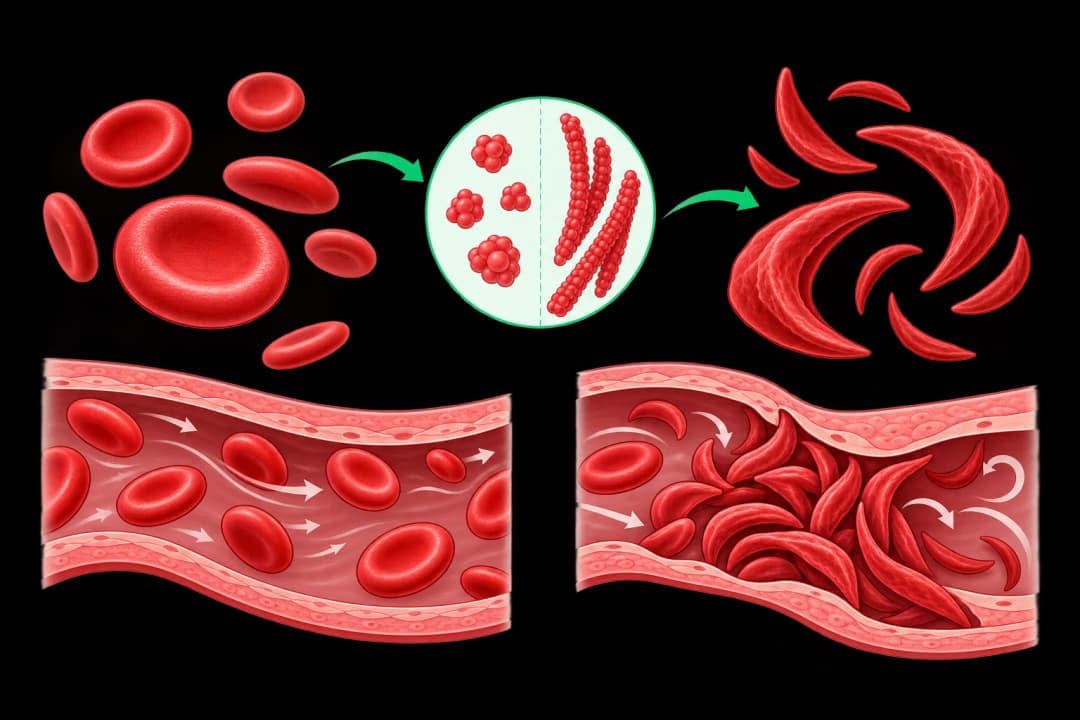
During a crisis, rigid sickle-shaped red blood cells can obstruct small vessels. Tissues then receive less oxygen, causing pain that may affect the bones, chest, abdomen, or joints. Some episodes begin suddenly, while others build over time. Dehydration, infection, cold exposure, stress, or low oxygen may contribute for some people, although a trigger is not always clear. Fatigue and pale skin can also reflect anaemia.
A crisis is different from ordinary muscle soreness. The person's established plan, medical history, and symptoms guide treatment. See [Sickle Cell Disease](/conditions/sickle-cell-disease/) for broader condition information.
What to do at home while arranging care
Follow the written pain plan, drink fluids if you can do so safely, rest, and keep warm without overheating. Use only medicines recommended for you and record what you take and when. Contact your haematology team if pain is not settling or is stronger than usual. Do not drive yourself if you feel faint, confused, or severely unwell. A [Blood Test](/treatments/diagnostics-and-screening/blood-test/) may be used during assessment to check for anaemia or another problem.
When to seek emergency help
Get emergency help for chest pain, trouble breathing, fever, sudden weakness, confusion, a seizure, severe headache, fainting, or pain that is severe or not controlled by your plan. Sudden vision changes, persistent vomiting, or inability to drink also need urgent assessment. Tell the team that you have sickle cell disease and bring your medicines or care plan if possible. These symptoms can signal complications that need treatment in a healthcare setting.
Questions for your doctor
How do I use my pain plan? Which symptoms mean I should go directly to emergency care? What should I keep ready at home? How can we identify my personal triggers? When should I contact the haematology team during an episode?
Find care
General Clinics & Polyclinics in Abu Dhabi
That answer is general. If you want it applied to your own case, these are licensed general clinics & polyclinics listed in Abu Dhabi.
27 Ar Ruwwad St - Shakhbout City - MSH4 - Abu Dhabi - United Arab Emirates
Accepts: Daman, Thiqa, Cigna, MetLife +20 more
Al Ruwais, Al Dhafrah
Accepts: Daman, Thiqa, AXA, Cigna +16 more
Al Bahyah - Al Bahyah Old - Abu Dhabi - United Arab Emirates
Accepts: Daman, Thiqa, Cigna, Allianz Care +18 more
Abu Dhabi
Accepts: Daman, Thiqa, AXA, Cigna +27 more
Ordered by verification status and how complete each clinic's public record is, then alphabetically. This is a directory listing, not a ranking — Zavis does not rate or recommend providers.
A factual listing drawn from the DHA, DOH and MOHAP licence registers. It is not a referral, an endorsement, or advice that any of these providers is right for you.
Questions people ask
Is every pain episode a sickle cell crisis?
Not necessarily. Other causes of pain exist, but new, severe, or unusual pain should be assessed using your care plan.
Can a crisis happen without a known trigger?
Yes. A clear trigger may not be found, so unexplained severe symptoms still deserve prompt attention.
Related
Related reading
Keep reading
Medical disclaimer. This page is general health information, not medical advice, and it cannot diagnose you. Always consult a licensed healthcare provider about your own symptoms and treatment. In an emergency in the UAE, call 998 for an ambulance.