
What Causes Sickle Cell Disease?
Short answer
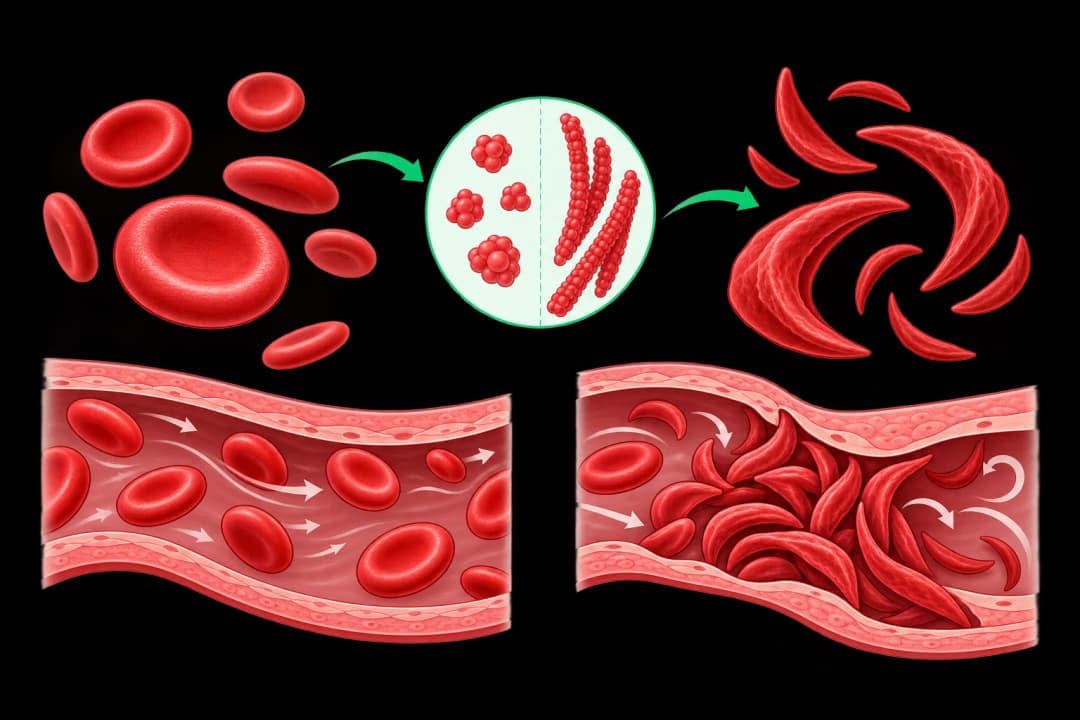
Sickle cell disease is caused by inherited changes in a haemoglobin gene, which can make red blood cells become rigid and sickle-shaped.
This answers one question. It is not a diagnosis and does not replace an assessment by a licensed doctor.
At a glance
- Underlying cause
- Inherited changes affecting haemoglobin production
- How it is passed on
- Through gene copies inherited from biological parents
- Main test
- A blood test that examines haemoglobin
The short answer
Sickle cell disease is caused by inherited changes in a haemoglobin gene, which can make red blood cells become rigid and sickle-shaped. Haemoglobin is the red-cell protein that carries oxygen. The altered haemoglobin can cause red cells to break down sooner than usual and, during some episodes, obstruct small blood vessels. The condition is present because of genes inherited from biological parents; it is not caused by food, exercise, stress, or anything a person did.
How inheritance leads to sickle cell disease
A person has two copies of the gene involved in haemoglobin production, with one copy inherited from each biological parent. Disease can occur when a child inherits sickle haemoglobin changes in a combination that affects red-cell shape and function. A person who inherits one sickle haemoglobin change and one usual haemoglobin copy may have sickle cell trait, also called carrier status. Carriers generally do not have sickle cell disease, but they can pass the changed gene to a child. Different inherited haemoglobin changes can produce different forms of the condition, so a family history alone cannot identify the exact type.
When sickle-shaped cells break down, anaemia can develop. When they block blood flow, a person may experience episodes of pain or other complications. Fatigue, joint pain, or pale skin can occur for several medical reasons and do not, by themselves, show that someone has sickle cell disease.
How the cause is checked
If sickle cell disease or carrier status may run in your family, discuss testing with a clinician. A blood test can examine haemoglobin and help identify sickle haemoglobin or another haemoglobin variant. The result may need interpretation alongside symptoms, family history, and the person’s age and health. Testing can be relevant before pregnancy, during pregnancy, or when a child has symptoms or an abnormal screening result.
Premarital screening may help couples understand whether they carry inherited blood conditions and what genetic counselling could add. If both partners carry a relevant haemoglobin change, a clinician or genetic counsellor can explain possible inheritance patterns and available choices in clear, personal terms.
When to seek medical care
Arrange a medical appointment if you have a family history of sickle cell disease, have been told you may carry a haemoglobin change, or have symptoms that need an explanation. Seek urgent care for severe or unusual pain, difficulty breathing, chest pain, sudden weakness, confusion, a seizure, or a high fever, particularly if you already have sickle cell disease. These symptoms can signal a complication that needs prompt assessment rather than confirming the cause on their own.
Questions for your doctor
You could ask: Which haemoglobin test is appropriate for me? Does my result show sickle cell disease, sickle cell trait, or another haemoglobin variant? Should a relative or partner be tested? If I am planning a pregnancy, would genetic counselling help? What symptoms should prompt urgent care in my situation?
Find care
General Clinics & Polyclinics in Abu Dhabi
That answer is general. If you want it applied to your own case, these are licensed general clinics & polyclinics listed in Abu Dhabi.
27 Ar Ruwwad St - Shakhbout City - MSH4 - Abu Dhabi - United Arab Emirates
Accepts: Daman, Thiqa, Cigna, MetLife +20 more
Al Ruwais, Al Dhafrah
Accepts: Daman, Thiqa, AXA, Cigna +16 more
Al Bahyah - Al Bahyah Old - Abu Dhabi - United Arab Emirates
Accepts: Daman, Thiqa, Cigna, Allianz Care +18 more
Abu Dhabi
Accepts: Daman, Thiqa, AXA, Cigna +27 more
Ordered by verification status and how complete each clinic's public record is, then alphabetically. This is a directory listing, not a ranking — Zavis does not rate or recommend providers.
A factual listing drawn from the DHA, DOH and MOHAP licence registers. It is not a referral, an endorsement, or advice that any of these providers is right for you.
Questions people ask
Can sickle cell disease develop because of lifestyle or diet?
No. The underlying cause is an inherited haemoglobin gene change. Lifestyle factors may affect wellbeing, but they do not create the genetic condition.
What is the difference between sickle cell trait and sickle cell disease?
Sickle cell trait means a person carries one changed haemoglobin gene copy, while sickle cell disease results from an inherited combination that affects red blood cells and can cause complications. Testing distinguishes them.
Can a person have sickle cell disease without knowing it?
Some people are identified through screening or family testing before they have recognised complications. A blood test can clarify whether sickle haemoglobin is present and which pattern is involved.
Related
Related reading
Keep reading
Medical disclaimer. This page is general health information, not medical advice, and it cannot diagnose you. Always consult a licensed healthcare provider about your own symptoms and treatment. In an emergency in the UAE, call 998 for an ambulance.