
What should you know about sickle cell anemia and sickle cell disease?
Short answer
Sickle cell anaemia is a form of sickle cell disease in which abnormal haemoglobin can make red blood cells less flexible and cause anaemia and pain.
This answers one question. It is not a diagnosis and does not replace an assessment by a licensed doctor.
At a glance
- Underlying issue
- An inherited haemoglobin condition
- Possible effects
- Anaemia, reduced oxygen delivery, and pain episodes
- Confirmation
- Haemoglobin testing with clinical review
How the terms fit together
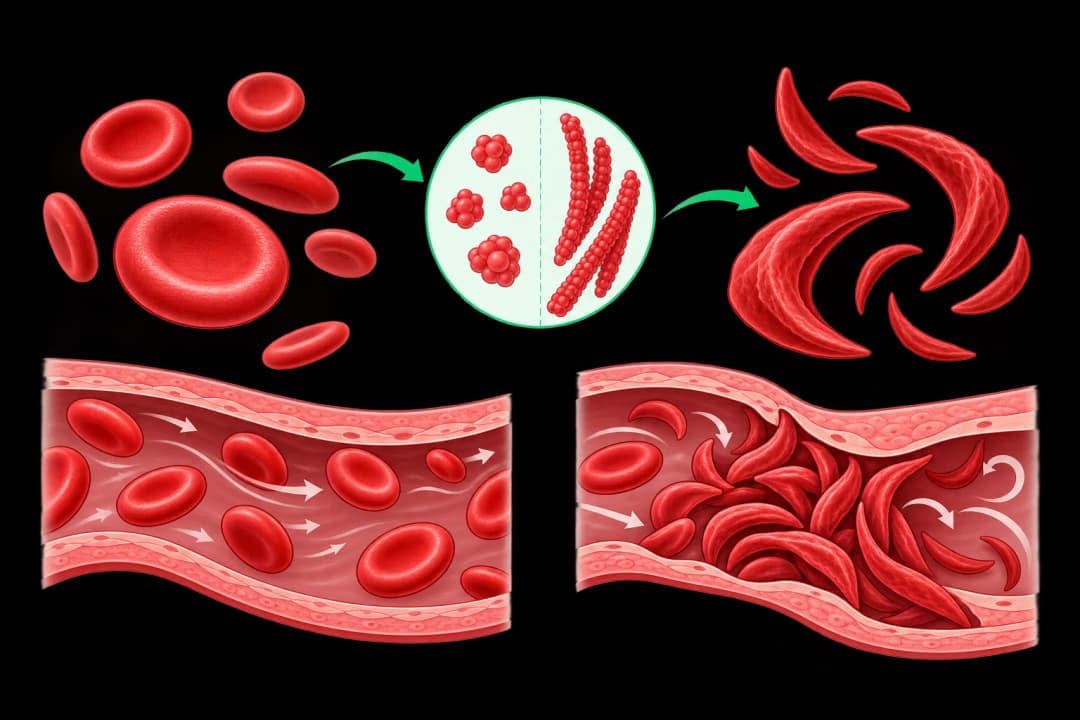
Sickle cell disease describes a group of inherited haemoglobin conditions. Sickle cell anaemia commonly refers to the form in which a person has two haemoglobin genes that produce substantial sickling. The altered cells can become rigid and obstruct small blood vessels, reducing oxygen delivery to tissues. This can lead to episodes of joint or bone pain, fatigue, and pale skin, although symptoms and severity vary between people.
A diagnosis is based on testing rather than symptoms alone. A blood test can identify haemoglobin types and help separate sickle cell disease from carrier status or another cause of anaemia. A clinician may also review previous episodes, family history, and current medicines.
Practical next steps
If you have a new or uncertain result, arrange a review with a clinician familiar with haemoglobin disorders. Discuss a plan for pain episodes, hydration, vaccinations, infection prevention, and regular monitoring when relevant to your diagnosis. Share the result with close relatives and consider premarital screening or genetic counselling when planning a family. Never assume that iron will correct anaemia unless iron deficiency has been confirmed.
Warning signs needing prompt assessment
Get urgent help for severe pain, fever, chest pain, breathing difficulty, sudden weakness, confusion, vision change, or a new severe headache. A painful erection that does not settle also needs urgent assessment. Seek advice promptly for worsening fatigue, yellowing of the eyes, dehydration, or an infection because sickle cell disease can make complications develop quickly.
Questions to take along
Ask which sickle cell type is present, how the diagnosis was confirmed, and which symptoms should trigger your personal emergency plan. Ask whether relatives or a partner should have a blood test, how often follow-up is needed, and which treatments or preventive measures fit your health history.
Find care
General Clinics & Polyclinics in Abu Dhabi
That answer is general. If you want it applied to your own case, these are licensed general clinics & polyclinics listed in Abu Dhabi.
27 Ar Ruwwad St - Shakhbout City - MSH4 - Abu Dhabi - United Arab Emirates
Accepts: Daman, Thiqa, Cigna, MetLife +20 more
Al Ruwais, Al Dhafrah
Accepts: Daman, Thiqa, AXA, Cigna +16 more
Al Bahyah - Al Bahyah Old - Abu Dhabi - United Arab Emirates
Accepts: Daman, Thiqa, Cigna, Allianz Care +18 more
Abu Dhabi
Accepts: Daman, Thiqa, AXA, Cigna +27 more
Ordered by verification status and how complete each clinic's public record is, then alphabetically. This is a directory listing, not a ranking — Zavis does not rate or recommend providers.
A factual listing drawn from the DHA, DOH and MOHAP licence registers. It is not a referral, an endorsement, or advice that any of these providers is right for you.
Questions people ask
Are sickle cell anaemia and sickle cell disease identical terms?
Sickle cell anaemia is commonly used for one form of sickle cell disease; sickle cell disease is the broader group of inherited conditions.
Can someone have sickle cell disease without constant pain?
Yes. Symptoms vary, and the absence of pain at a particular time does not rule out the diagnosis.
Related
Related reading
Keep reading
Medical disclaimer. This page is general health information, not medical advice, and it cannot diagnose you. Always consult a licensed healthcare provider about your own symptoms and treatment. In an emergency in the UAE, call 998 for an ambulance.